Skip to content
September 11, 2026
  • Bluesky
  • Facebook
  • Linkedin
  • Mastodon
  • RSS
  • Twitter
  • Youtube

Daily CyberSecurity

Zero-hour alerts. Unmatched analysis.

Primary Menu
  • Home
  • CVE Data
    • CVE Watchtower
    • Top Exploited CVEs
    • CVE Stats by Vendor
    • Q2 2026 Report
    • CVE Alerts
    • CVE Alert Settings
    • Pricing
  • Cyber Criminals
  • Data Leak
  • Linux
  • Malware
  • Vulnerability
  • Submit Press Release
  • Weekly Recap
Light/Dark Button
  • Home
  • Technique
  • Ransomware Cipher Crime: Encryption Used Maliciously
  • Technique

Ransomware Cipher Crime: Encryption Used Maliciously

Do Son November 8, 2021 4 minutes read
Img_2021_11_03_21_05_40

Credit: mantejmo via Canva

Credit: gregorly via Canva

Ransomware from Several Perspectives

Ransomware has many facets and angles to explore. Let’s explore it from a general, technical, personal and monetary perspective. Then let’s perhaps dive into how some of these different angles interrelate.

Generally Speaking

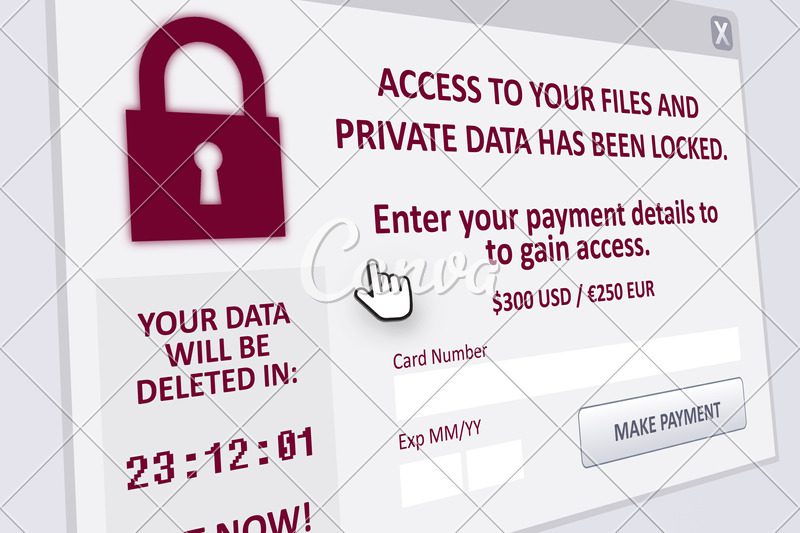
Ransomware is a malicious application that renders user or business data inaccessible with the ultimate goal of receiving ransom payments from its unsuspecting cyber victims.

Encryption in History

Encryption was used 2000 years ago by the Romans on the battlefield used an encryption algorithm called substitution cipher developed by Caesar. Caesar needed a way to send documents to his troops in remote locations while ensuring only its intended recipients would be able to understand the text.

Digital encryption has been in existence for several decades, going back to the 1970s. At that time, IBM started protecting their customers’ data using encryption.

Encryption used for Cybercrime

Cybercriminals are just using something that is generally a valid solution to protect the privacy and sensitivity of digital information and turn it into a tool to commit a malicious cybercrime/cyber theft.

Root Cause: Complacency

We could safely assume that most ransomware victims did not use anti ransomware or other cybersecurity-related products such as antivirus and malware protection solutions. Once a ransomware attack occurs, many cyber victims have no other choice but to give in and pay ransom to regain access to their data.

Cyber ransomware will typically encrypt personal and enterprise-grade data. Once the encryption is complete and verified, a ransom for that data depends on the value deemed. A high-pressure ultimatum often comes attached with the ransom request.

In the next section, we will take a deeper dive into the technical side of encryption which is at the core of a ransomware attack. Cryptocurrencies have made it even easier for cyber gangs to remain elusive and evade the law. Crypto ransom has made it much more challenging and often near impossible to track by law enforcement.

Technically Speaking

Encryption, which is at the heart of a ransomware cyberattack, is a process of encoding data into a series of letters, numbers and other characters, which essentially renders a coherent piece of data into gibberish.

Data at Rest and Data in Transit

Encryption protects sensitive documents by organizations and regular end-users, and it falls under two different categories, data at rest and data in transit. Data at rest could be data in a hard drive, and data in transit is any data that travels over digital communication channels, such as a peer-to-peer chat. 

Another example of data at rest encryption is when a password is on a Microsoft Word document. What happens is that the file becomes scrambled with indiscernible ciphertext or a series of random characters. 

Essentially the password, in this case, is the key that can unlock the data. Encryption can take place for a much larger batch of data, including encrypting an entire physical hard drive at the hardware level.

This process converts the original representation of the information, known as plaintext, into an alternative form known as ciphertext. Ideally, only authorized parties can decipher a ciphertext back to plaintext and access the original information.

Encryption Protocols and Keys

Encryption protocols use encryption algorithms to scramble the text into set-sized blocks, which can be 56 bits, 128 bits and more in size. These algorithms used advanced mathematical functions to perform their operations and then create a key. The same key is generally needed to decrypt the data with a symmetric encryption protocol, and Asymmetrical protocols require public and private keys.

Some of the most popular encryption protocols are DES and AES, which stand for Data Encryption Standard and Advanced Encryption Standard.

Credit: mantejmo via Canva

The Key is in the Key Size

Theoretically, a brute force attack could guess a given algorithm key by guessing all of its possible respective keys. This is why the key length of a given encryption algorithm makes a massive difference.

For example, a 56 bit DES cipher encryption algorithm could be hacked in 1 hour with a supercomputer, and 128 bit AES cipher encryption algorithm could take 5.3 x 10¹⁷, which is 5.3 times almost a QUINTILION YEARS or 5.3 x 100000000000000000 YEARS for a supercomputer to hack. This is not even close to other bigger key lengths out there. 

Imagine how much time it would take for an organization to guess the key to deciphering their data. Actually, don’t bother, it is UNIMAGINABLE.

Monetarily Speaking

In 2020, an estimated $18 billion was paid out as a result of ransomware cyber-attacks by businesses and home users, and this number is expected to grow.

SHARE
Share on FacebookShare on XShare on LinkedInShare on TelegramShare on BlueskyShare on Mastodon

Search

Translation

CVE ALERTS
📧

Email Delivery
Get threat intel straight to your inbox.

♾️

Unlimited Vendors
Track every technology in your stack.

🚨

All New CVE Alerts
Be the first to know about new flaws.

⚙️

Custom EPSS Threshold
Filter noise, focus on real risks.

💬

Slack & Teams Webhook
Integrate directly into your SecOps.

🚫

100% Ad-Free
Enjoy an uninterrupted reading experience.

$7/mo
Subscribe Now

🚨 Active Exploits in the Wild

  • CVE-2026-42016CVSS 8.1
    JFrog Artifactory (Self Hosted) versions before 7.133.11 are vulnerable to a privilege escalation attack due to a validation...
    Admin intel📅 Updated: Sep 11, 2026
  • CVE-2026-42018CVSS 7.5
    JFrog Artifactory could return an internal anonymous-user token to an unauthenticated caller when anonymous access is disabled, potentially...
    Admin intel📅 Updated: Sep 11, 2026
  • CVE-2026-20079CVSS 10.0
    A vulnerability in the web interface of Cisco Secure Firewall Management Center (FMC) Software could allow an unauthenticated,...
    Admin intelCISA KEV📅 Added to KEV: Sep 9, 2026📅 Updated: Sep 9, 2026
  • CVE-2025-25249CVSS 8.1
    A heap-based buffer overflow vulnerability in Fortinet FortiOS 7.6.0 through 7.6.3, FortiOS 7.4.0 through 7.4.8, FortiOS 7.2.0 through...
    Admin intelCISA KEV📅 Added to KEV: Sep 9, 2026📅 Updated: Sep 9, 2026
  • CVE-2026-87491
    Out of bounds write in V8 in Google Chrome prior to 153.0.8010.36 allowed a remote attacker to execute...
    Admin intelCISA KEV📅 Added to KEV: Sep 9, 2026📅 Updated: Sep 9, 2026
  • CVE-2026-19490
    Vulnerability in NetScaler ADC and NetScaler Gateway. This issue affects ADC: from 14.1 through 73.32 and from 13.1...
    CISA KEV📅 Added to KEV: Sep 9, 2026
  • CVE-2026-75650CVSS 10.0
    Adobe Commerce is affected by an Improper Neutralization of Special Elements Used in a Template Engine vulnerability that...
    Admin intelCISA KEV📅 Added to KEV: Sep 8, 2026📅 Updated: Sep 8, 2026
  • CVE-2026-81963CVSS 7.8
    Improper link resolution before file access ('link following') in Windows Update Stack allows an authorized attacker to elevate...
    CISA KEV📅 Added to KEV: Sep 8, 2026
Powered by CVE Watchtower

🔴 Live Critical Threats

  • CVE-2026-8778CVSS 9.8
    The MIPL Grouped Checkout Fields for WooCommerce – Customize & Organize Checkout...
  • CVE-2026-82107CVSS 9.6
    IBM DataStage on Cloud Pak for Data 5.4.0.0 could allow a remote...
  • CVE-2026-82100CVSS 9.6
    IBM DataStage on Cloud Pak for Data 5.4.0.0 could allow a remote...
  • CVE-2026-81204CVSS 9.8
    IBM Langflow OSS 1.0.0 through 1.11.5 could allow a remote attacker to...
  • CVE-2026-80424CVSS 9.1
    IBM DataStage on Cloud Pak for Data 5.4.0.0 could allow a remote...
  • CVE-2026-79724CVSS 9.8
    IBM Langflow OSS 1.0.0 through 1.11.5 could allow a remote attacker to...
  • CVE-2026-78573CVSS 9.8
    IBM ContextForge MCP Gateway 1.0.0 through 1.0.7 could allow a remote attacker...
  • CVE-2026-45764CVSS 9.1
    Suricata is a network Intrusion Detection System, Intrusion Prevention System and Network...
  • CVE-2026-19646CVSS 9.1
    IBM Common Licensing Agent 9.0, Agent 9.0.0.1, Agent 9.0.0.2, ART 9.0, ART...
  • CVE-2026-89094CVSS 9.9
    Forgejo before 16.0.4 allows remote code execution via a crafted template repository...
Powered by CVE WATCHTOWER

Our Websites
  • Penetration Testing Tools
  • The Daily Information Technology
  • Top Exploited CVEs
  • Daily CyberSecurity

    • About SecurityOnline.info
    • Advertise with us
    • Announcement
    • Contact
    • Contributor Register
    • Login
    • Disclaimer
    • DCMA
    • Privacy Policy
    • About SecurityOnline.info
    • Advertise on SecurityOnline.info
    • Contact Us

    When you purchase through links on our site, we may earn an affiliate commission. Here’s how it works

    • CVE Watchtower
    • CVE Statistics by Vendor 2026
    • Q2 2026 Report
    • Top Exploited CVEs
    • Bluesky
    • Facebook
    • Linkedin
    • Mastodon
    • RSS
    • Twitter
    • Youtube
    © 2017 - 2026 Daily CyberSecurity. All Rights Reserved.