Skip to content
September 11, 2026
  • Bluesky
  • Facebook
  • Linkedin
  • Mastodon
  • RSS
  • Twitter
  • Youtube

Daily CyberSecurity

Zero-hour alerts. Unmatched analysis.

Primary Menu
  • Home
  • CVE Data
    • CVE Watchtower
    • Top Exploited CVEs
    • CVE Stats by Vendor
    • Q2 2026 Report
    • CVE Alerts
    • CVE Alert Settings
    • Pricing
  • Cyber Criminals
  • Data Leak
  • Linux
  • Malware
  • Vulnerability
  • Submit Press Release
  • Weekly Recap
Light/Dark Button
  • Home
  • Technique
  • What are the Safest way to store Bitcoins Safely in 2021
  • Technique

What are the Safest way to store Bitcoins Safely in 2021

Do Son November 24, 2021 5 minutes read
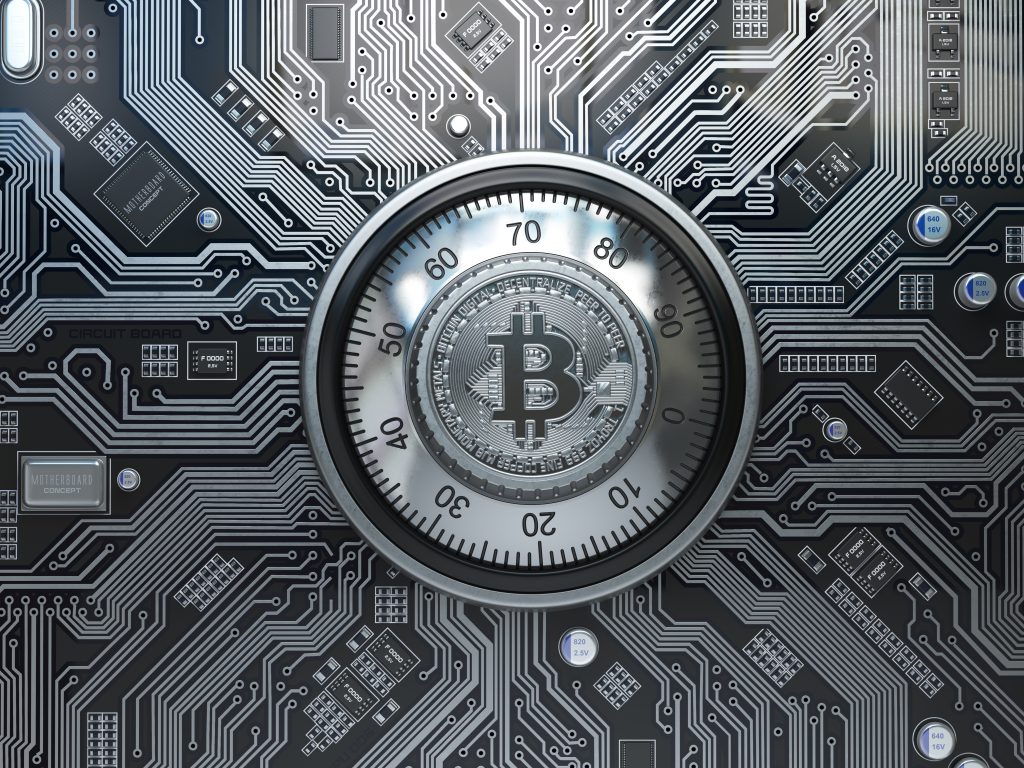
Bitcoin cryptocurrency security  and mining concept. Safe lock with symbol of bitcoin on circuit board.

Bitcoin cryptocurrency security and mining concept. Safe lock with symbol of bitcoin on circuit board. 3d illustration

If you are familiar with how hackers have breached cryptocurrency exchanges in the past to steal crypto coins. Then you probably don’t feel safe keeping your coins in the exchange wallet.

Even you should not really do so. As this puts your crypto investment at risk of getting hacked. So the question is, what is the safest way to store Bitcoins safely?

To help you with this question only, I am going to talk about different wallet types and how you can keep your Bitcoins or any other cryptocurrency safe. So here we go:

Types of Crypto Wallets

Hot and Cold Wallets:

Crypto wallets connected to the internet are referred to as hot and cold wallets. Hot wallets are connected to the internet. Hence, they are less secure and always at a risk of getting hacked. Also The Money Mongers mentions, the wallet which popular crypto exchanges like WazirX, Coinbase and Binance provide are a Hot wallet. However, they are user-friendly and great enough for frequent crypto transactions.

On the other hand, cold wallets are stored offline, and they don’t require an internet connection. As a result, they offer you improved security and less risk. You can use a cold wallet for long-term holdings.

Hardware Wallets:

Hardware wallets are hardware devices that handle public addresses and keys. It looks like a flash drive with an OLED screen on it and has side buttons.

It is also a battery-less device and can be connected to a PC and accessed by native desktop apps. However, these wallets come with a price anywhere between 100 to 2000 dollars. These types of wallets are highly secure compared to hot wallets. Also, they are pretty easy to use.

Paper Wallets:

Paper Wallets are now an old generation thing, and it is not really recommended. A paper wallet is a physically printed QR coded from the wallet. Some wallets allow you to download the code and generate a new address offline.

The good part is that they are safe from hacks. But there are a number of flaws in it that can make your crypto investments at risk.

Desktop Wallets:

Desktop wallets are installable applications available for different operating systems. However, they do require your PC to have an Anti-virus application installed. Because your desktop is always connected to the internet, which can pose a fundamental security issue.

Mobile Wallets:

Mobile wallets are similar to desktop wallets. They are pretty convenient to use, and it uses QR codes for transactions. You can use them for daily transactions. But mobile wallets are vulnerable to malware infection.

Web Wallets:

Lastly, there are web wallets. Web wallets are accessed by internet browsers. However, they are not so secure. As the private keys are held in web wallets are prone to DDOS attacks.

Also, web wallets can be hosted or non-hosted. The non-hosted wallets keep your funds in control. But we cannot deny the fact that they are the least secure wallets.

Tips to Store your Crypto Safely after your purchase

Hardware Wallet:

Hardware wallets are definitely one of the best ways to keep your crypto safe. They are completely offline and protect your crypto against hackers.

All you have to do is withdraw your cryptocurrencies to the hardware by sending them to your hardware wallet address, and you are done. Similarly, when you want to transact your crypto, you have to connect the hardware wallet to your PC.

Turn on two-factor authentication:

Make sure to turn on 2FA or Two-factor authentication for your Bitcoin wallet. This way, hackers will not really find it easy to steal your cryptocurrencies. For 2FA, make sure to use another phone with a different SIM card. And it should only be used for this purpose only. If you are going to use your primary phone for 2FA, your phone is most likely to get hijacked.

Secure network:

When you are accessing your Bitcoin wallet via the internet, make sure to use a secure and private network. Also, do avoid using a public WiFi network. In case if you need to use a public network only, then make sure to use a VPN to encrypt your web activity and IP address. Also, for your home network, make sure to use an antivirus application.

Use a strong password:

You should also use a strong password. Your password should be 16 characters long. Also, it should have a combination of letters, numbers, and special characters. You can also use a password checker to ensure that your password is secure.

Along with that, make sure to store your password safely. If you lose your password, you won’t really have many options to recover your investments. So I would recommend you to keep a paper copy of the password. Also, store the password safely somewhere.

Conclusion

So those were some of the safest ways to store Bitcoins safely. I hope this has helped you with your query. In case if you wish to ask anything else, then do comment below, and I will help you out.

SHARE
Share on FacebookShare on XShare on LinkedInShare on TelegramShare on BlueskyShare on Mastodon

Search

Translation

CVE ALERTS
📧

Email Delivery
Get threat intel straight to your inbox.

♾️

Unlimited Vendors
Track every technology in your stack.

🚨

All New CVE Alerts
Be the first to know about new flaws.

⚙️

Custom EPSS Threshold
Filter noise, focus on real risks.

💬

Slack & Teams Webhook
Integrate directly into your SecOps.

🚫

100% Ad-Free
Enjoy an uninterrupted reading experience.

$7/mo
Subscribe Now

🚨 Active Exploits in the Wild

  • CVE-2026-42016CVSS 8.1
    JFrog Artifactory (Self Hosted) versions before 7.133.11 are vulnerable to a privilege escalation attack due to a validation...
    Admin intel📅 Updated: Sep 11, 2026
  • CVE-2026-42018CVSS 7.5
    JFrog Artifactory could return an internal anonymous-user token to an unauthenticated caller when anonymous access is disabled, potentially...
    Admin intel📅 Updated: Sep 11, 2026
  • CVE-2026-20079CVSS 10.0
    A vulnerability in the web interface of Cisco Secure Firewall Management Center (FMC) Software could allow an unauthenticated,...
    Admin intelCISA KEV📅 Added to KEV: Sep 9, 2026📅 Updated: Sep 9, 2026
  • CVE-2025-25249CVSS 8.1
    A heap-based buffer overflow vulnerability in Fortinet FortiOS 7.6.0 through 7.6.3, FortiOS 7.4.0 through 7.4.8, FortiOS 7.2.0 through...
    Admin intelCISA KEV📅 Added to KEV: Sep 9, 2026📅 Updated: Sep 9, 2026
  • CVE-2026-87491
    Out of bounds write in V8 in Google Chrome prior to 153.0.8010.36 allowed a remote attacker to execute...
    Admin intelCISA KEV📅 Added to KEV: Sep 9, 2026📅 Updated: Sep 9, 2026
  • CVE-2026-19490
    Vulnerability in NetScaler ADC and NetScaler Gateway. This issue affects ADC: from 14.1 through 73.32 and from 13.1...
    CISA KEV📅 Added to KEV: Sep 9, 2026
  • CVE-2026-75650CVSS 10.0
    Adobe Commerce is affected by an Improper Neutralization of Special Elements Used in a Template Engine vulnerability that...
    Admin intelCISA KEV📅 Added to KEV: Sep 8, 2026📅 Updated: Sep 8, 2026
  • CVE-2026-81963CVSS 7.8
    Improper link resolution before file access ('link following') in Windows Update Stack allows an authorized attacker to elevate...
    CISA KEV📅 Added to KEV: Sep 8, 2026
Powered by CVE Watchtower

🔴 Live Critical Threats

  • CVE-2026-8778CVSS 9.8
    The MIPL Grouped Checkout Fields for WooCommerce – Customize & Organize Checkout...
  • CVE-2026-82107CVSS 9.6
    IBM DataStage on Cloud Pak for Data 5.4.0.0 could allow a remote...
  • CVE-2026-82100CVSS 9.6
    IBM DataStage on Cloud Pak for Data 5.4.0.0 could allow a remote...
  • CVE-2026-81204CVSS 9.8
    IBM Langflow OSS 1.0.0 through 1.11.5 could allow a remote attacker to...
  • CVE-2026-80424CVSS 9.1
    IBM DataStage on Cloud Pak for Data 5.4.0.0 could allow a remote...
  • CVE-2026-79724CVSS 9.8
    IBM Langflow OSS 1.0.0 through 1.11.5 could allow a remote attacker to...
  • CVE-2026-78573CVSS 9.8
    IBM ContextForge MCP Gateway 1.0.0 through 1.0.7 could allow a remote attacker...
  • CVE-2026-45764CVSS 9.1
    Suricata is a network Intrusion Detection System, Intrusion Prevention System and Network...
  • CVE-2026-19646CVSS 9.1
    IBM Common Licensing Agent 9.0, Agent 9.0.0.1, Agent 9.0.0.2, ART 9.0, ART...
  • CVE-2026-89094CVSS 9.9
    Forgejo before 16.0.4 allows remote code execution via a crafted template repository...
Powered by CVE WATCHTOWER

Our Websites
  • Penetration Testing Tools
  • The Daily Information Technology
  • Top Exploited CVEs
  • Daily CyberSecurity

    • About SecurityOnline.info
    • Advertise with us
    • Announcement
    • Contact
    • Contributor Register
    • Login
    • Disclaimer
    • DCMA
    • Privacy Policy
    • About SecurityOnline.info
    • Advertise on SecurityOnline.info
    • Contact Us

    When you purchase through links on our site, we may earn an affiliate commission. Here’s how it works

    • CVE Watchtower
    • CVE Statistics by Vendor 2026
    • Q2 2026 Report
    • Top Exploited CVEs
    • Bluesky
    • Facebook
    • Linkedin
    • Mastodon
    • RSS
    • Twitter
    • Youtube
    © 2017 - 2026 Daily CyberSecurity. All Rights Reserved.