ADEX: AI involved in 52% of detected ad fraud schemes – shopping agents could be next
 ddos-admin
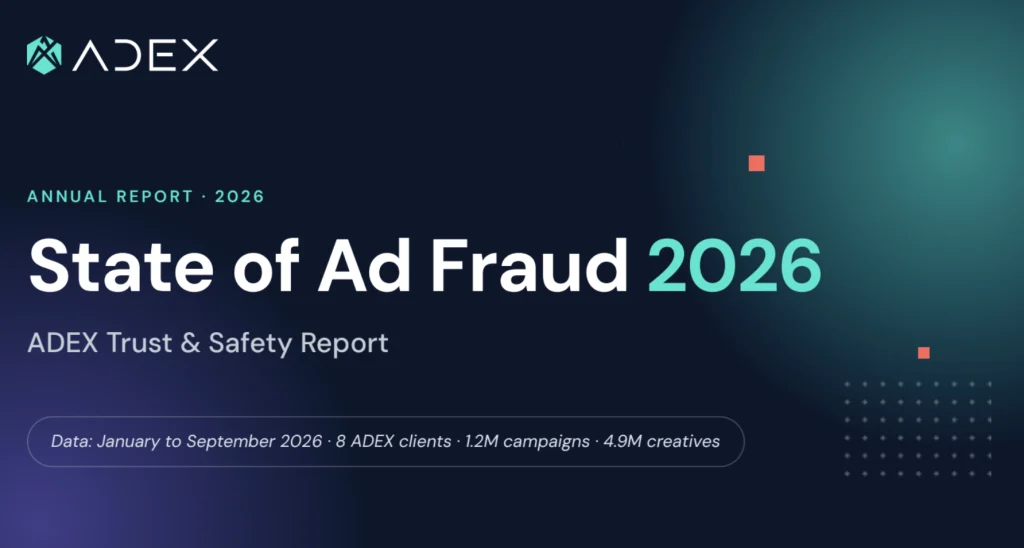
New ADEX research shows how AI is making familiar scams cheaper and harder to detect, while fraudsters prepare to target AI shopping assistants.
LIMASSOL, Cyprus, October 27, 2026 — AI played a significant role in 52% of Advertising fraud schemes identified by ADEX, a leading AI-powered traffic validation and anti-fraud ecosystem, between January and September 2026, according to the company’s new State of Ad Fraud 2026: ADEX Trust & Safety Report. The findings are based on aggregated moderation data from eight advertising platforms using ADEX and cover 1.2 million campaigns and 4.9 million creatives.
Among AI-involved schemes, bots impersonating humans appeared in 64% of fraud schemes, while cloned brands and fake endorsements featured in 53%. Deepfakes appeared in 11%. The categories overlap, as fraudulent schemes often tend to combine several AI-powered techniques.
The change AI brings about is fundamental though. A set of agents now stands in the place of a team of content makers, designers and developers. Fraud content today is super cheap to produce and even cheaper to scale. And ADEX expects the next shift to take it a few levels up: in 2027, fraudsters may increasingly target the AI agents that browse websites, compare products, and make purchases on behalf of regular people.
The same old scam gets a shiny new wrapper
A typical fake investment campaign of only a couple of years ago usually meant a hastily assembled landing page, maybe a celebrity photograph paired with a fabricated quote. Behind, there was a small team working potential victims through private messages.
Today, AI can produce a polished imitation of a legitimate news outlet or financial institution that would look almost flawless to the naked eye. A chatbot can then handle conversations around the clock, responding fluently in the victim’s language. The quality can be so good even people well-versed in AI may not see it’s fake right away.
| “The scheme itself has not changed in years: borrow a trusted face, promise big returns, move the victim into a private chat. What AI changed is the finish. The page looks real, the video looks real, and the person in the chat never sleeps and never makes a typo.”
— Sergey Martianov, Chief Product Officer at ADEX |
According to the report, brand cloning and fake endorsements appear across investment and blockchain scams, as well as fraudulent e-commerce stores. Attackers also imitate familiar technology brands to distribute fake security alerts.
AI has also accelerated the cycle of replacing fraudulent advertising materials. ADEX researchers observed cases in which revised versions of rejected campaigns returned within hours, sometimes on the same day. The company does not report a standard turnaround time, as it varies considerably between schemes.
The next target could be the AI doing your shopping
Online users delegate more and more tasks to AI assistants. That’s why ADEX expects fraudsters to adapt their tactics to an emerging new audience: machines who we allow to make decisions for us.
An example of such attack is prompt injection, where malicious instructions are embedded in content an AI agent consumes while performing a legitimate task.
These instructions could appear in invisible page elements, metadata, product images, or text addressed directly to AI assistants. Attackers could also serve different content to human visitors and AI agents, adapting cloaking techniques already used to evade advertising moderation.
ADEX emphasizes that this is a forecast rather than an attack category currently measured in its moderation data. However, prompt-injection techniques are already documented in security research, and the company has previously examined how AI agents can be manipulated into delivering malicious content.
| “In 2027, the most valuable user on the web may not be a person at all. If an agent is doing the shopping, someone will try to scam the agent. The industry needs to start checking ads for what they say to machines, too.”
— Sergey Martianov, Chief Product Officer at ADEX |
When a bot is also a legitimate customer
The expected growth of AI shopping agents presents another challenge for advertisers and platforms: distinguishing legitimate automated activity from malicious bots.
An AI assistant that compares prices or buys something for a real customer is doing a legitimate job, even if no human ever touches the website.
So the question isn’t “bot or human?” ADEX suggests asking three things instead. Can the visitor prove who it is? Does it behave the way its stated task says it should? And do its sessions end in something real, like a purchase or a booking? Platforms should also watch for websites that show AI agents one page and people another.
For advertisers, the to-do list is short. Keep an eye out for your brand in other people’s ads. Check where your clicks actually end up. And ask your technology partners a simple question: how do you tell a good agent from bad automation?
With AI now on both sides of the ad transaction, two questions matter more and more: who, or what, is making the decision, and what told it to?
The full findings are available in State of Ad Fraud 2026: ADEX Trust & Safety Report.
| About ADEX
ADEX is a global anti-fraud and traffic-quality platform within AdTech Holding. It analyzes billions of impressions, clicks, and conversions, protecting AdTech products and partners from malware-driven and invalid traffic attacks. Methodology The report analyzes aggregated moderation and verification data from eight advertising platforms using ADEX, covering January through September 2026. AI involvement is calculated across distinct fraud schemes, rather than individual campaigns or accounts. Categories may overlap. |