Bridging Nations and Defence Technologies: The Critical Role of Information Management at an International Defence Exhibition
 Do Son

When the International Defence Exhibition and Seminar closed at the Karachi Expo Centre on November 30, its tenth edition had drawn more than 500 exhibitors and high-level delegations from more than 50 countries. Four years earlier, IDEAS 2014 counted 256 exhibitors and 88 foreign defence delegations. In the space of two editions, the event roughly doubled.
Visitors see the result as crowded halls, product stands and seminar sessions. Behind them runs a constant flow of information. Every delegation and every exhibitor generates arrival times, meeting requests, contact lists and access arrangements, and many of these change at short notice. At a high-profile defence event, the accuracy, confidentiality, and controlled handling of information are essential. Even a minor data-entry error can direct an international delegation to the wrong meeting, disrupt official engagements, or create unnecessary operational complications. Similarly, the unauthorized disclosure of schedules or meeting arrangements could expose sensitive information about interactions between military representatives, foreign delegations, and defence organizations. Such responsibilities require exceptional attention to detail, sound administrative judgment, information security awareness, and the ability to manage sensitive operational information with discretion and professionalism.
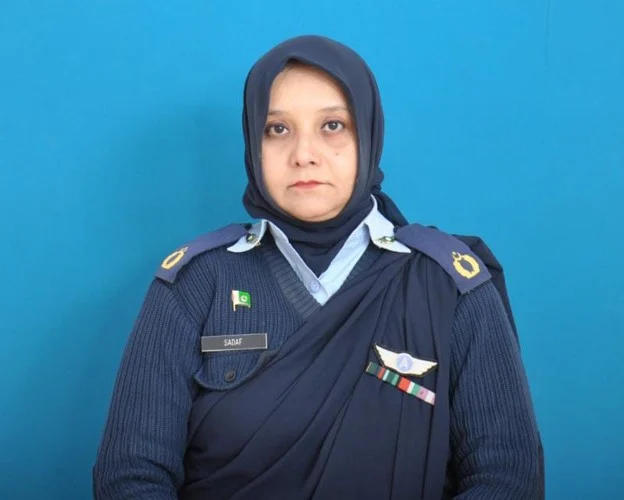
Squadron Leader Sadaf knows this side of the exhibition from the inside. A computer scientist by training, she served as the Pakistan Air Force’s Marketing and Conducting Officer at IDEAS from 2004 to 2018.
Coordinating the Pakistan Air Force’s International Presence at IDEASAs Marketing and Conducting Officer, Squadron Leader Sadaf played an important role in coordinating the Pakistan Air Force’s participation in the International Defence Exhibition and Seminar (IDEAS).Sadaf earned both a Bachelor of Science (Honours) and a Master of Science in Computer Science from the University of Sindh, establishing a strong academic foundation in computing and information technology. Building upon her academic qualifications, she joined the Pakistan Air Force (PAF) as a commissioned officer in 2001, beginning a distinguished military career that combined her technical knowledge with leadership, administration, security, and operational responsibilities in a high security defence environment.
At IDEAS, her primary responsibility was to represent the Pakistan Air Force by promoting its participation in the exhibition, coordinating closely with the event organizers, and liaising with international defence manufacturers, foreign military delegations, and technology specialists seeking engagement with the Air Force. Her role required effective communication, international coordination, professional representation, and careful management of official engagements in a high profile defence environment.
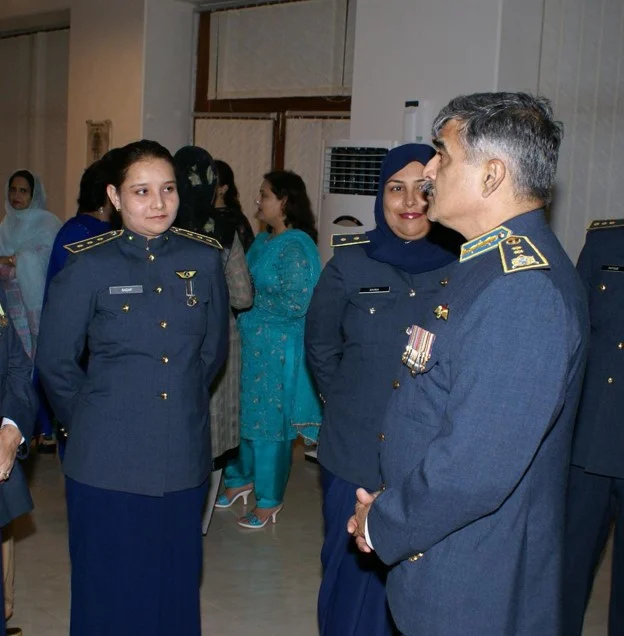
IDEAS 2014, the last edition she worked on, shows what that meant in practice. Over four days, she kept delegation schedules and contact details accurate, connected foreign visitors with the right Air Force representatives and made sure that arranged meetings took place as planned. All of it happened under strict security requirements, at an event attended by senior officials from dozens of countries.
Much of this work may appear, at first glance, to involve protocol and administrative coordination. At its core, however, it is a complex information management process. The same information must often serve multiple stakeholders simultaneously, including exhibition organizers, security personnel, protocol teams, and the Air Force’s own representatives. Each group requires access to specific information relevant to its responsibilities, without necessarily needing access to the entire body of information.
Maintaining a consistent and up to date information record, controlling access according to operational requirements, ensuring accuracy, and promptly updating records whenever schedules, personnel, or security arrangements change are fundamental information management challenges. These are essentially the same principles that underpin database design and information systems, regardless of the tools used to implement them.
For an officer with formal academic training in computer science and practical experience in a defence environment, the connection between these administrative responsibilities and structured information management was particularly significant. Her experience at IDEAS therefore provided valuable exposure to the practical importance of accurate data management, information coordination, controlled access, and reliable communication in a complex, security sensitive defence environment.
What the Exhibition Floor Shows
The exhibition has changed in content as well as in size. Surveillance, cybersecurity and intelligence systems already had a visible place beside air, land and naval equipment in 2014. In 2018, a noticeable share of the exhibits dealt with intelligence, surveillance, information and data sharing.

Squadron Leader Sadaf’s more than 18 years of professional experience in the Pakistan Air Force, provided her with a multidisciplinary understanding of technology, defence operations, and strategic coordination. Her appointment as Marketing and Conducting Officer at the International Defence Exhibition and Seminar (IDEAS) further broadened her exposure to advanced defence technologies, international defence manufacturers, military delegations, and emerging technological innovations.Working on such a significant international defence platform allowed her to observe the evolving relationship between technology, national security, and modern defence capabilities. Her technical education, military experience, and extensive exposure to the international defence environment collectively provide a foundation for her future ambitions.
Building upon this experience, Sadaf intends to move beyond observing technological advancements and contribute to their practical implementation. Her future objective is to support the development and application of AI-enabled defence and intelligence technologies, particularly in cybersecurity, threat detection, surveillance analysis, operational intelligence, and strategic decision-making.
Her ambition is to translate her accumulated technical knowledge and defence sector experience into practical technological solutions that can strengthen defence capabilities and contribute to national security.