 Do Son
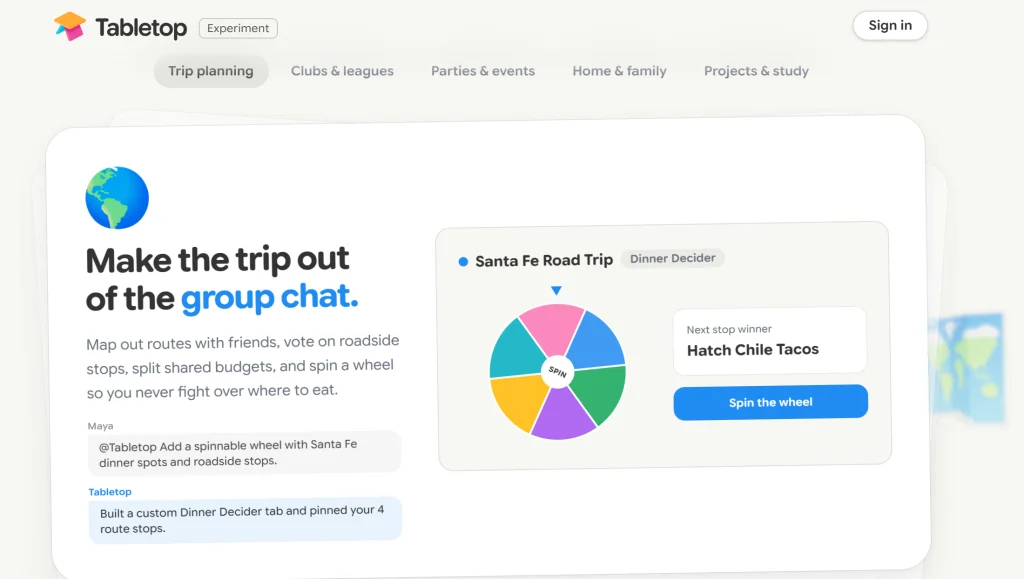
Coordinating group trips, dinner outings, or shared savings goals often traps friends in a frustrating dilemma. Messy chat threads bury key decisions beneath endless stickers, while corporate spreadsheets feel like weekend overtime. To solve everyday coordination headaches, Google Labs launched an experimental artificial intelligence workspace named Tabletop. Specifically, the new Google Labs Tabletop platform transforms casual ideas into custom multiplayer utilities through natural language prompts. Despite evoking tabletop board games, this flexible hub empowers households and friends to organize effortlessly.
Combining Vibe Coding With Visual Project Boards
According to Google Labs design and engineering lead Roman Nurik, Tabletop blends visual clarity with playful simplicity. Visually, the workspace borrows structured board layouts from workplace platforms like Asana and Monday.com. However, designers stripped away rigid enterprise jargon and complex database configurations. Users simply drop scattered restaurant links, reference files, and rough ideas onto the shared canvas. Next, they tag @tabletop and type conversational instructions to generate bespoke interactive widgets instantly. Visitors can explore the experimental waitlist directly on the official Google Labs Tabletop portal.
Unlike legacy spreadsheets requiring manual formulas, Tabletop embeds generative software creation directly into the workspace. Users can either describe custom tools in plain language or select prebuilt templates. Currently, supported interactive modules span custom trip itineraries, dinner polls, expense splitters, and shared savings trackers. Furthermore, families can build household chore charts, event planning boards, and game-night tournament brackets. Consequently, one dynamic space replaces half a dozen disconnected mobile applications.
Frictionless Real-Time Collaboration Through Single Links
Once a custom workspace takes shape, sharing it with companions requires zero technical onboarding. Organizers simply copy the invitation link and paste it into any existing messaging group. Immediately, participants open the link and interact simultaneously, much like co-editing a Google Doc. Friends can check off itinerary milestones, cast dinner votes, or log shared expenses in real time. Therefore, groups eliminate tedious file attachments and manual tallying across fragmented chat histories.
Waitlist Restrictions and the Household Access Paradox
Currently, Google Labs restricts public beta access to United States residents aged eighteen and older. However, technology observers quickly noticed a curious contradiction in the official product demonstrations. Nurik showcased household chore charts and family event planners that clearly require participation from children and teenagers. Analysts suspect this strict age gate reflects standard early-stage safety and child-protection compliance measures. Ultimately, Google will likely introduce granular family permissions as the experimental platform matures.
Comparing Tabletop Against Mainstream Planning Tools
To clarify its market positioning, the table below contrasts Tabletop with traditional planning workflows. Specifically, it evaluates customization barriers, interactive modules, sharing friction, and current availability across four categories.
| Comparison Dimension | Google Labs: Tabletop (Nov 2026) | Modular Workspaces (Asana / Notion / Airtable) | Cloud Office Docs (Google Docs / Sheets) | Chat Groups + Single-Purpose Apps (Splitwise) |
|---|---|---|---|---|
| Core Positioning | Personal and social vibe-coded AI collaboration hub | Enterprise project management and structured databases | General-purpose text co-editing and spreadsheets | Real-time messaging paired with single-task utilities |
| Customization Method | Zero-barrier natural prompts via @tabletop or quick templates | Steep learning curve requiring Kanban views or schema setup | Manual column layout and complex spreadsheet formulas | Fixed features requiring separate apps for polls and bills |
| Interactive Modules | Dynamic mix of itineraries, dinner polls, splitters, and chore charts | Task cards, Gantt charts, calendars, and KPI trackers | Plain text lists, comments, and static tables | Restricted to each standalone app’s preset function |
| Sharing Friction | Single link enables instant real-time multiplayer interaction | Requires account signups and feels like corporate work | Mature link sharing but lacks mobile poll or splitter UI | Chat polls get buried; external apps require downloads |
| Current Availability | US waitlist beta for users aged 18 and older | Global commercial release with per-seat subscriptions | Free globally within standard Google accounts | Global access but causes severe data fragmentation |
Support Our Threat Intelligence
Find our tech and OS security coverage helpful? Support our work today and unlock a 100% ad-free reading experience!
 Buy Me a Coffee
