Skip to content
October 19, 2026
  • Bluesky
  • Facebook
  • Linkedin
  • Mastodon
  • RSS
  • Twitter
  • Youtube

Daily CyberSecurity

Zero-hour alerts. Unmatched analysis.

Primary Menu
  • Home
  • CVE Data
    • CVE Watchtower
    • Top Exploited CVEs
    • CVE Stats by Vendor
    • Q2 2026 Report
    • CVE Alerts
    • CVE Alert Settings
    • Pricing
  • Cyber Criminals
  • Data Leak
  • Free Tools
    • CVSS 3.1 Calculator
    • Certificate Viewer
    • DNS Lookup
    • Encoder & Hash Generator
    • IP / Subnet Calculator
    • Whois Lookup
  • Linux
  • Malware
  • Vulnerability
  • Submit Press Release
  • Weekly Recap
Light/Dark Button
  • Home
  • News
  • Technology
  • KDE Announces how to install KDE Plasma Mobile on your Android smartphone
  • Technology

KDE Announces how to install KDE Plasma Mobile on your Android smartphone

Do Son February 14, 2018 1 minute read
KDE Plasma Mobile
Add Daily CyberSecurity as a preferred source on Google

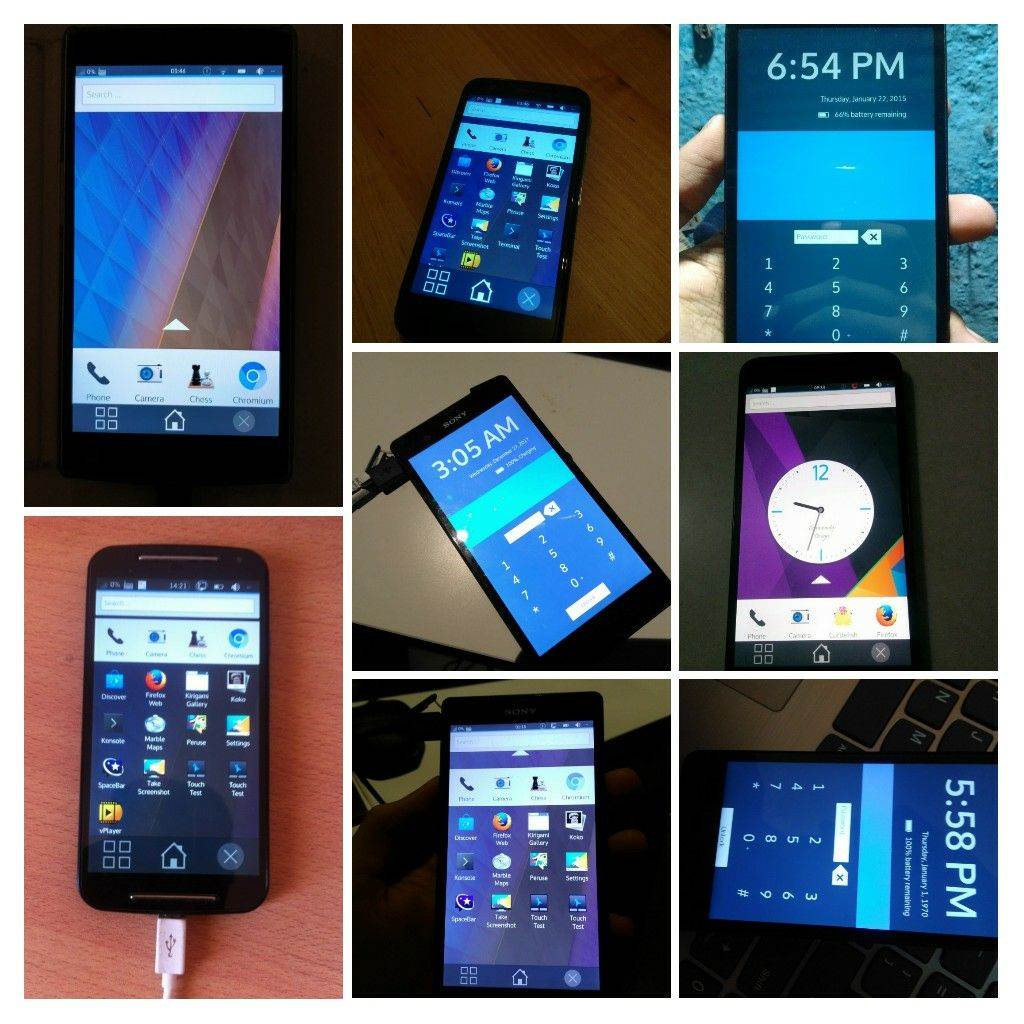
After releasing dedicated image files for PCs and virtual machines, the KDE team today released the latest tutorial on installing Plasma Mobile on the phone side. If you want to try something new on your Android phone, the KDE team offers community users two ways to install Plasma Mobile.

The first is to use postmarketOS, an Alpine Linux-based GNU/Linux distribution that has been configured and optimized for touch-based devices, using KDE’s Plasma Mobile as a desktop environment/user interface based on the Wayland display server.

The strength of postmarketOS is its ability to power Plasma Mobile for Android phones running the mainstream kernel, including the LG Nexus 5, the Sony Xperia Z2 tablet, and the Google Nexus 7 (2013) tablet. However, it is still in its early stages of development and is not recommended for end users.

The second method is recommended for most ordinary users, users install Halium (HAL for mobile Linux OSes), provides a small Android layer to allow Plasma Mobile to communicate with the Android kernel to call the device hardware.

The Plasma Mobile team recommends using the KDE Neon release of rootfs. Users can find images of Nexus 5 and 5X smartphones on the KDE project’s download server.

Related coverage

  • The U.S. Government Is Now an Intel Shareholder, Acquiring a Nearly 10% Stake
  • GitHub Infrastructure Outage: The True Cause
  • Google Home Adds MCP Support for AI Agent Control
  • The Great Bifurcation: Apple’s Ingenious “Data Offloading” Strategy Secures Major Legal Win Against Masimo
  • Copyright Pivot: Getty Images Partners with Perplexity AI to Tackle Content Attribution
  • Qualcomm Announces New Snapdragon 429/439/632 Processor
Track all actively exploited CVEs →

Support Our Threat Intelligence

Find our tech and OS security coverage helpful? Support our work today and unlock a 100% ad-free reading experience!

Buy Me a Coffee Logo Buy Me a Coffee
Select your plan
Free Pro Team

Hover over a plan to see its benefits.

Get Zero-Hour Vulnerability Alerts

Critical CVEs, CVSS scores, and PoC updates — straight to your inbox every week.

We respect your inbox. Unsubscribe anytime.

SHARE
Share on FacebookShare on XShare on LinkedInShare on TelegramShare on BlueskyShare on Mastodon
Written by
@DdoS · Security Researcher

Do Son

Do Son is the Founder and Editor of SecurityOnline.info. Working in cybersecurity since 2013, he reports on vulnerabilities, malware, and emerging threats, providing timely analysis to help organizations and individuals stay ahead of evolving risks.

Tags: KDE Plasma Mobile

Search

Translation

CVE ALERTS
📈

EPSS Spike Alerts
Catch risk spikes before they make headlines.

🎯

Custom EPSS/CVSS
Set score thresholds to effectively filter noise.

🛡️

Exploit Intel
Real-world exploit signals beyond the KEV catalog.

🐙

GitHub Issues
Auto-create alert tickets without duplication.

📬

Weekly Digest
Clean summaries, eliminating email spam.

🏷️

Watchlist Groups
Tag vulnerabilities by team (Infra/AppSec/SOC).

🔀

Smart Routing
Route chat channels based on severity levels.

🚨

RBP Tracker
Early warning detection and tracking system.

Subscribe – $7/mo or try free for 14 days →

🚨 Active Exploits in the Wild

  • CVE-2020-13125CVSS 7.2
    An issue was discovered in the "Ultimate Addons for Elementor" plugin before 1.24.2 for WordPress, as exploited in...
    Watchtower Verified📅 Updated: Oct 19, 2026
  • CVE-2020-13126CVSS 9.9
    An issue was discovered in the Elementor Pro plugin before 2.9.4 for WordPress, as exploited in the wild...
    Watchtower Verified📅 Updated: Oct 19, 2026
  • CVE-2019-20180CVSS 8.0
    The TablePress plugin for WordPress is vulnerable to CSV Injection in versions up to and including 1.14 via...
    Watchtower Verified📅 Updated: Oct 19, 2026
  • CVE-2026-111862CVSS 9.8
    Rank Math SEO PRO for WordPress is affected by a supply-chain compromise in a subset of version 3.0.123...
    Admin intel📅 Updated: Oct 17, 2026
  • CVE-2026-111357CVSS 7.0
    Ivanti Connect Secure 22.8R2.4 mishandles the manner in which the dsinvoked broker trusts DSCache configuration data, leading to...
    Watchtower Verified📅 Updated: Oct 17, 2026
  • CVE-2025-61624CVSS 6.0
    An Improper Limitation of a Pathname to a Restricted Directory (\'Path Traversal\') [CWE-22] vulnerability in Fortinet FortiOS 7.6.0...
    CISA KEV📅 Added to KEV: Oct 16, 2026
  • CVE-2026-102764CVSS 9.3
    The vulnerability exists within internal components of BeyondTrust’s Remote Support product. The components did not adequately validate the...
    CISA KEV📅 Added to KEV: Oct 16, 2026
  • CVE-2026-106931CVSS 8.5
    SiteGuard Server Edition contains an OS command injection vulnerability, which may allow an attacker to execute arbitrary OS...
    Admin intel📅 Updated: Oct 15, 2026
Powered by CVE Watchtower

Critical Vulnerabilities

  • CVE-2026-90110CVSS 9.4
    In the Linux kernel, the following vulnerability has been resolved: inetpeer: randomize RB-tree node comparison using SipHash The...
    📅 Updated: Oct 19, 2026
  • CVE-2026-90038CVSS 9.8
    In the Linux kernel, the following vulnerability has been resolved: NFSD: Prevent client use-after-free during export state revocation...
    📅 Updated: Oct 19, 2026
  • CVE-2026-90012CVSS 9.8
    In the Linux kernel, the following vulnerability has been resolved: spi: Fix DMA mapping ownership on partial map...
    📅 Updated: Oct 19, 2026
  • CVE-2026-90011CVSS 9.1
    In the Linux kernel, the following vulnerability has been resolved: scsi: target: iscsi: Reserve a terminator byte for...
    📅 Updated: Oct 19, 2026
  • CVE-2026-89990CVSS 9.8
    In the Linux kernel, the following vulnerability has been resolved: ceph: lock mutex in ceph_mds_check_access() MDS session OPEN...
    📅 Updated: Oct 19, 2026
  • CVE-2026-89970CVSS 9.8
    In the Linux kernel, the following vulnerability has been resolved: nvmet-auth: Synchronize timeout work during SQ teardown nvmet_auth_sq_free()...
    📅 Updated: Oct 19, 2026
  • CVE-2026-89969CVSS 9.8
    In the Linux kernel, the following vulnerability has been resolved: nvmet-tcp: fix out-of-bounds write when receiving an over-long...
    📅 Updated: Oct 19, 2026
  • CVE-2026-89930CVSS 9.3
    In the Linux kernel, the following vulnerability has been resolved: KVM: nVMX: Service local TLB flushes on failed...
    📅 Updated: Oct 19, 2026
Powered by CVE Watchtower

Daily CyberSecurity

  • About SecurityOnline.info
  • Advertise with us
  • Announcement
  • Contact
  • Contributor Register
  • Login
  • Disclaimer
  • DCMA
  • Privacy Policy
  • About SecurityOnline.info
  • Advertise on SecurityOnline.info
  • Contact Us

When you purchase through links on our site, we may earn an affiliate commission. Here’s how it works

  • CVE Watchtower
  • CVE Statistics by Vendor 2026
  • Q3 2026 Report
  • Top Exploited CVEs
  • Bluesky
  • Facebook
  • Linkedin
  • Mastodon
  • RSS
  • Twitter
  • Youtube
© 2017 - 2026 Daily CyberSecurity. All Rights Reserved.