Workplace Safety Checks Before Choosing a Laser Cleaning Machine Manufacturer
 Do Son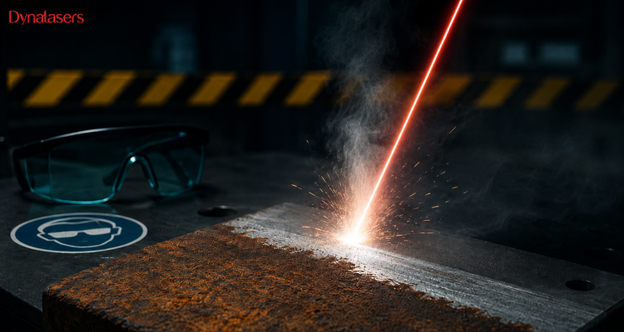
Laser cleaning is a fast and effective way to remove rust, paint, oxide, grease, and other contamination from metal surfaces. In factories, repair shops, and industrial maintenance yards, it can replace grinding, abrasive blasting, and chemical stripping. But a laser cleaner is not a simple power tool. It uses concentrated energy, so safe operation depends on the right machine, correct settings, the material being cleaned, and an operator who understands the risks.
Before you commit to any laser cleaning machine manufacturer, it’s worth checking whether the supplier can support safe, real‑world use—not just show a clean part in a demo. This guide is written for plant managers, EHS leads, and workshop supervisors.
Why Laser Cleaning Safety Matters in Industrial Work
Laser cleaning works by directing a focused beam onto a contaminated surface. The coating, rust, or paint absorbs the energy and vaporizes. That process is efficient, but it also creates real hazards that need planning.
The most obvious risk is eye protection. A direct or reflected laser beam can permanently damage retinas in a fraction of a second. Standard safety glasses are not enough. You need laser‑specific eyewear rated for the machine’s wavelength (usually 1064 nm for fiber lasers).
Reflected laser light is another concern. Shiny metals like stainless steel, aluminum, copper, brass, or even wet rust can bounce the beam sideways. In an open workshop, a reflection could hit someone walking past. Beam angle, matte shielding, warning signs, and restricted access are all part of the solution.
Then there’s fume extraction. A laser rust removal machine throws fine metal dust into the air. A laser paint removal machine can release smoke from old coatings, oils, or industrial primers. Without proper extraction, operators breathe in particles that can irritate lungs or worse.
Old paint deserves special caution. Coatings on older machinery, ships, bridges, or structural steel may contain lead, chromium, or other heavy metals. Laser cleaning vaporizes these into breathable dust. Test a sample before full cleaning—it’s not just smart, it’s often a legal requirement.
Other everyday risks include metal dust accumulation (which can be an explosion hazard in enclosed spaces), operator training (misjudging distance or angle can damage the part or cause burns), a controlled work area (no casual walkways through the beam path), fire risk (hot sparks or smoldering paint residue), and surface testing first (thin or heat‑sensitive materials may warp or discolor).
Good laser cleaning safety isn’t about slowing down the job. It’s about knowing what’s being removed, where the beam might go, and how to keep everyone safe.
Safety Questions to Ask Laser Cleaning Machine Manufacturers
Not every laser cleaning machine manufacturer thinks about safety the same way. Some focus only on watts and speed. Others—especially those with real field experience—will help you plan a safe workflow. Use the table below as a checklist when talking to suppliers.
| Question to Ask | Why It Matters |
| What protective eyewear is required? | Must be rated for 1064 nm with the right optical density (OD7+). A responsible fiber laser cleaning machine supplier will give you a specific rating, not a vague answer. |
| Does the supplier provide operation training? | Training should cover beam hazards, standoff distance, start‑up checks, and emergency shutdown. A PDF manual isn’t enough. |
| Is fume extraction recommended? | The honest answer is “yes, always.” Some suppliers sell compatible extractors; others will give you specs to match your existing system. |
| How should reflective materials be handled? | Look for practical answers: use pulsed instead of continuous? Change the beam angle? Cover nearby shiny surfaces with matte tape? |
| What surfaces require testing first? | Painted alloys, anodized aluminum, thin sheet metal, and heat‑sensitive composites. A good manufacturer will warn you to test for thermal damage. |
| What emergency procedures are needed? | Ask about key switches, remote stops, and what to do if the beam stays on. A safety‑first supplier will have clear procedures. |
Don’t accept “it’s safe” without details. You’re not buying a phone—you’re buying a tool that can cause eye damage or start a fire. A good laser cleaning machine manufacturer, llike Dynalasers, will be transparent about risks and help you mitigate them.
Why Dynalasers Supports Safer Laser Cleaning Workflows
We’ve worked with enough workshops to know that safety isn’t an add‑on. It starts with selecting the right machine for the job. A 1500W continuous laser on a thin mold surface is risky. A low‑power pulsed laser on heavy structural rust is inefficient. Dynalasers laser cleaning equipment helps you match power, pulse or continuous architecture, and beam delivery to your actual materials, parts, and work environment. Correct selection is the first step in a safe cleaning process.
We also provide:
- Parameter guidance – Power, frequency, scan speed, and number of passes. Wrong settings can cause overheating or dangerous reflections.
- Operator training support – Remote or on‑site sessions covering PPE, beam control, and emergency responses.
- Remote assistance – If something looks off in the cleaning result or a safety concern appears, our technicians can help diagnose.
- Spare parts support – Lenses and protection windows are stocked so safety features stay functional.
- 2‑year warranty – Confidence that the laser source, optics, and interlocks are built to last.
Two examples from our lineup show how different cleaning tasks require different safety considerations: the M75 continuous cleaner for heavy rust and paint, and the P300 pulsed cleaner for precision work.
Dynalasers Laser Cleaning Equipment for Different Safety Needs
Different cleaning jobs need different levels of speed and control. Below are two options for heavy‑duty and precision cleaning.
M75 Continuous Laser Cleaner for Heavy Rust and Paint
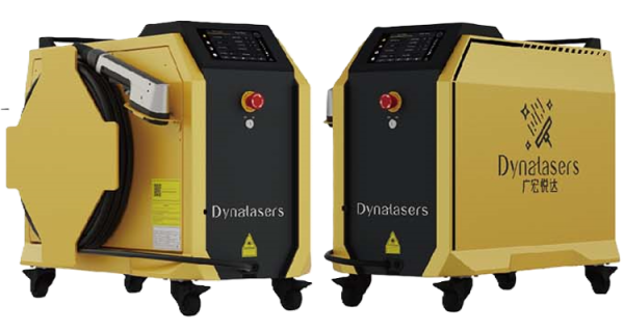
The Dynalasers M75 is a continuous laser cleaner built for heavy rust, thick paint, and stubborn corrosion on large metal surfaces. It’s suitable for steel structures, heavy equipment, industrial repair, shipyard maintenance, and large‑area cleaning. With suitable lenses, cleaning width can reach up to 300 mm, covering ground quickly.
Best for:
- Heavy rust removal
- Paint stripping from large metal surfaces
- Steel structures and industrial repair
- Maintenance cleaning of thick coatings
From a safety standpoint, continuous wave lasers deliver constant energy. That means reflected beams are equally intense. You’ll need a well‑buffered or enclosed work zone, laser curtains, and strict access control. The M75 also produces more fume and debris than pulsed units, so high‑flow extraction is mandatory. Always test on a small area first—some thick coatings can overheat and smolder before they strip clean.
P300 Pulse Laser Cleaner for Controlled Precision Cleaning
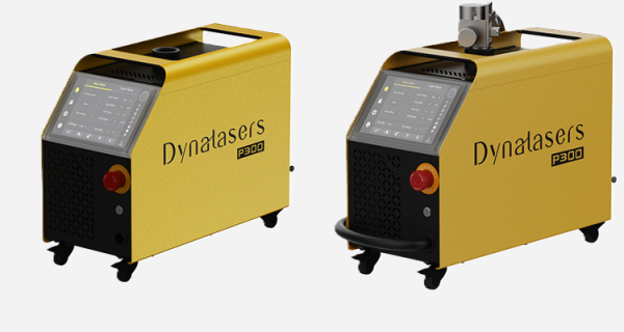
The Dynalasers P300 is a pulsed laser cleaner designed for molds, bearings, precision parts, and high‑value components. If you’re cleaning delicate surfaces like anodized aluminum, chrome‑plated dies, or sensitive electronics housings, the pulsed energy gives you controlled oxide and residue removal with lower heat input.
Best for:
- Mold and bearing cleaning
- Precision parts and high‑value components
- Delicate metal surfaces
- Controlled oxide or residue removal
Pulsed lasers have a different risk profile. The peak power is high but the duration is short, which reduces some reflection hazards compared to continuous systems. That doesn’t mean you skip eye protection or barriers—you can’t. But you can work in smaller, more enclosed setups. The P300 still needs fume extraction (precision parts often have oils or coatings that release VOCs), and you should always test parameters on a scrap part first. A few watts too many can melt thin edges.
Whichever model fits your shop, remember: the safest laser cleaner is the one you’ve planned for, trained on, and respected every time you pull the trigger.
Frequently Asked Questions
Is laser cleaning safe for industrial use?
Yes, when proper measures are in place: laser‑rated eyewear, fume extraction, controlled access zones, and trained operators. Without these, it’s dangerous. With them, it’s one of the most efficient and safe industrial cleaning methods.
What PPE is needed for laser cleaning?
Minimum requirements: laser safety glasses rated for 1064 nm (OD7+), flame‑resistant gloves, a long‑sleeve coverall, and often a respirator or powered air‑purifying respirator (PAPR) if fume extraction is incomplete. For high‑power continuous lasers, add a laser safety curtain or full enclosure.
Should old paint be tested before laser cleaning?
Absolutely. Paint from older machinery, ships, or structures may contain lead, chromium, or cadmium. Laser cleaning vaporizes these into dust. Test a sample with an XRF analyzer or send it to a lab. If hazardous metals are present, upgrade extraction to HEPA + activated carbon and use stricter PPE.
Which Dynalasers cleaner is safer for delicate surfaces?
The P300 pulsed laser cleaner is generally safer for delicate surfaces like molds, bearings, and precision parts. Pulsed energy allows finer control and lower heat input, reducing the risk of warping or melting. But “safer” still requires testing on a representative sample and adjusting parameters before full cleaning.
Conclusion
Choosing a laser cleaning machine manufacturer shouldn’t depend only on power or cleaning speed. Buyers should also check eyewear guidance, reflected light control, fume extraction, old coating risks, training, and testing support. Dynalasers offers the M75 continuous laser cleaner for heavy rust and paint removal, and the P300 pulse laser cleaner for controlled precision cleaning. With the right machine and a clear safety workflow, laser cleaning can become a practical, safer method for industrial surface preparation.