The Rise of the CCTV Tower: How Elevated Surveillance Is Reshaping Modern Security
 Do Son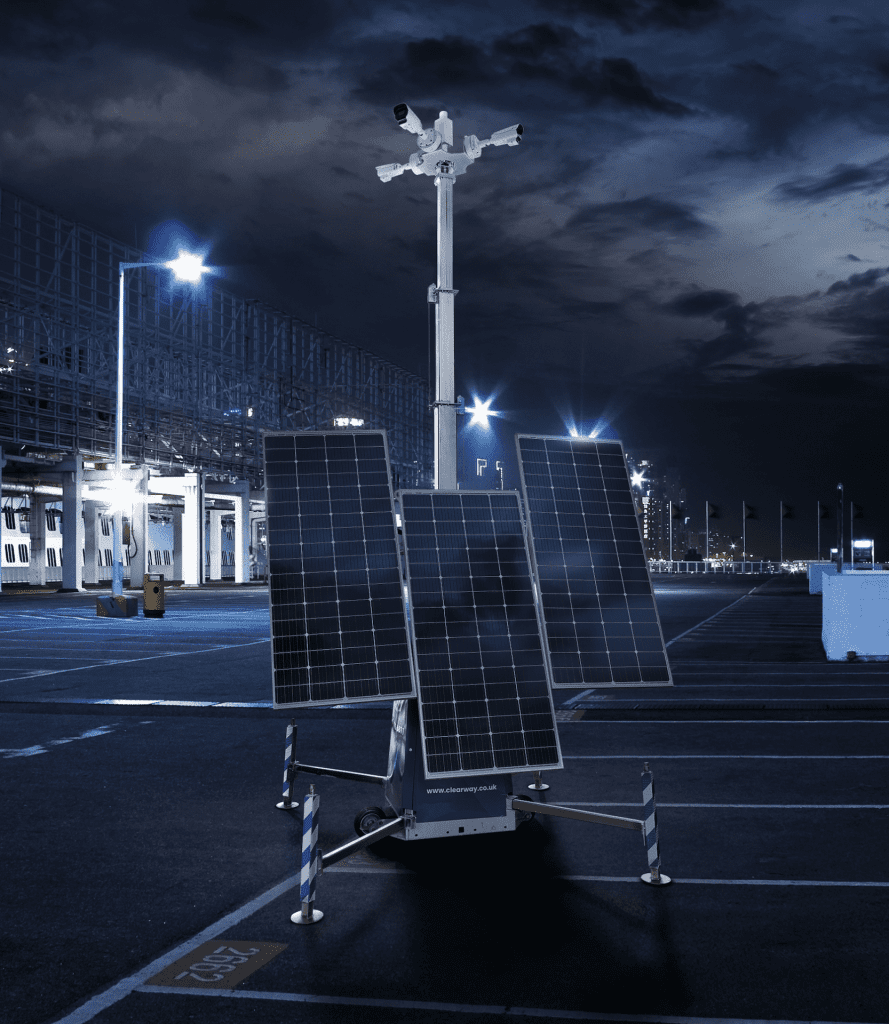
Walk through any city center, industrial park, or large residential complex today, and you’ll likely notice tall, slender structures rising above rooftops and perimeter walls, each one crowned with a cluster of cameras quietly scanning the surroundings. These are CCTV towers, and over the past decade they have become one of the most practical and widely adopted solutions for large-area surveillance. Unlike a single wall-mounted camera that covers a narrow field of view, a CCTV tower elevates monitoring equipment high enough to capture wide, unobstructed sightlines across parking lots, construction sites, warehouses, farmland, and public spaces. This article explores what cctv tower are, why they have become so popular, the technology that powers them, and what to consider before investing in one.
What Exactly Is a CCTV Tower?
At its core, a CCTV tower is a freestanding or mast-mounted structure designed specifically to hold surveillance cameras at an elevated position, typically anywhere from 20 to 100 feet above ground level. The height advantage is the entire point: cameras mounted higher up can see farther, avoid obstructions like vehicles or vegetation, and are much harder for intruders to tamper with or vandalize. These towers can be permanent steel or concrete installations, or they can be mobile, trailer-mounted units that can be towed to a temporary job site, an outdoor event, or an area experiencing a spike in criminal activity.
Modern CCTV towers are rarely just a pole with a camera bolted to the top. Most commercial-grade towers integrate several components into a single self-contained unit, including pan-tilt-zoom cameras, infrared or thermal imaging sensors for nighttime visibility, solar panels and battery banks for off-grid power, cellular modems for remote connectivity, and even two-way audio speakers that allow a remote operator to issue live warnings to anyone loitering in a restricted zone.
Why Organizations Are Choosing Elevated Surveillance
The growing demand for CCTV towers isn’t just about aesthetics or having an imposing physical presence, although that deterrent effect certainly plays a role. There are several practical drivers behind their popularity.
First, coverage efficiency is a major factor. A single tower placed in the right location can often replace what would otherwise require five or six separate ground-level cameras. This reduces both equipment costs and the complexity of cabling and maintenance, since fewer devices mean fewer points of failure.
Second, elevated positioning dramatically reduces blind spots. Ground-level cameras are frequently obstructed by parked vehicles, stacked materials, fencing, or simply the curvature of a large open lot. A tower-mounted camera looks down and across a site with far fewer obstacles in its line of sight.
Third, deterrence matters enormously in security planning. Visible, elevated cameras send an unmistakable signal to would-be trespassers, thieves, or vandals that the area is being actively monitored. Studies on situational crime prevention consistently show that visible deterrents reduce opportunistic crime simply because offenders prefer low-risk targets.
Fourth, mobility has transformed how organizations think about temporary security needs. Construction companies, event organizers, and disaster recovery teams increasingly rely on trailer-mounted CCTV towers that can be deployed within hours rather than waiting weeks for a permanent installation to be engineered and approved.
Common Applications Across Industries
CCTV towers have found a home in an unusually broad range of settings. Construction sites use them to protect expensive machinery, building materials, and tools from theft, which remains one of the most persistent sources of financial loss in the construction industry. Agricultural operations use towers to monitor large fields and equipment storage yards where traditional wired surveillance would be prohibitively expensive to install.
Retail and logistics companies deploy towers around distribution centers and parking areas to track vehicle movement and prevent cargo theft. Municipalities and public safety agencies use fixed towers in parks, transit stations, and high-traffic public squares to support law enforcement and improve community safety perception. Even private estates and gated communities have begun adopting smaller-scale residential towers to supplement traditional perimeter fencing.
Key Technologies Behind Modern Towers
The surveillance capability of a CCTV tower depends heavily on the cameras and supporting systems it carries. Pan-tilt-zoom cameras allow remote operators to actively track movement across a wide area rather than relying on a fixed angle. Thermal and infrared cameras extend visibility into total darkness, which is particularly valuable for rural or industrial sites without ambient lighting.
Analytics software has also become a defining feature of newer towers. Rather than simply recording footage for someone to review later, many systems now include video analytics capable of detecting motion patterns, distinguishing between humans, vehicles, and animals, and automatically triggering alerts when something unusual occurs. This shifts surveillance from a purely reactive tool, useful mainly after an incident, into a proactive one capable of preventing incidents in real time.
Connectivity is another crucial piece. Cellular-enabled towers can transmit live footage to a central monitoring station or directly to a smartphone app, meaning a security manager overseeing multiple sites doesn’t need to be physically present at any of them. Solar power has also made remote deployment far more practical, eliminating the need for trenching electrical lines to isolated locations.
Things to Consider Before Installing One
Before committing to a CCTV tower, it helps to think through a few practical questions. Site assessment matters greatly: the optimal height and camera angle depend on the specific terrain, the size of the area to be covered, and any structures or vegetation that might create blind spots over time as they grow or change. Power availability should also be evaluated, since solar-powered units work well in sunny climates but may need battery banks large enough to handle extended cloudy periods.
Local regulations are worth checking carefully too. Many municipalities have rules governing the height of freestanding structures, as well as privacy regulations that limit what areas can legally be recorded, particularly where the camera’s field of view might extend onto a neighboring property. Finally, ongoing maintenance and data storage costs deserve attention; high-resolution footage from multiple cameras running continuously can generate enormous amounts of data, so a clear plan for storage, retention periods, and remote monitoring responsibilities should be established before installation rather than after.
Final Thoughts
CCTV towers represent a practical evolution in how organizations think about large-area surveillance. By combining height, mobility, and increasingly intelligent camera technology, they offer a level of coverage and deterrence that traditional ground-mounted systems simply cannot match in open or expansive environments. Whether protecting a construction site, securing agricultural land, or supporting public safety in a busy city square, the elevated vantage point of a CCTV tower continues to prove its worth as a cornerstone of modern security planning.