 Do Son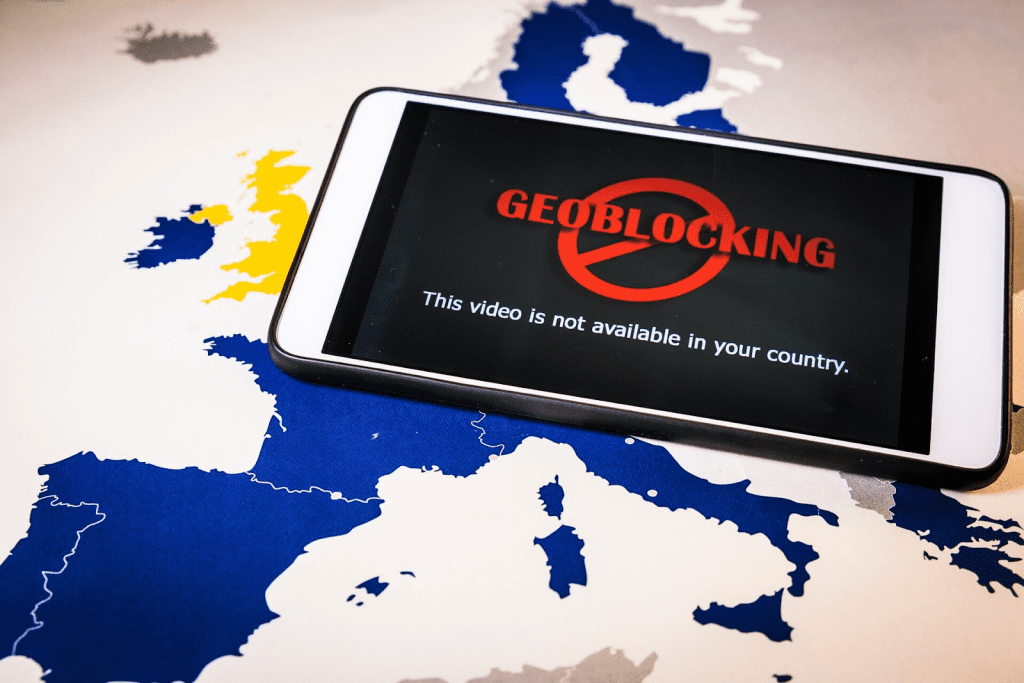

If you’re a frequent internet surfer and browse your way through several sites in a day, then you might have come across a geo-blocking error at least once.
For those who don’t know what geo-blocking is, don’t worry and read on, as we will give you a brief overview of geo-blocking and how you can bypass these restrictions using a VPN.
Geo-Blocking: What you need to know
Geo-blocking is the technology that restricts users’ access to content based on the user’s physical location.
For instance, when you click on a certain YouTube video, you may get a pop-up message that says: ‘This video is not available in your country, or ‘This site is not accessible in your location. This may sound frustrating to some users, but this is exactly what geo blocking is.
This practice is usually used as a tactic by online streaming content companies and other media broadcasting companies to prevent their content from being watched unlicensed.
Companies like Netflix, Amazon Prime, and others use geo-blocking for certain countries to regulate their content. So, if you are a Disney Plus fan and wish to watch it from Thailand, this article is your quick guide to stream Disney Plus in Thailand, or any other streaming site, in any part of the world using a quick hack.
How does geo-blocking works?
The Geo-blocking technique works by monitoring and identifying your IP address. It is identified by using geolocation and tracking technology. If you are unaware, your IP address works like your home address.
The technology identifies the user’s location and if your IP address is found to be associated with a country or a location where the content is prohibited; the geo-blocking is enabled and you are prevented from accessing the platform, eventually.
Unlike your home address, the IP address of your device fluctuates depending upon your location and ISP. When your ISP assigns you an IP address, it contains information about your geographical location.
Why is geo-blocking used?
Other than that geo-blocking is used to protect unlicensed access to online content, it is also used to block the websites that promote illegal activities in some countries. For instance, online gambling. Some internet service providers (ISPs) use geo-blocking to throttle the internet in order to mitigate and manage the traffic congestion on their bandwidth networks.
Geo-blocking can be used for benign reasons as well as at the State level to prevent bigger-scale scams.
In some countries, the government uses this tactic to prevent its citizens from accessing certain websites online. Some companies like Amazon use geo-blocking in order to force people to use their local version, which may have higher charges.
Geo-blocking is definitely a legal practice, which makes it even more frustrating for people who often fall prey to it. Based on your physical location and IP address, you might be not able to access several websites online because of copyright agreements and restrictions.
Most of the time, these copyrights are used by the media and broadcasting companies. There are unlimited shows on Hulu, Netflix and other streaming platforms that you may watch in the UK, Canada or USA, but not anywhere else in the world.
Similarly, there are chances that you may access a show in Australia but may be prevented from accessing it if you’re in Thailand.
Is it legal to bypass geo-blocking?
In some regions of the world, it is also legal to bypass geo-blocking under certain circumstances. For example, if you’re traveling in a country where you can access your online TV, you can change your IP address back to your home country to keep enjoying your content.
If you’re concerned about cookies, your online privacy and web tracking, evading geo-blocking by disguising your IP address also protects your privacy by concealing your location.
How to bypass geo-blocking?
There are several ways to bypass geo-blocking and enjoy accessing your desired websites or streaming platforms. You can use either of the following available options to hide and change your IP address:
Get a Premium VPN
One of the easiest ways to bypass geo-restriction within a second is to use a reliable VPN provider. There are many VPN providers available, however, it is not recommended to go with free VPNs as they offer poor connectivity and slow speeds.
- A virtual private network (VPN) is an encrypted connection that masks up your original IP address to make sure your data stays private.
- VPNs are safe and secure and allow you to watch your favorite shows, get discounts, or simply browse privately.
- VPNs are also simple to set up, and there are many advantages to using one, particularly while traveling or using public Wi-Fi.
- VPNs can let you overcome geo-blocks and other content restrictions by routing your connection through a server in another country.
Wrapping Up
While there are obvious limitations to accessing online content, there are various alternatives that are already in use by users nowadays. Apart from VPNs and proxy servers, Tor Browser, clever DNS, and DNS changers are some more options to circumvent geo-blocking.
However, the most secure, fastest and easiest way to bypass geo-blocking remains the use of a premium VPN provider such as ExpressVPN.