 Do Son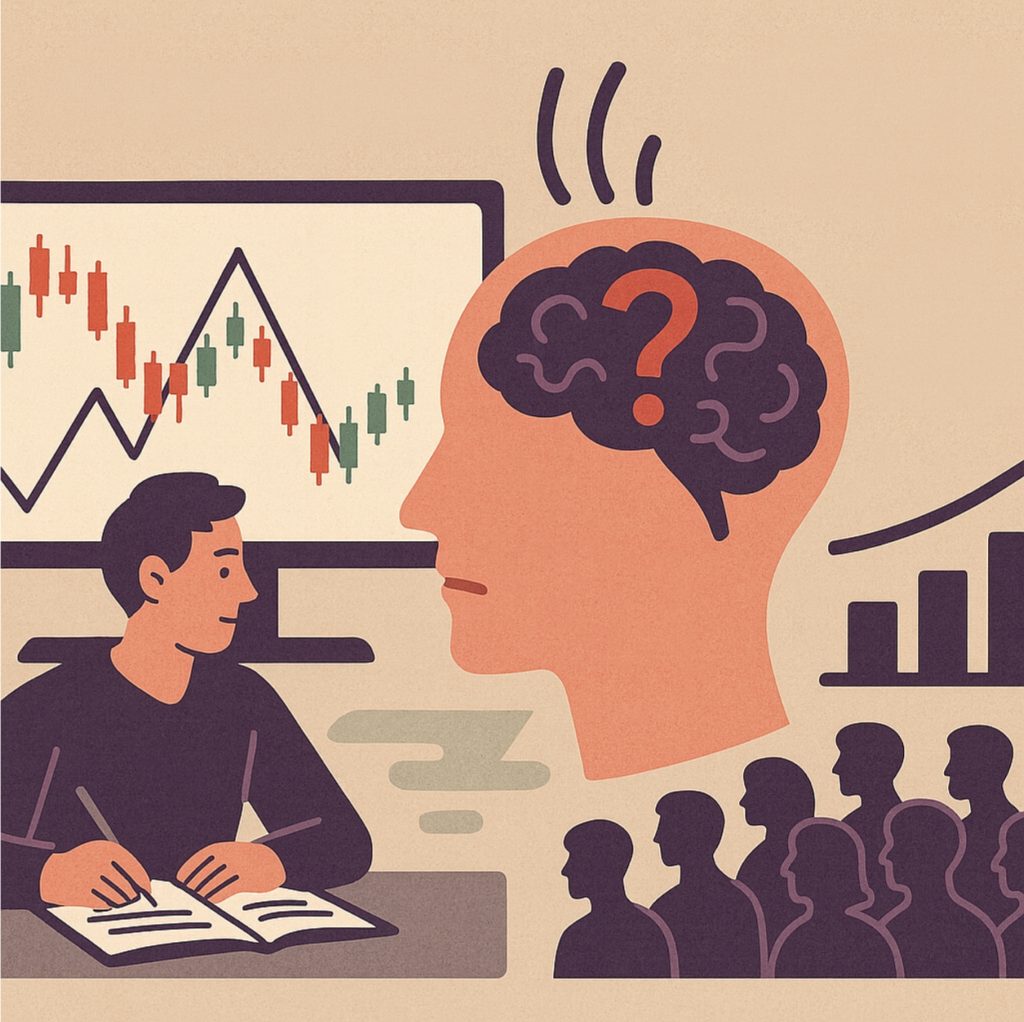
Have you ever watched the stock market crash and wondered why it feels like history repeating itself? Take the 2008 financial crisis. It echoed the Great Depression of 1929 with eerie similarity: a speculative bubble bursts, panic spreads, and economies tank. Investors, armed with lessons from the past, still fall into the same traps. Why? Human behavior is wired for patterns, those recurring responses to stimuli that shape everything from daily habits to massive market swings.
In trading, these patterns are more than abstract ideas. They appear on charts as formations like “head and shoulders” or “double bottoms,” signaling potential reversals or continuations. But what is technical analysis if not the study of these behavioral echoes? It’s a method that assumes prices move in trends driven by collective psychology, not just random noise. Understanding why patterns repeat can transform how we approach life and investments. It reveals the interplay of biology, psychology, and society that keeps us looping. In this article, we’ll explore these roots, drawing from my years as a trader spotting cycles in volatile markets. By the end, you’ll see how breaking free from these patterns can lead to smarter decisions.
Biological and Evolutionary Roots of Repeating Patterns
Our brains are ancient machines, sculpted by evolution for survival in a wild world. Patterns repeat because they once kept us alive. Think about the “fight or flight” response. In trading, it manifests as knee-jerk selling during a downturn, mirroring how our ancestors fled predators. This instinct, hardwired over millennia, overrides logic when markets plummet.
Evolution favored quick pattern recognition. Spotting a rustle in the bushes as danger meant survival. Today, that translates to seeing a rising stock chart and jumping in, chasing potential rewards. It’s no accident that bull markets often follow similar arcs: slow build-up, frenzy, then correction. Our biology pushes us toward repetition because change is risky.
Dive deeper into neurobiology. The brain’s reward system, fueled by dopamine, lights up when we anticipate gains. In my trading days, I’ve seen colleagues chase “hot” stocks repeatedly, hooked on that rush. It’s like a gambler’s high, reinforcing the cycle. Studies show dopamine surges during winning streaks, making us blind to risks until it’s too late.
Genetics play a role too. Some people are predisposed to risk-taking due to variations in genes like DRD4, linked to novelty-seeking. This explains why certain traders repeatedly overleverage, drawn to volatile assets. Habits form neural pathways, grooves that deepen with repetition. Breaking them requires conscious effort, but understanding this biological base is the first step. In essence, we’re not just repeating behaviors; we’re reliving evolutionary scripts adapted to modern arenas like the trading floor.
Psychological Factors Reinforcing Cycles
Psychology adds another layer to why patterns persist. Our minds are riddled with biases that distort reality, leading to predictable mistakes. Confirmation bias is a classic: we seek evidence that supports our views and ignore the rest. In trading, this means holding onto a losing position because we cherry-pick positive news, repeating past errors.
Loss aversion compounds this. Coined by Kahneman and Tversky, it shows we feel losses twice as intensely as gains. Traders often ride losers too long, hoping for a turnaround, only to watch patterns like descending triangles confirm the downtrend. It’s a cycle of denial and regret.
Emotions drive much of this. Fear and greed are the twin engines of markets. Greed fuels bubbles, as seen in the dot-com era, where euphoria led to overvaluation. Fear then triggers crashes. I’ve witnessed this firsthand during the 2020 COVID dip: initial panic selling, followed by a greedy rebound chase.
Conditioning, like Pavlov’s dogs, seals the deal. Past successes condition us to repeat strategies, even if markets evolve. A trader who profited from momentum plays might stick to them rigidly, missing shifts.
To illustrate, here’s a table of common cognitive biases in trading and their repetitive impacts:
| Bias | Description | Trading Example | Repetitive Outcome |
| Confirmation Bias | Ignoring contradictory information | Dismissing bearish signals on a favored stock | Repeated over-optimism leading to losses |
| Loss Aversion | Preferring to avoid losses over gains | Holding declining assets too long | Cycles of hope and eventual capitulation |
| Anchoring | Relying on initial information | Basing decisions on purchase price | Missing opportunities to cut losses early |
| Overconfidence | Overestimating one’s abilities | Taking excessive risks after wins | Boom-bust personal trading patterns |
Recognizing these helps traders journal their decisions, spotting personal loops before they spiral.
Social and Cultural Influences on Pattern Repetition
No behavior exists in isolation; society amplifies patterns. Herd mentality is prime: we follow the crowd for safety. In markets, this creates trends. Remember the 2021 GameStop saga? Social media buzz drove retail investors to pile in, inflating prices in a classic pump-and-dump echo of past manias.
Cultural norms embed these cycles. Western individualism might encourage bold bets, while collectivist societies favor conservative plays. Yet globally, economic booms and busts repeat, like the Tulip Mania of 1637 mirroring today’s NFT hype. Both stem from shared narratives of quick riches.
Media and technology turbocharge this. News cycles hype stories, creating self-fulfilling prophecies. A viral tweet from a influencer can spark buying frenzies, as with Elon Musk’s Dogecoin pumps. Algorithms on platforms like X feed us echo chambers, reinforcing biases.
Social proof, per Cialdini, makes us mimic others. If everyone buys tech stocks, we do too, perpetuating bubbles. In my experience, trading floors buzz with this energy; one optimistic voice can sway the room. Breaking free means questioning the herd, but it’s tough when belonging feels instinctive.
Cultural shifts can alter patterns, though. Post-2008 regulations curbed some excesses, yet core behaviors linger. Understanding social dynamics lets us anticipate crowd moves, turning patterns into opportunities rather than traps.
Conclusion
Patterns repeat because we’re biological beings shaped by evolution, psychological quirks, and social forces. In trading, this explains why charts recycle formations and markets cycle through euphoria and despair. By grasping these roots, we gain an edge: spotting a forming pattern early or recognizing our own biases.
Practically, start with self-awareness. Keep a trading journal to track recurring mistakes. Use tools like moving averages to confirm patterns objectively. Diversify to counter herd pulls, and set strict rules to override emotions.
Ultimately, we’re human, prone to loops, but awareness empowers change. Next time you see a familiar chart setup, pause and ask: is this history repeating, or my chance to rewrite it? Master this, and you’ll trade not just markets, but human nature itself.