 Do Son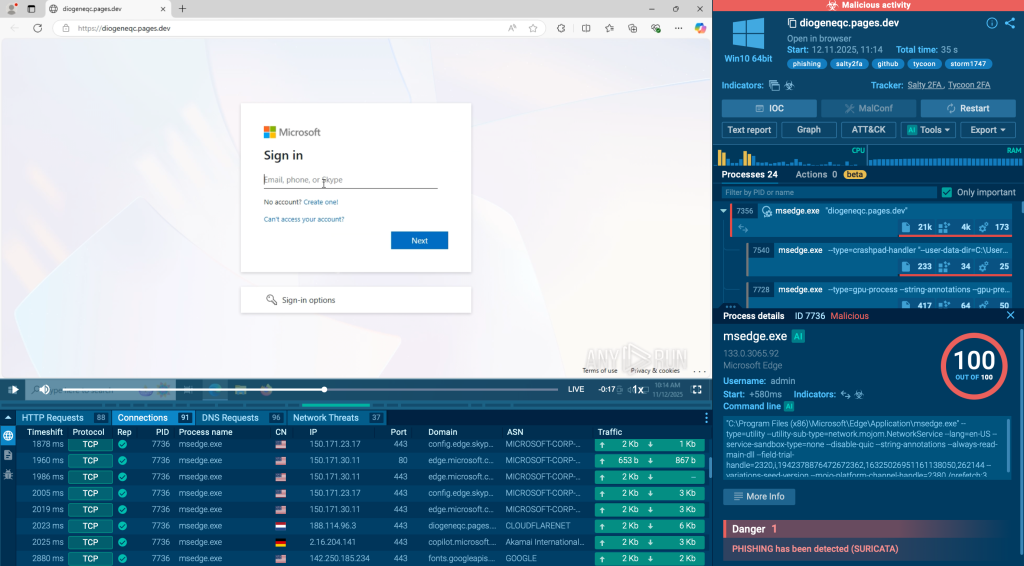
Hybrid phishkit attack exposed, leading to Microsoft fake login page inside ANY.RUN sandbox
Your IR plan probably isn’t failing because it’s “bad.” It fails because, when something suspicious shows up, your team is stuck piecing together clues. And that takes time you don’t have.
A sandbox helps by turning “we think” into “we know.” It shows you real behavior fast, what the file drops, where it connects, and what it tries to do next, without risking a production system.
Here’s what adding a sandbox changes in your response.
Where Most IR Plans Break: The First Hour
Most plans break in the same place: the first 30–60 minutes. That’s when your team needs a confident verdict, but the evidence is scattered, slow to validate, or only becomes clear after something runs on a real machine.
Without a sandbox, response often turns into a familiar loop:
- Triage drags because artifacts need manual validation
- Escalations rise because there isn’t enough proof early on
- Containment decisions get riskier when context is incomplete
- Business exposure grows while everyone is still answering, “What is this?”
A sandbox fills that gap with runtime evidence early, so your team can move from uncertainty to clear action faster and keep the situation smaller.
Sandbox-Driven Incident Response: What Modern Teams Add to the Plan
Sandboxes aren’t “extra tooling” anymore. They’re how teams replace guesswork with proof fast.
With an interactive sandbox like ANY.RUN, responders can detonate suspicious files and URLs safely and get runtime proof fast. That’s why more security leaders are making sandbox runs a standard step in their 2026 IR plan: not a backup, but the fastest path to confident decisions.
Check the hybrid phishkit attack exposed in 35 seconds

In the sandbox session above, a complex hybrid phishkit attack was exposed with its full chain and content in just 35 seconds. That’s the kind of turnaround that shortens the first hour of response, and keeps incidents from growing while teams “figure it out.”
|
Bring sandbox-first triage into your process to limit downtime, cut investigation hours, and reduce escalation-driven overhead. |
Faster Triage: 94% of Users Report Quicker Verdicts
In the first hour, speed isn’t about “moving fast.” It’s about removing uncertainty early, so the team can decide what to block, what to escalate, and what to ignore.
That’s where a sandbox changes the workflow. Instead of spending time validating artifacts by hand, responders can detonate a suspicious file or URL and immediately see what it does at runtime: process activity, network calls, dropped files, and follow-on behavior.
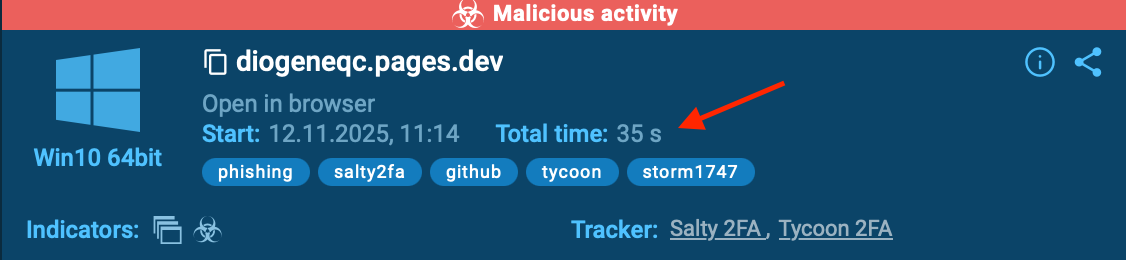
In ANY.RUN’s user-reported data, 94% say triage becomes faster, and 90% of malicious activity is exposed within the first 60 seconds of detonation.
What this improves in incident response:
- Faster decisions at the entry point (block, escalate, or close, without waiting)
- Earlier blocking of attacker infrastructure, before more clicks happen
- Quicker hunting using confirmed behavior + extracted IOCs
- Less rework because the report already includes the details teams usually collect manually (IOCs, chain, artifacts)
Fewer Escalations: Up to 30% Fewer Tier-1 → Tier-2 Handoffs
A lot of escalations happen for one reason: the first line doesn’t have enough proof to close the case. So, alerts get pushed upward “just to be safe,” and Tier-2 gets dragged into work that should’ve ended earlier.
Sandbox-driven context changes that. When Tier-1 can see what actually executed, what it contacted, what it dropped, and what it attempted next, they can make the call with evidence, not gut feel. ANY.RUN points to up to a 30% reduction in Tier-1 → Tier-2 escalations when teams use sandbox-driven workflows.
What this improves in incident response:
- Tier-2 gets time back for high-impact cases (not routine validation)
- Queues shrink during spikes, so real incidents move faster
- Handoffs get cleaner, with clear artifacts and a defensible verdict attached
- Onboarding becomes less painful, because newer team members can work with concrete runtime evidence
Executive-Ready Reporting with IOCs and Full Context
During an incident, the hardest part of reporting isn’t writing an update; it’s gathering enough verified detail to make that update accurate. If the evidence lives across five tools and ten tabs, every status report becomes a mini investigation.
That’s where ANY.RUN’s auto-generated analysis report helps. After detonation, it compiles the full runtime picture in one place: a clear behavior summary, execution chain, contacted infrastructure, dropped artifacts, and extracted IOCs you can immediately use for blocking and hunting.
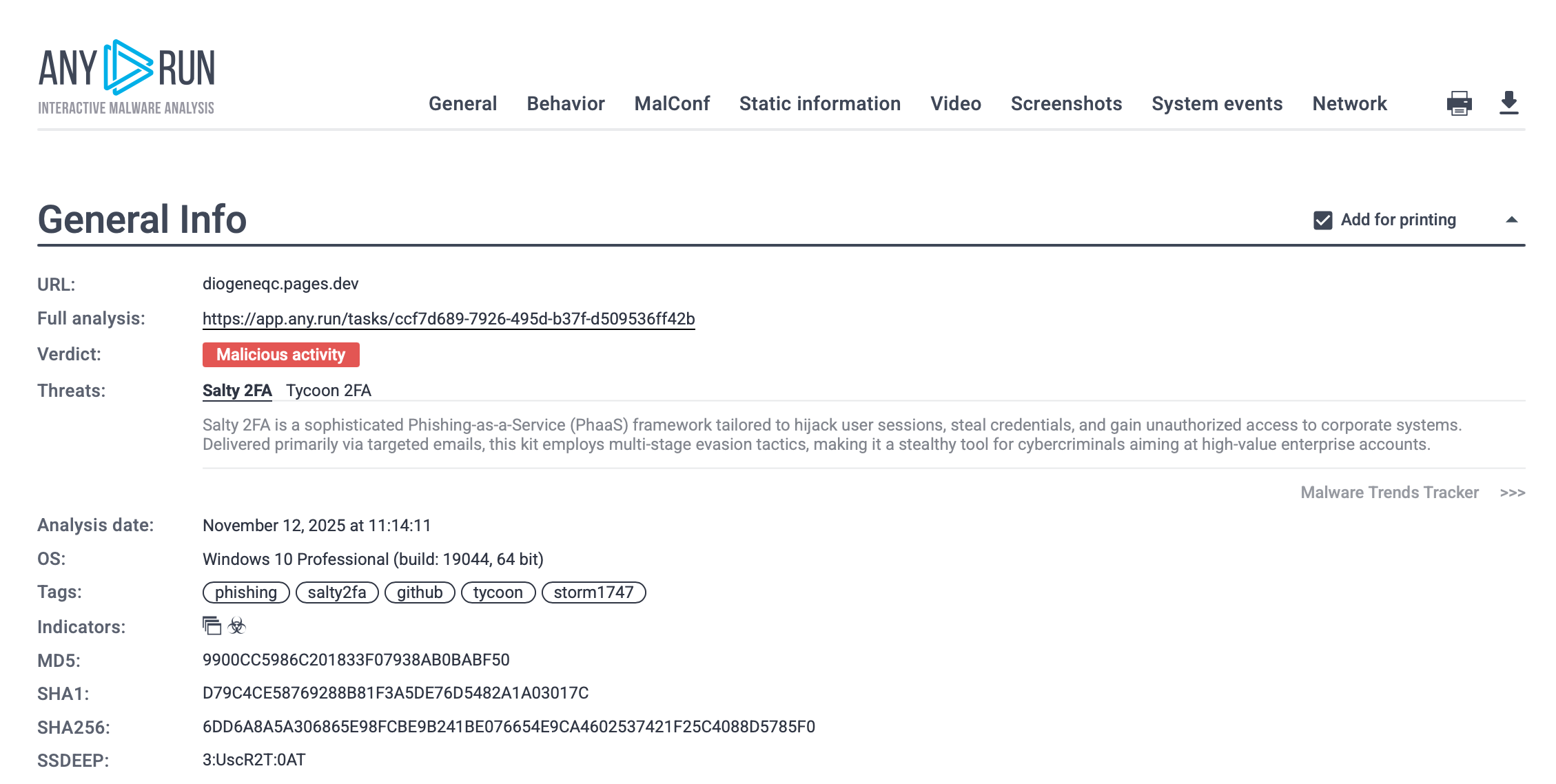
For incident response, that means:
- faster, more confident internal updates
- quicker alignment between security and IT on what to block and where to hunt
- a clearer transition from “early signal” to “verified context and a concrete response”
Strengthen Your 2026 IR Plan with Sandbox-First Triage
You’ve seen what sandbox-first response changes in the first hour: faster verdicts, fewer escalations, and clearer context when it matters most. It gives teams runtime evidence early, so decisions are based on proof, not assumptions.
With ANY.RUN’s sandbox, teams get the kind of clarity that speeds decisions and cuts wasted effort: confirmed behavior, the full execution flow, and actionable indicators—so response stays fast, focused, and easy to coordinate across people and shifts.
Add sandbox-first triage to your workflow to reduce investigation time, lower operational load, and limit incident impact, protecting uptime, productivity, and SLA performance.