 Do Son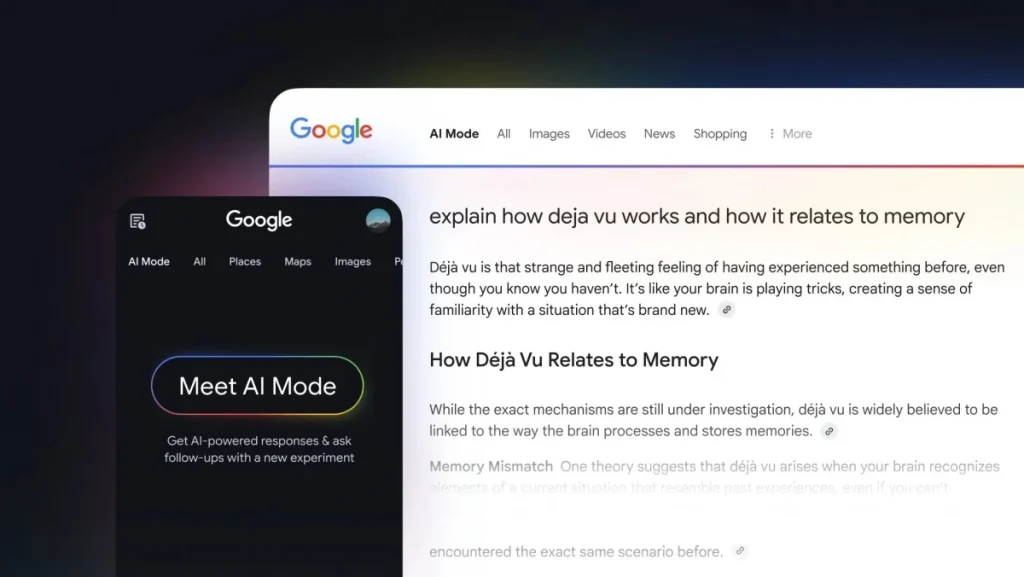
Following its initial rollout in the United States, India, and the United Kingdom, Google has announced that its “AI Mode” search feature will officially expand to more than 180 countries and regions. The service will first be available in English, with support for additional languages to be introduced progressively.
Beyond geographic expansion, Google has also enhanced the agentic capabilities of AI Mode, introducing a new restaurant reservation service. Users can now issue natural language commands such as, “Find me a table for four next Friday at 6 p.m., in the city center, serving Italian cuisine,” and AI Mode will compile results by integrating web data with partner platform information. It will then present a curated list of options, complete with available reservation times and booking links, enabling users to finalize reservations seamlessly.
Google further revealed that AI Mode will soon incorporate local service bookings and event ticketing, with partnerships already established with platforms such as Ticketmaster and StubHub. This will allow users to reserve concert tickets or arrange lifestyle services in much the same way they book a restaurant.
At the core of AI Mode lies the “Project Mariner” web-browsing AI agent, which works in tandem with Google’s Knowledge Graph and Google Maps. To ensure broader restaurant coverage, Google has also partnered with OpenTable, Resy, and Tock, streamlining the booking process and making it more comprehensive.
Currently, these features remain exclusive to Google AI Ultra subscribers and are accessible via the Google Labs experimental platform. Given the relatively high subscription cost of AI Ultra, the service is presently positioned for the premium user segment.
However, Google has stated that it intends to refine the service based on user feedback, with the possibility of extending availability to additional tiers of AI subscription plans—bringing the feature to a wider audience.
In addition, AI Mode now includes a shared conversation function. If users plan a trip or organize a party with the help of the AI assistant, they can invite others to join the dialogue through a “Share” button. Participants can then ask follow-up questions within the same context, while the original conversation owner retains the ability to delete the shared link at any time, ensuring full privacy control.
Related Posts:
- Google’s Agentic AI Security Team Develops Framework to Combat Prompt Injection Attacks
- Trend Micro Fortifies AI Security: Integrates NVIDIA Agentic AI Safety for End-to-End Protection
- Google Uncovers Massive Phishing Scam Exploiting Booking.com Users
- A New Era for Windows: Microsoft’s Protocol Transforms OS into AI Agent Platform
Support Our Threat Intelligence
Find our tech and OS security coverage helpful? Support our work today and unlock a 100% ad-free reading experience!
 Buy Me a Coffee
