Amazon’s Medical Move: New “Health AI” Assistant Turns Data into Doctor Visits
 Do Son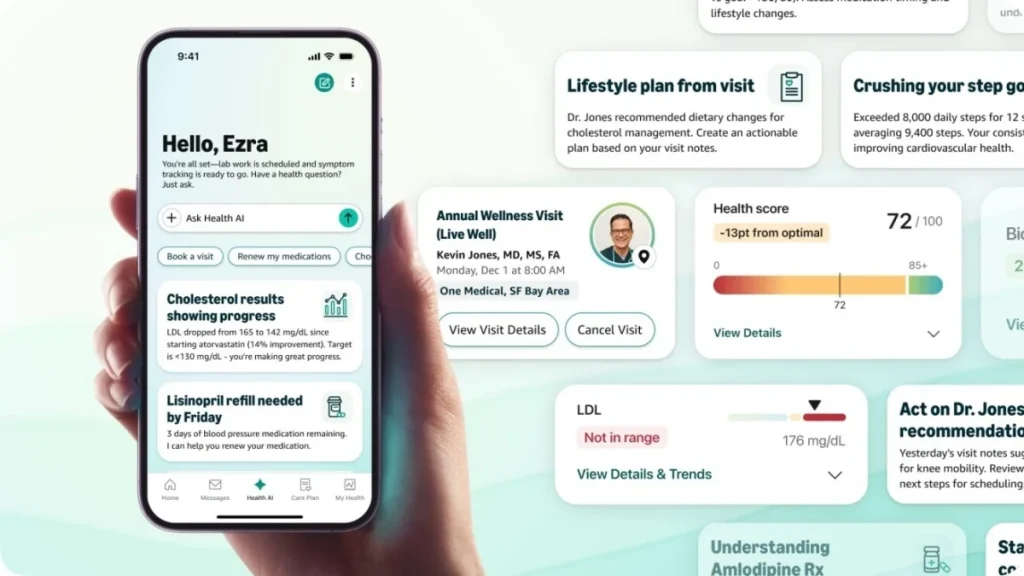
Following its substantial acquisition of the primary healthcare provider One Medical in 2023, Amazon has commenced the infusion of its formidable artificial intelligence prowess into the clinical landscape. The corporation has unveiled “Health AI,” an intelligent assistant integrated into the One Medical application. This tool, distinguished by its “agentic” capabilities, is engineered to provide around-the-clock, bespoke health guidance synthesized from the user’s idiosyncratic medical history.
According to Amazon’s delineations, the utility of Health AI transcends mere inquiry response, encompassing several critical functions:
- Deciphering Diagnostic Reports: Translating labyrinthine laboratory data and specialized nomenclature into accessible, intelligible insights.
- Pharmaceutical and Appointment Orchestration: Managing complex medication regimens and facilitating the direct scheduling of clinical consultations.
- Visual Analysis: Analyzing imagery—though Amazon remains ambiguous as to whether this entails professional radiologic scans or informal dermatological captures.
While Amazon asserts that the AI can navigate a spectrum from rudimentary to complex medical inquiries, the corporation has established a robust “firewall,” emphasizing that the tool serves as a supplement, not a substitute, for human clinical expertise. When the system identifies symptoms necessitating professional judgment, it is programmed to defer to a qualified practitioner.
The most precarious challenge in medical AI remains the sanctity of privacy. Amazon guarantees that Health AI maintains strict compliance with HIPAA regulations. The corporation specifies that dialogues with the assistant are not automatically assimilated into the formal medical record and pledges that Protected Health Information (PHI) will never be monetized.
This deployment represents a strategic cornerstone in Amazon’s broader healthcare mosaic, joining its existing repertoire of same-day prescription delivery and automated pharmacy services. Amazon, however, does not occupy this frontier alone; Google introduced an AI health coach within the Fitbit ecosystem last year, and OpenAI recently inaugurated its dedicated “ChatGPT Health” portal. The hallmark of Amazon’s offering is its “agentic” nature—the capacity not merely to counsel, but to execute tangible actions, such as finalizing a clinical appointment.
Envision a scenario where, upon the completion of a physical examination, the AI synthesizes your laboratory results and proactively suggests: “In light of your historical metrics, your cholesterol has stabilized, yet your glucose levels warrant attention. Shall I secure a follow-up consultation for next Tuesday?” This proactive health management represents the pinnacle of “technological medicine.”
Nevertheless, the margin for error in clinical AI is vanishingly small. Should the system provide misleading interpretations of complex pathologies, the ensuing liability presents a profound legal hazard. Furthermore, for a retail titan predicated on data analytics, cultivating the requisite trust—convincing users that their physiological data is reserved exclusively for clinical ends—will be a formidable, long-term endeavor.
Related Posts:
Support Our Threat Intelligence
Find our tech and OS security coverage helpful? Support our work today and unlock a 100% ad-free reading experience!
 Buy Me a Coffee
