Android’s March Update Brings “Find Hub” Luggage Sharing and Play Store Shorts
 Do Son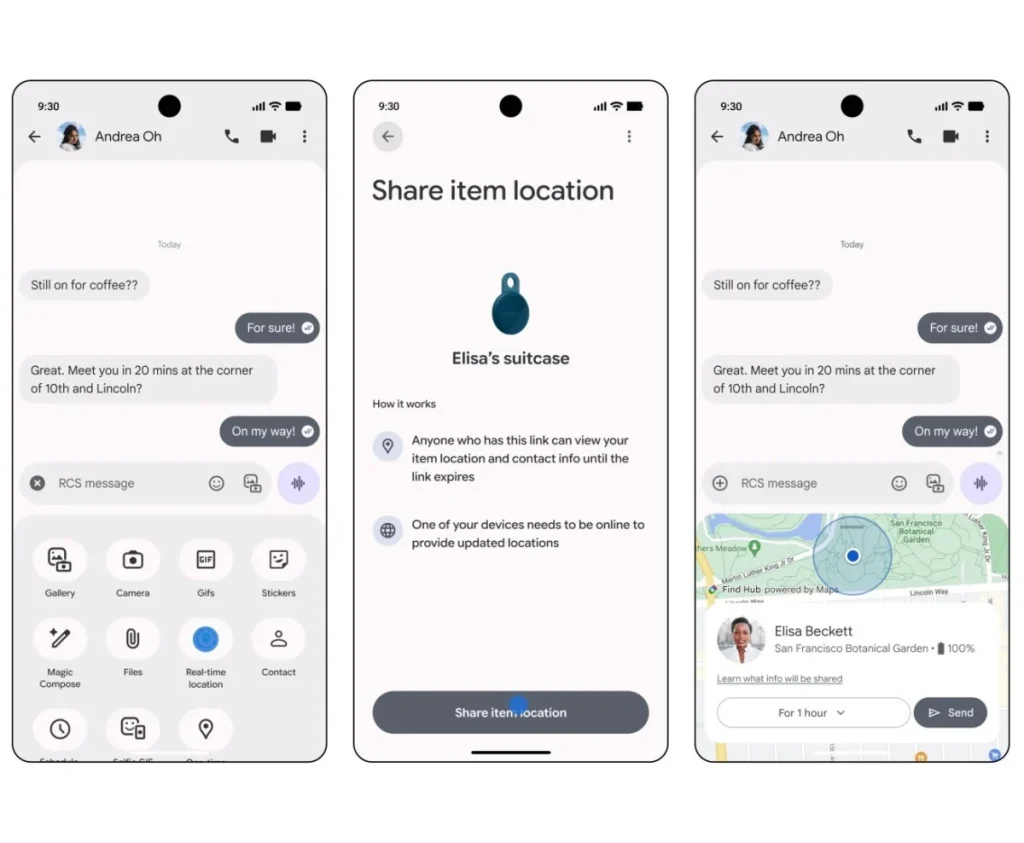
In an endeavor to render the daily experiences of Android users profoundly more seamless and convenient, Google has heralded the rollout of a comprehensive suite of novel system updates. This formidable upgrade encompasses the spheres of communication, item tracking, and entertainment. Undoubtedly, the cynosure of this update is the nascent Find Hub functionality, empowering individuals to seamlessly initiate real-time location sharing directly within Google Messages. Astonishingly, one can even transmit luggage tracker links to airline personnel to expedite the recovery of lost baggage. Furthermore, the Google Play Store has formally integrated the Shorts short-form video mechanism, poised to entirely revolutionize the historically rigid paradigm of application discovery.
Historically, coordinating a rendezvous with acquaintances necessitated exiting one’s communication application to access Google Maps for location sharing. Following this update, courtesy of the ingenious Find Hub, users can spontaneously initiate location broadcasting directly within the dialogue interface of Google Messages. Whether navigating the throngs of a concert to locate a companion or awaiting an airport pickup, both parties can now behold real-time cartographic dynamics directly within the chat room, retaining the absolute flexibility to terminate the broadcast at their discretion.
Of even greater pragmatic value is Find Hub’s newfound support for luggage recovery. Should you secrete a Bluetooth tracker tag within your checked baggage, in the unfortunate event of its misplacement, you are now empowered to transmit the tag’s locational link directly to collaborating airline personnel. This significantly expedites their ability to pinpoint the item and furnish status updates, thereby profoundly mitigating the anxieties inherent to international travel.
Shifting to the realm of application discovery, Google has astutely adopted the prevailing zeitgeist of short-form video, introducing the Shorts feature within the Google Play Store. Henceforth, when perusing the marketplace for novel applications, one is no longer relegated to scrutinizing static screenshots or laboring through verbose textual descriptions. By gliding through a dynamic feed of short videos, users can bear witness to the actual operational interfaces of these applications—be they photographic utilities, e-commerce platforms, or Webtoon comics. The infusion of short videos into the Google Play Store not only drastically curtails the probability of downloading a substandard application but simultaneously affords developers a far more vibrant stage for exhibition.
Regarding telephony, Android has unveiled the novel Custom Calling Card. Users are granted the creative liberty to curate the photograph, typography, and color palette displayed during outgoing calls, endowing their caller ID with the distinct, personalized flair of a social media profile. One may elect to broadcast this card to the global public or restrict its visibility exclusively to trusted contacts residing within their address book.
Catering to households reliant upon vehicular transport, Android Auto has seamlessly integrated a roster of Teacher Approved children’s games. Provided the vehicle is securely engaged in “Park,” the central console screen metamorphoses into a veritable playground for the youth, offering educational and recreational titles—such as Disney Coloring World and Marvel HQ—tailored for children aged three to twelve. This masterfully alleviates the tedium of awaiting family members or the protracted interludes of electric vehicle charging.
Finally, the universally cherished Emoji Kitchen within the Gboard keyboard has been enriched with an array of delightfully eccentric new fusions. Whimsical pairings, such as “Cheese 🧀 + Rose 🌹” or “Saxophone 🎷 + Skunk 🦨,” are designed to infuse our daily textual exchanges with a profound sense of levity and humor.
Support Our Threat Intelligence
Find our tech and OS security coverage helpful? Support our work today and unlock a 100% ad-free reading experience!
 Buy Me a Coffee
