Beyond Routing: Transform the OpenWrt One into a Powerful Debian Micro-Server
 Do Son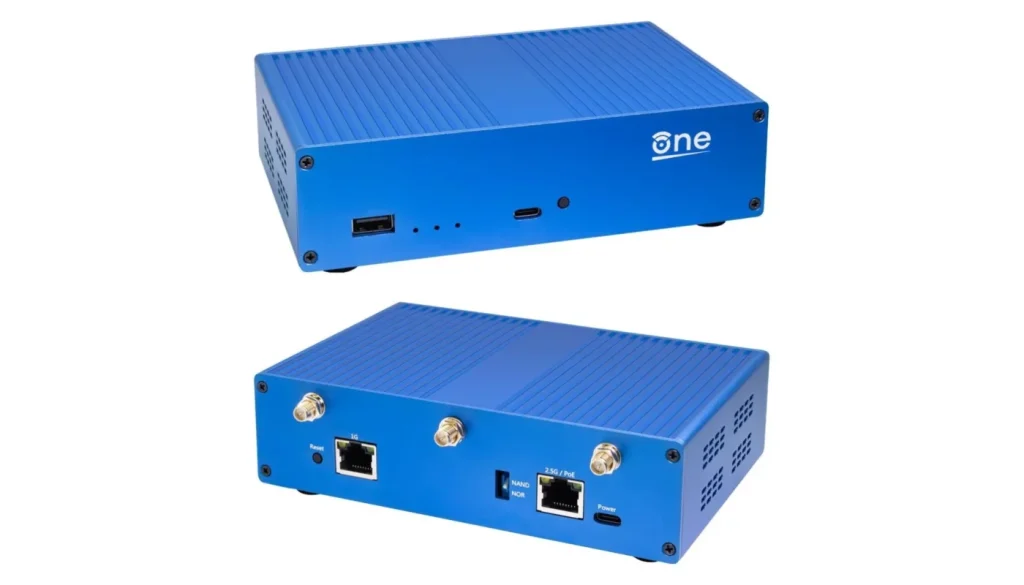
Image: OpenWrt
The OpenWrt One represents the inaugural hardware offering from the esteemed OpenWrt open-source firmware community. While the technical orchestration and firmware development are masterminded by the OpenWrt team, the physical manifestation of the device is entrusted to their manufacturing partners in China.
Driven by an ARM-based architecture, this router was initially limited to the OpenWrt environment; however, the emergence of the openwrt-one-debian project now empowers enthusiasts to deploy a comprehensive Debian GNU/Linux distribution. This nascent open-source initiative provides the requisite scripts and utilities to facilitate standard Debian workflows and package management. By leveraging the router’s internal NVMe storage, users can now host bespoke services, containerized environments, and sophisticated development tools.
Effectively, this transition transmutes the router into a multifaceted micro-server, offering unparalleled versatility for power users. Nevertheless, for the casual consumer, the official OpenWrt firmware remains the recommended choice for traditional networking tasks. The hardware specifications are as follows:
- Processor: MediaTek MT7981B Dual-core Cortex-A53, clocked at 1.3GHz
- Storage Architecture: 128MB SPI NAND and 4MB SPI NOR Flash
- Wireless Connectivity: MediaTek MT7976C (2×2 2.4 GHz + 3×3/2×2 Zero-wait DFS 5GHz)
- Memory: 1GB DDR4 RAM
- Networking: 1 x 2.5GbE and 1 x 1GbE RJ45 interfaces
- Expansion: 1 x USB 2.0, 1 x USB-C, 1 x M.2 2042 (PCIe 2.0 x1), and 1 x mikroBUS header
- Power Supply: 12V USB-C or PoE via the 2.5GbE interface
- Boot Management: Mechanical switch for NAND/NOR selection
- System Integrity: EM6324 (GPIO) Hardware Watchdog
- MSRP: $89 USD
A quintessential selling point of this device is its “unbrickable” nature, facilitated by a dual-flash redundancy mechanism. This failsafe ensures that no matter how extensively a user modifies the firmware, the system can be effortlessly restored, mitigating the risk of catastrophic failure during experimentation. Furthermore, the M.2 2042 expansion slot is specifically designed for Solid State Drives; users intending to host a Debian environment are strongly encouraged to install an SSD to serve as both a boot medium and a primary storage repository, as the onboard flash capacity is insufficient for such workloads.
Related Posts:
- The End of an Era? Samsung Rumored to Discontinue All SATA SSD Production
- Check Point: Hackers use over 10,000 hacked WordPress sites to launch malvertising campaign
- CVE-2024-54143: Critical Vulnerability in OpenWrt’s Attended SysUpgrade Server Allows for Firmware Poisoning
- OpenWrt Patches ubusd RCE Flaw (CVE-2025-62526) and Kernel Memory Leak (CVE-2025-62525) in DSL Driver
Support Our Threat Intelligence
Find our tech and OS security coverage helpful? Support our work today and unlock a 100% ad-free reading experience!
 Buy Me a Coffee
