Beyond the Console: How Andy Nguyen Turned the PlayStation 5 Into a 4K Ray-Tracing Linux PC
 Do Son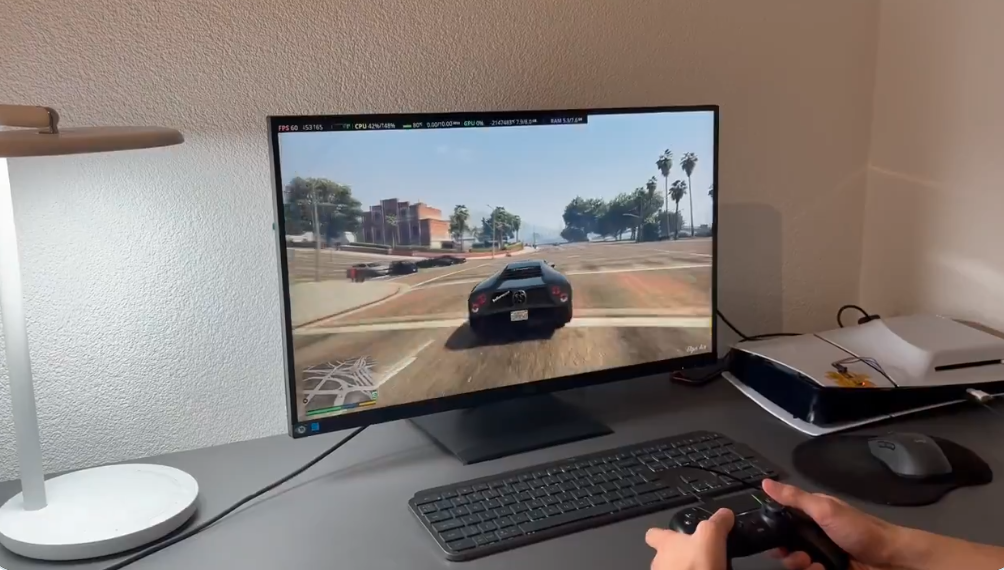
The PlayStation 5 has unexpectedly transcended its boundaries, encroaching upon the domain of a fully-fledged gaming personal computer. Andy Nguyen, a security researcher affiliated with Google and renowned in the scene as theflow0, unveiled the successful execution of a Linux environment upon the Sony console. Concurrently, he showcased the operation of Steam alongside Grand Theft Auto V Enhanced, replete with hardware-accelerated ray tracing. Within the demonstration, the title operates flawlessly at a resolution of 1440p, sustaining a fluid 60 frames per second under the High RT paradigm. For a PlayStation 5 constrained within a Linux ecosystem, this transcends a mere laboratory curiosity, boldly staking a claim as a profoundly viable gaming architecture.
Nguyen articulates that this meticulously compiled environment currently sustains 4K visual and auditory fidelity via the HDMI conduit, whilst simultaneously supporting the entirety of the USB array. The present configuration, he notes, harnesses frequencies of 3.2 GHz for the central processing unit and 2.0 GHz for the graphics processing unit. Whilst a more aggressive overclocking to 3.5 GHz and 2.23 GHz respectively remains feasible, such a zenith precipitously induces catastrophic thermal throttling within the PlayStation 5 Slim chassis.
PR to Mesa to support PS5's GPU: https://t.co/u3Y83qQMfs
— Andy Nguyen (@theflow0) March 6, 2026
The linchpin for orchestrating this Linux ingestion resides not in a pedestrian firmware substitution, but rather within a labyrinthine exploit chain. To circumvent the draconian validation protocols of the bootloader, the architecture leverages Byepervisor—an endeavor birthed by the PS5Dev community. This instrument targets antiquated firmware iterations preceding the 2.xx branch, ruthlessly exploiting systemic vulnerabilities entrenched deep within the hypervisor. The publicly promulgated documentation for Byepervisor meticulously delineates the exploit chain itself, the stringent firmware prerequisites, and its intrinsic dependency upon a Homebrew Enabler. Consequently, a ubiquitous metamorphosis of every PlayStation 5 into a personal computer remains a distant horizon. This phenomenon is strictly confined to a remarkably diminutive cohort of consoles harboring antiquated systemic software.
The graphical stack commands particular fascination. Nguyen divulged the orchestration of a bespoke patch for the Mesa 3D Graphics Library, endowing it with intrinsic support for the PlayStation 5’s graphics processing unit, which has already been submitted for formal integration review. This narrative assumes profound verisimilitude when juxtaposed against the community’s antecedent endeavors concerning PlayStation 5 graphics and the RADV driver, wherein the assimilation of kindred AMD silicon has been exhaustively debated and partially realized within the Linux ecosystem. It is for this precise reason that the contemporary demonstration is perceived not as a transient sleight of hand, but rather as the inexorable continuation of protracted technical labor striving for absolute, unadulterated console support within the Linux dominion.
For the Sony conglomerate, these tidings are profoundly unwelcome for an entirely disparate reason. As investigators relentlessly penetrate the PlayStation 5’s low-level defensive citadels, the hacking collective inches ever closer to achieving absolute, sovereign dominion over the platform. The fail0verflow syndicate had previously heralded the extraction of the console’s sacrosanct root keys; these nascent explorations merely fortify the prevailing sentiment that the PlayStation 5’s once-impenetrable closed architecture is progressively succumbing to the relentless ingenuity of enthusiasts and security savants.
Presently, the paramount revelation resounds thusly: Linux upon the PlayStation 5 has triumphantly transcended the sterile confines of a rudimentary boot menu, successfully conquering the realm of kinetic gaming, Steam integration, and hardware-accelerated rendering. The odyssey toward a frictionless, pedestrian user experience remains protracted, constrained by the exigencies of antiquated firmware, a notoriously volatile exploit chain, and excruciatingly meticulous configurations. Nevertheless, the sheer kinetic reality of executing Grand Theft Auto V Enhanced, replete with ray tracing, upon a PlayStation 5 tethered to Ubuntu incontrovertibly demonstrates that the Sony console is ever more assertively embracing its destiny as a formidable, alternative Linux personal computer.
Support Our Threat Intelligence
Find our tech and OS security coverage helpful? Support our work today and unlock a 100% ad-free reading experience!
 Buy Me a Coffee
