 Do Son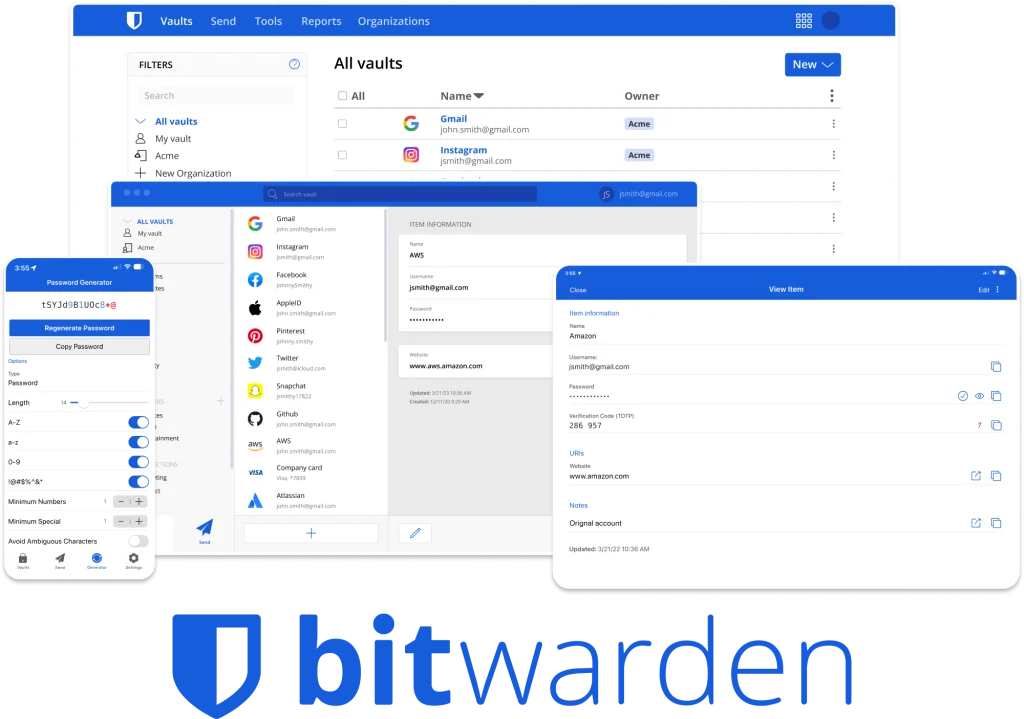
The renowned password manager Bitwarden recently published a community announcement. It declared that, commencing with its forthcoming release, applications distributed across various digital storefronts—predominantly the Apple App Store and Google Play Store—will be constructed utilizing a commercial license. The proclamation assures clientele that no intervention is requisite. The software shall continue to operate precisely as accustomed, and the current repertoire of features will suffer no diminution consequent to this licensing transition.
A Pre-existing Dual-License Architecture
The foundational repository housing Bitwarden’s client-side code presently embraces a bifurcated licensing structure. It harbors both the venerable GPLv3 open-source license and the proprietary Bitwarden License v1.0. Within this digital repository, the default codebase adheres strictly to the GPLv3 mandate. However, the specific code sequestered within the /bitwarden_license directory operates under Bitwarden’s bespoke, non-open-source licensing framework.
Official documentation formally defines the latter as a source-available, commercial license. It unequivocally clarifies that it completely fails to meet the rigorous criteria established by the Open Source Initiative (OSI). Consequently, while the intricate source code remains entirely legible to the public eye, the liberty of users to freely compile and distribute their own iterations under the permissive GPLv3 is an entirely distinct, and now highly regulated, matter.
Transitioning Storefronts to Commercial Licensing
The most profound metamorphosis inherent in this strategic pivot dictates that iterations of the application downloaded via commercial app stores will henceforth operate under the proprietary commercial license. They will completely shed their open-source pedigree. In a recent published version update community announcement, Bitwarden vehemently stressed its unwavering commitment to the foundational principles of open-source security and transparency. The traditional GPLv3 edition will persist. It will continuously receive compliant updates through the public repository. This ensures that the current pantheon of functionalities remains universally available across both distinct versions.
Devoted patrons retain the absolute prerogative to examine, audit, augment, and fork the underlying codebase. Furthermore, the complimentary tier shall remain a perpetual fixture of their service offering. The official communique meticulously clarified that this calibration does not signify a descent into closed-source obscurity. Nor shall it impose any detrimental impact upon self-hosted infrastructure. Ultimately, this licensing metamorphosis is surgically targeted to thwart the unauthorized repackaging and illicit commercial resale of Bitwarden’s intellectual property.
The Inevitability of Future Feature Discrepancies
In subsequent discourse addressing the initial proclamation, Bitwarden formally verified that installations procured directly from their official website will equally transition to the commercial licensing model. Moving forward, certain esoteric components may reside exclusively within these commercial builds. For each new feature, the licensing disposition will be subjected to rigorous, case-by-case adjudication.
For the end-user, this translates to a reassuring lack of immediate disruption. No arduous migrations or behavioral adjustments are currently mandated. However, as the platform’s capabilities inevitably expand, the iteration governed by the GPLv3 license will likely exhibit tangible functional disparities when juxtaposed with the commercial storefront counterpart. Developers who diligently maintain third-party distribution packages, steward forked projects, or orchestrate commercial services must henceforth exercise profound vigilance. Meticulous verification of specific component licenses and strict adherence to their distribution prerequisites will become absolutely paramount to sidestep calamitous copyright entanglements.
Support Our Threat Intelligence
Find our tech and OS security coverage helpful? Support our work today and unlock a 100% ad-free reading experience!
 Buy Me a Coffee
