Grokipedia Launches: Elon Musk’s xAI Debuts AI Encyclopedia to Rival Wikipedia
 Do Son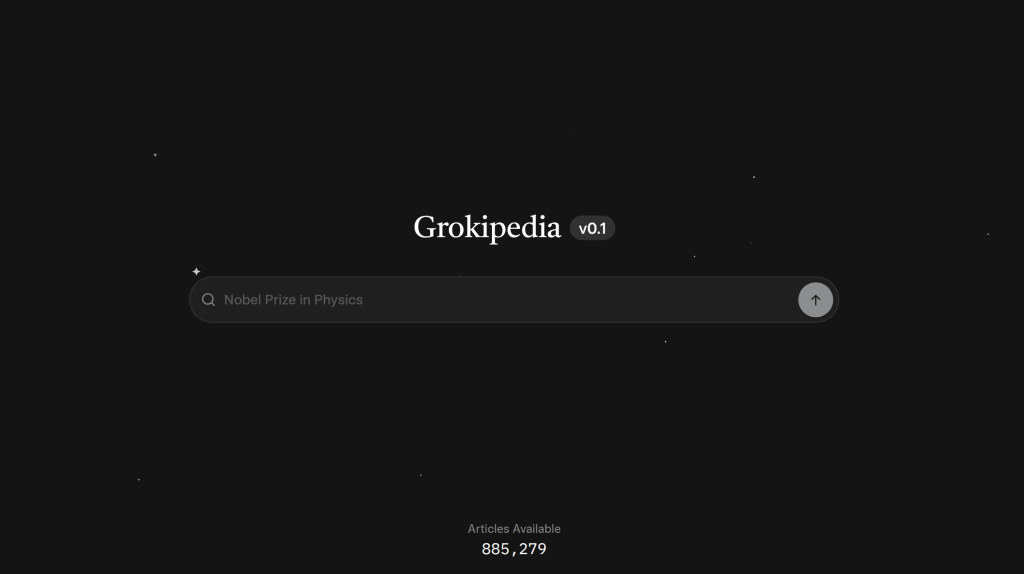
Elon Musk’s artificial intelligence company xAI has recently unveiled Grokipedia, a new encyclopedia platform built upon its Grok AI model, positioning it as a direct competitor to Wikipedia. Unlike Wikipedia, whose articles are written and reviewed by humans, Grokipedia’s content is generated entirely by artificial intelligence.
The foundation of Grokipedia lies in AI-driven knowledge synthesis. Musk has previously criticized Wikipedia for its editorial bias, arguing that human authorship and moderation inevitably introduce subjectivity. In contrast, he claims that Grokipedia offers a more impartial alternative, free from the ideological leanings of human contributors.
At present, the platform hosts approximately 880,000 entries, a relatively modest number considering AI’s potential scale. Were xAI to adopt the content-farm model seen on certain domestic platforms, it could likely generate tens of millions of entries within days.
Upon reviewing several articles, we observed that Grokipedia’s entries are impressively structured — featuring clear hierarchies, well-organized formatting, and citations from reputable sources. Users can click these references to view detailed excerpts from the original materials, adding a layer of transparency uncommon in AI-generated content.
Currently, the platform supports only English, but the xAI team is expected to expand its linguistic range once content accuracy and verification are further refined. Given AI’s scalability, it seems inevitable that Grokipedia will soon expand across multiple languages, as any true encyclopedia must ultimately be broad, diverse, and comprehensive in scope.
Related Posts:
- Wikipedia goes offline in serveral countries to protest the upcoming copyright law in the EU
- Wikipedia Warns of Existential AI Threat as Page Views Fall 8% Due to Chatbot Summaries
- Microsoft develops new tools that prevent AI algorithms from being biased
- Wiki-Slack Attack: The New Threat Lurking in Wikipedia Pages
Support Our Threat Intelligence
Find our tech and OS security coverage helpful? Support our work today and unlock a 100% ad-free reading experience!
 Buy Me a Coffee
