Skip to content
July 4, 2026
  • Linkedin
  • Twitter
  • Facebook
  • Youtube

Daily CyberSecurity

Zero-hour alerts. Unmatched analysis.

Primary Menu
  • Home
  • CVE Watchtower
  • Cyber Criminals
  • Data Leak
  • Linux
  • Malware
  • Vulnerability
  • Submit Press Release
  • Vulnerability Report
Light/Dark Button
  • Home
  • News
  • Cyber Security
  • Hackers use three malware simultaneously in cyber espionage against Ukraine
  • Cyber Security

Hackers use three malware simultaneously in cyber espionage against Ukraine

Do Son July 25, 2018 3 minutes read
malware against Ukraine
Add as a preferred
source on Google

ESET, a security company based in Bratislava, Slovakia, recently released a 19-page technical analysis report detailing three types of malware that they are using simultaneously in cyber espionage against Ukrainian government agencies. Includes features of malware and techniques to circumvent security detection and how attackers spread them.

ESET pointed out in this report that they have been tracking the hackers since mid-2017 and can track their activities back to October 2015, even earlier. Although hackers do not seem to have a high level of skill or the ability to use zero-day vulnerabilities, they have successfully used social engineering to achieve the goal of spreading malware and have not been discovered for years.

The latest activity aimed at Ukrainian government agencies, who use three different .NET malware at their time – Quasar RAT, Sobaken (a Quasar-based RAT) and a custom RAT called “Vermin” Currently, targets are monitored, and data stolen from their systems.

According to its telemetry data, hackers use malicious spam as the primary source of communication for these three types of malware and have succeeded in using social engineering to lure targets to download and execute malware. In most cases, file names are written in Ukrainian and cover specific topics related to the target occupation.

In addition to using junk e-mail and basic social engineering techniques, hackers have used three more technical methods to increase the probability of success of their activities further.

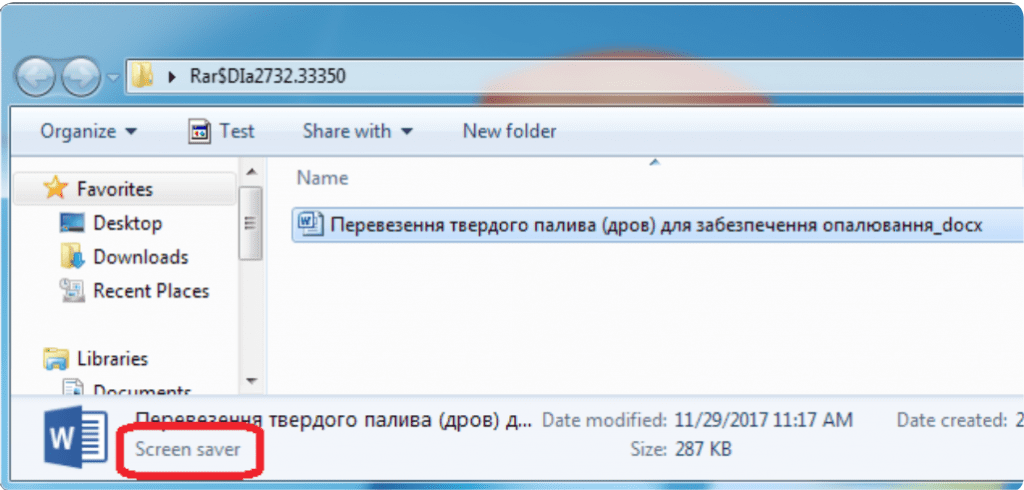
“Method #1: Email attachments using Unicode right-to-left override in their filenames to obscure their
real extension. These are actually executable files using Word, Excel, PowerPoint or Acrobat Reader
icons to appear more trustworthy.

Method #2: Email attachments disguised as RAR self-extracting archives.

Method #3: Word document plus CVE-2017-0199 exploit. This vulnerability is triggered when the victim
opens a specially crafted Word document. The Word process issues an HTTP request for an HTA file that
contains a malicious script, located on a remote server. The malicious script will then be executed by
mshta.exe. The first public information about this vulnerability appeared in April 2017 and Microsoft fixed
it by issuing Security updates for all versions of Windows and Office.”

Although the hackers have been active for at least three years, their attacks have not caused much public attention, which may be open sourced before they develop their malware (Vermin).

Using multiple malware in the same event may indicate that the hacker is composed of various teams and is developing malware independently, while using much malware at the same time may be because they are testing malware and some attack techniques.

In any case, in the past three years, the hackers have indeed developed a variety of malware and successfully implemented the attack using some of the most fundamental technologies (such as social engineering). This fully demonstrates how critical is the personal security awareness and related knowledge in the computer network security protection system.

Read the full report:

QUASAR, SOBAKEN AND VERMIN: A deeper look into an ongoing espionage campaign

Get Zero-Hour Vulnerability Alerts

Critical CVEs, CVSS scores, and PoC updates — straight to your inbox every week.


We respect your inbox. Unsubscribe anytime.

Related coverage

  • GitHub Search Sabotaged: Malware Hidden in Popular Repositories
  • A Persistent Threat: Blind Eagle Hacking Group Continues to Target Colombia
  • TA402 Uses IronWind Malware in Targeted Attacks
  • Critical WSUS RCE (CVE-2025-59287) Actively Exploited to Deploy ShadowPad Backdoor
  • Wave of Attacks on WordPress: Urgent Update for WP Statistics, WP Meta SEO, LiteSpeed Cache

Support Our Threat Intelligence

If you find our CVE report and cybersecurity news helpful, consider supporting our work.

Buy Me a Coffee Logo Buy Me a Coffee PayPal
Crypto QR Code
USDT (TRC20):
TN8BdV8cp4T1Cd28gK9qTAnZknzzuwyUtm
USDT (ERC20):
0x3725e1a7d3bc5765499fa6aaafe307fabcd75bce

Share this article:

Facebook Post LinkedIn Telegram
Written by
@DdoS · Security Researcher

Do Son

Do Son is the Founder and Editor of SecurityOnline.info. Working in cybersecurity since 2013, he reports on vulnerabilities, malware, and emerging threats, providing timely analysis to help organizations and individuals stay ahead of evolving risks.

Tags: hacker malware Ukraine

Search

Translation

CVE WATCHTOWER
🚨

Receive alerts for vulnerabilities being exploited in the wild.

⚡

Get notified instantly when a Proof of Concept (PoC) exploit is published.

🔍

Access critical info on vulnerabilities even when marked as "RESERVED".

🧠

Insights powered by decades of expertise and global intelligence sources.

🎯

Customize alerts with up to 10 keywords for your specific tech stack.

📊

Export the raw CVE database for SIEM integration and reporting.

Upgrade Package

🚨 Active Exploits in the Wild

  • CVE-2026-48282CVSS 10.0
    ColdFusion versions 2025.9, 2023.20 and earlier are affected by an Improper Limitation of a Pathname to a Restricted...
    Admin intel📅 Updated: Jul 3, 2026
  • CVE-2024-14037CVSS 9.8
    Redsea Cloud eHR contains an arbitrary file upload vulnerability that allows unauthenticated attackers to achieve remote code execution...
    Admin intel📅 Updated: Jul 3, 2026
  • CVE-2026-8451CVSS 8.8
    Insufficient input validation in NetScaler ADC and NetScaler Gateway leading to memory overread if NetScaler ADC or NetScaler Gateway is configured...
    Admin intel📅 Updated: Jul 2, 2026
  • CVE-2026-8037CVSS 9.6
    OS Command Injection Remote Code Execution Vulnerability in API in Progress ADC Products allows an un-authenticated attacker to...
    Admin intel📅 Updated: Jul 1, 2026
  • CVE-2026-45659CVSS 8.8
    Deserialization of untrusted data in Microsoft Office SharePoint allows an authorized attacker to execute code over a network.
    CISA KEV📅 Added to KEV: Jul 1, 2026
  • CVE-2026-48558CVSS 10.0
    SimpleHelp versions 5.5.15 and prior and 6.0 pre-release versions contain an authentication bypass vulnerability in the OIDC authentication...
    Admin intelCISA KEV📅 Added to KEV: Jun 29, 2026📅 Updated: Jun 29, 2026
  • CVE-2026-46817CVSS 9.8
    Vulnerability in the Oracle Payments product of Oracle E-Business Suite (component: File Transmission). Supported versions that are affected...
    Admin intel📅 Updated: Jun 29, 2026
  • CVE-2026-28496CVSS 9.4
    FOSSBilling is a free, open-source billing and client management system. Versions prior to 0.8.0 have a Server-Side Template...
    Admin intel📅 Updated: Jun 25, 2026
Powered by CVE Watchtower

🔴 Live Critical Threats

  • CVE-2026-58426CVSS 9.6
    Gitea Actions Artifacts V4 signed URL HMAC ambiguity allows cross-repository artifact read...
  • CVE-2026-58289CVSS 9.0
    Access of resource using incompatible type ('type confusion') in Microsoft Edge (Chromium-based)...
  • CVE-2026-22874CVSS 9.6
    Gitea versions up to and including 1.26.2 have incomplete SSRF protection in...
  • CVE-2026-20896CVSS 9.8
    Gitea Docker image versions up to and including 1.26.2 use REVERSE_PROXY_TRUSTED_PROXIES=* by...
  • CVE-2026-4321CVSS 9.8
    Improper neutralization of special elements used in an SQL command ('SQL injection')...
  • CVE-2026-14544CVSS 9.8
    A flaw was found in HPLIP (HP Linux Imaging and Printing Software)....
  • CVE-2026-9725CVSS 9.1
    The Printcart Web to Print Product Designer for WooCommerce plugin for WordPress...
  • CVE-2026-13768CVSS 10.0
    Gardyn devices expose a privileged iothubowner key. Access to this key will...
  • CVE-2026-57100CVSS 9.9
    Server-side request forgery (ssrf) in Microsoft Entra Provisioning Service (SyncFabric) allows an...
  • CVE-2026-45499CVSS 9.9
    Server-side request forgery (ssrf) in Azure OpenAI allows an authorized attacker to...
Powered by CVE WATCHTOWER

Get Zero-Hour Vulnerability Alerts

Critical CVEs, CVSS scores, and PoC updates — straight to your inbox every week.

    We respect your inbox. Unsubscribe anytime.

    Our Websites
  • Penetration Testing Tools
  • The Daily Information Technology
  • Daily CyberSecurity

    • About SecurityOnline.info
    • Advertise with us
    • Announcement
    • Contact
    • Contributor Register
    • Login
    • About SecurityOnline.info
    • Advertise on SecurityOnline.info
    • Contact Us

    When you purchase through links on our site, we may earn an affiliate commission. Here’s how it works

    • Disclaimer
    • Privacy Policy
    • DMCA NOTICE
    • Linkedin
    • Twitter
    • Facebook
    • Youtube
    © 2017 - 2026 Daily CyberSecurity. All Rights Reserved.