Skip to content
September 25, 2026
  • Bluesky
  • Facebook
  • Linkedin
  • Mastodon
  • RSS
  • Twitter
  • Youtube

Daily CyberSecurity

Zero-hour alerts. Unmatched analysis.

Primary Menu
  • Home
  • CVE Data
    • CVE Watchtower
    • Top Exploited CVEs
    • CVE Stats by Vendor
    • Q2 2026 Report
    • CVE Alerts
    • CVE Alert Settings
    • Pricing
  • Cyber Criminals
  • Data Leak
  • Free Tools
    • CVSS 3.1 Calculator
    • Certificate Viewer
    • DNS Lookup
    • Encoder & Hash Generator
    • IP / Subnet Calculator
    • Whois Lookup
  • Linux
  • Malware
  • Vulnerability
  • Submit Press Release
  • Weekly Recap
Light/Dark Button
  • Home
  • News
  • Technology
  • Meta Fixes ‘Broken’ Support: Rolling Out AI Assistants and New Recovery Hubs
  • Technology

Meta Fixes ‘Broken’ Support: Rolling Out AI Assistants and New Recovery Hubs

Do Son December 8, 2025 2 minutes read
0
Meta AI Support Hacked Account Recovery
Add Daily CyberSecurity as a preferred source on Google

Many people have endured the nightmare of having their Facebook or Instagram accounts hacked or locked, only to be met with frustration at Meta’s customer-service process — some even resorting to legal action in search of help. In a rare admission, Meta has acknowledged that its support experience has fallen short of expectations and has announced a suite of new AI-driven features aimed at repairing its broken support system.

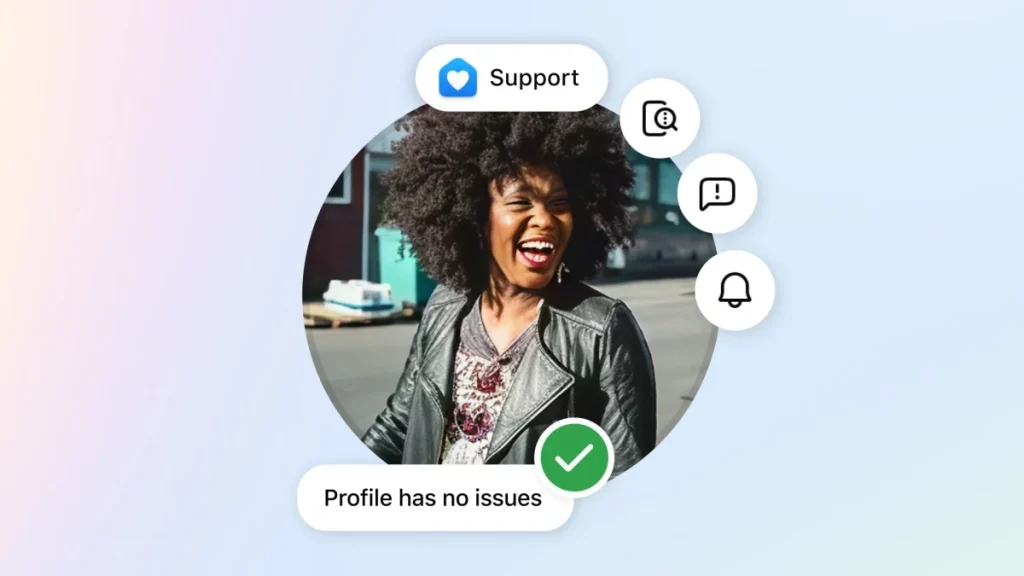
Meta states that it is rolling out a new Support Hub on Facebook and Instagram, unifying all assistance tools into a single entry point.

The hub introduces a new AI chat feature that allows users to ask questions about account issues or Meta’s policies. Meta also revealed that it is testing a more advanced AI support assistant, which it claims can provide real-time, personalized help with account recovery and file management.

This assistant remains in an early testing phase and is currently available only to a subset of Facebook users worldwide. Whether it will eventually be able to escalate cases to a human representative remains unclear.

To address the issue that troubles users most — hacked accounts — Meta says it has enhanced its recovery process with AI:

  • Intelligent detection: The system can now use AI to identify devices and locations frequently associated with a user, enabling more accurate anomaly alerts.
  • Selfie verification: Recovery methods have expanded to include selfie-video verification to strengthen identity checks.

According to Meta, these improvements have increased the hacked-account recovery success rate by more than 30% this year in the United States and Canada.

Yet despite good intentions, these AI tools may offer limited help to users who cannot log in at all, since the in-app Support Hub becomes inaccessible in such situations (Meta recommends using external recovery tools instead).

For now, the most reliable path to reaching a human support agent still appears to be subscribing to Meta’s paid verification service — though even paying customers often report that the chat service struggles with complex account issues.

Whether Meta’s new AI initiatives can meaningfully resolve users’ longstanding frustrations remains a question only time can answer.

Related Posts:

  • Phishing Campaign Bypasses MFA to Target Meta Business Accounts, Putting Millions at Risk
  • $20 Million Drained and Returned: Government Wallet Under Scrutiny

Related coverage

  • Broadcom’s Game-Changing Move: VMware Fusion and Workstation Now Free for All Users
  • Fedora 29 makes BootLoaderSpec the default
  • Gmail Search Gets Smart: AI-Powered Results to Find Emails Faster
Track all actively exploited CVEs →

Support Our Threat Intelligence

Find our tech and OS security coverage helpful? Support our work today and unlock a 100% ad-free reading experience!

Buy Me a Coffee Logo Buy Me a Coffee
Select your plan
Free Pro Team

Hover over a plan to see its benefits.

Get Zero-Hour Vulnerability Alerts

Critical CVEs, CVSS scores, and PoC updates — straight to your inbox every week.

We respect your inbox. Unsubscribe anytime.

SHARE
Share on FacebookShare on XShare on LinkedInShare on TelegramShare on BlueskyShare on Mastodon
Written by
@DdoS · Security Researcher

Do Son

Do Son is the Founder and Editor of SecurityOnline.info. Working in cybersecurity since 2013, he reports on vulnerabilities, malware, and emerging threats, providing timely analysis to help organizations and individuals stay ahead of evolving risks.

Tags: Account Recovery AI Assistant AI Chat Customer Support facebook Instagram Meta Selfie Verification Support Hub

Leave a Reply Cancel reply

You must be logged in to post a comment.

Search

Translation

CVE ALERTS
📧

Email Delivery
Get threat intel straight to your inbox.

♾️

Unlimited Vendors
Track every technology in your stack.

🚨

All New CVE Alerts
Be the first to know about new flaws.

⚙️

Custom EPSS Threshold
Filter noise, focus on real risks.

💬

Slack & Teams Webhook
Integrate directly into your SecOps.

🚫

100% Ad-Free
Enjoy an uninterrupted reading experience.

$7/mo
Subscribe Now

🚨 Active Exploits in the Wild

  • CVE-2026-5430CVSS 10.0
    The JWT authentication mechanism accepts tokens signed with algorithms other than those explicitly configured or supported. This allows...
    CISA KEV📅 Added to KEV: Sep 24, 2026
  • CVE-2026-71362CVSS 9.1
    Adobe Commerce is affected by an Incorrect Authorization vulnerability that could result in privilege escalation. An attacker could...
    CISA KEV📅 Added to KEV: Sep 24, 2026
  • CVE-2026-48842CVSS 8.1
    Roundcube Webmail 1.6.x before 1.6.16 and 1.7.x before 1.7.1 has Pre-authentication SQL injection in the virtuser_query plugin via...
    Admin intel📅 Updated: Sep 23, 2026
  • CVE-2026-87902
    Unauthenticated path traversal in page-template resolution leading to conditional RCE An unauthenticated attacker can make get_page_template() page-template resolution...
    Admin intel📅 Updated: Sep 23, 2026
  • CVE-2026-94127CVSS 9.8
    When a BIG-IP APM access policy and an OAuth profile is configured on a virtual server, specific malicious...
    Admin intelCISA KEV📅 Added to KEV: Sep 22, 2026📅 Updated: Sep 22, 2026
  • CVE-2026-85102CVSS 9.8
    Improper certificate trust validation during VPN negotiation in Check Point Quantum Security Gateway may allow an unauthenticated remote...
    Admin intelCISA KEV📅 Added to KEV: Sep 22, 2026📅 Updated: Sep 22, 2026
  • CVE-2026-93616CVSS 9.8
    A directory traversal and file upload vulnerability allows an unauthenticated attacker to upload and execute arbitrary scripts on...
    Admin intelCISA KEV📅 Added to KEV: Sep 22, 2026📅 Updated: Sep 22, 2026
  • CVE-2026-93952CVSS 10.0
    VeloCloud Orchestrator (VCO) on-prem has a security issue where this issue may allow a remote attacker to access...
    Admin intelCISA KEV📅 Added to KEV: Sep 22, 2026📅 Updated: Sep 22, 2026
Powered by CVE Watchtower

Critical Vulnerabilities

  • CVE-2026-78445CVSS 9.8
    Use after free in Windows Services for NFS ONCRPC XDR Driver allows an unauthorized attacker to execute code...
    📅 Updated: Sep 24, 2026
  • CVE-2026-77493CVSS 9.8
    Double free in Microsoft Graphics Component allows an unauthorized attacker to execute code over a network.
    📅 Updated: Sep 24, 2026
  • CVE-2026-73025CVSS 9.8
    Weak authentication in Windows iSCSI allows an unauthorized attacker to bypass a security feature over a network.
    📅 Updated: Sep 24, 2026
  • CVE-2026-73009CVSS 9.8
    Use after free in Windows Secure Socket Tunneling Protocol (SSTP) allows an unauthorized attacker to execute code over...
    📅 Updated: Sep 24, 2026
  • CVE-2026-72979CVSS 9.8
    Use after free in Windows DHCP Server allows an unauthorized attacker to execute code over a network.
    📅 Updated: Sep 24, 2026
  • CVE-2026-72982CVSS 9.8
    Stack-based buffer overflow in Windows Netlogon allows an unauthorized attacker to execute code over a network.
    📅 Updated: Sep 24, 2026
  • CVE-2026-72983CVSS 9.8
    Use after free in Windows Internet Connection Sharing (ICS) allows an unauthorized attacker to execute code over a...
    📅 Updated: Sep 24, 2026
  • CVE-2026-70296CVSS 9.8
    Out-of-bounds write in Windows Imaging Component allows an unauthorized attacker to execute code over a network.
    📅 Updated: Sep 24, 2026
Powered by CVE Watchtower

Daily CyberSecurity

  • About SecurityOnline.info
  • Advertise with us
  • Announcement
  • Contact
  • Contributor Register
  • Login
  • Disclaimer
  • DCMA
  • Privacy Policy
  • About SecurityOnline.info
  • Advertise on SecurityOnline.info
  • Contact Us

When you purchase through links on our site, we may earn an affiliate commission. Here’s how it works

  • CVE Watchtower
  • CVE Statistics by Vendor 2026
  • Q2 2026 Report
  • Top Exploited CVEs
  • Bluesky
  • Facebook
  • Linkedin
  • Mastodon
  • RSS
  • Twitter
  • Youtube
© 2017 - 2026 Daily CyberSecurity. All Rights Reserved.