
 Do Son
SpaceX is interviewing investment banks for a potential 2026 IPO after its valuation nearly doubled to $800 billion in a secondary sale, fueled by Starlink's growth.

A developer's Mac home directory was wiped after Claude AI executed an unconstrained rm -rf ~/ command. Experts urge using Docker to contain AI coding tools for safety.
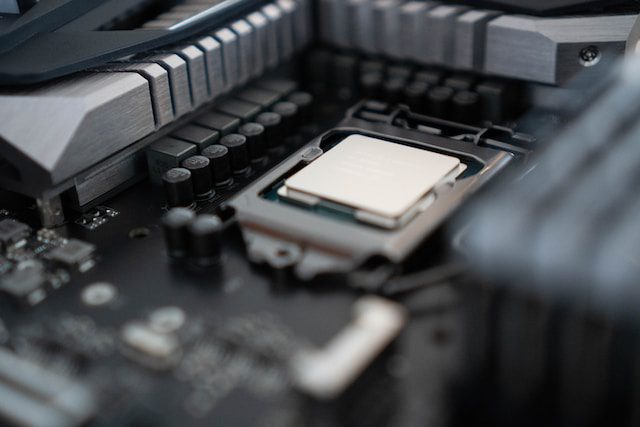
Intel is reportedly nearing a deal to buy AI chip startup SambaNova for around $1.6B, a sharp drop from its $5B valuation, for strategic boost to its inference capabilities.

Microsoft published a guide outlining recommended Windows 11 gaming PC specs from entry-level 1080p to high-end 4K, emphasizing NVMe SSDs for DirectStorage.

Amazon shifts DRM control to publishers/authors starting Jan 2026. Readers can download unencrypted EPUB/PDF files if the publisher consents, boosting reader choice.

Google is overhauling Health Connect with new tracking for alcohol and medical symptoms to challenge Apple Health. The redesign improves privacy via group permission management.

Google Translate, now powered by Gemini AI, upgrades text-to-text to handle slang and adds real-time voice translation that preserves the original speaker's tone.

Rumors suggest Samsung will discontinue all SATA SSDs by Jan 2026, shifting entirely to M.2. The move will impact global supply, legacy systems, and could raise prices.

NVIDIA patched High-severity (CVSS 8.8) deserialization flaws in Merlin's NVTabular and Transformers4Rec on Linux. Exploitation risks RCE, DoS, and data tampering in AI recommendation pipelines.

0patch found an unpatched flaw in Windows RasMan that allows any user to crash the service on demand. This unprivileged crash is the necessary step to exploit the CVE-2025-59230 LPE flaw. Micropatch is available.

A critical RCE flaw (CVSS 9.1) in pgAdmin bypasses security via a UTF-8 BOM parsing mismatch. It allows attackers to execute root commands during a database restore operation. Update immediately.

NANOREMOTE, a new Windows backdoor, leverages the Google Drive API for covert C2 and data exfiltration using OAuth 2.0 tokens. The malware shares a hard-coded AES key with the FINALDRAFT family, linking it to seasoned espionage actors.

SHADOW-VOID-042 impersonated Trend Micro via fake security advisories to breach defense, energy, and chemical firms. Tactics align with Void Rabisu (ROMCOM), using HR lures and targeted exploits.

A critical LPE flaw (CVSS 9.1) in Plesk's Password-Protected Directories allows Apache configuration injection. Any Plesk user can execute root commands and achieve full server takeover. Update immediately.

Ashen Lepus (Hamas-APT) significantly evolved during the conflict, deploying the AshTag modular .NET malware suite. It uses in-memory execution and Rclone for stealthy cyber-espionage against diplomatic targets in the Middle East.

GOLD SALEM (Storm-2603) is exploiting SharePoint via ToolShell then abusing the Velociraptor DFIR tool as a ransomware precursor. The group deploys Warlock and LockBit 3.0 variants, often targeting critical infra.

A critical flaw in Apache StreamPark uses a hard-coded encryption key and the insecure AES ECB mode, risking data decryption and JWT authentication token forgery. Update to v2.1.7 immediately.

Storm-0249 IAB abuses the SentinelOne EDR process via DLL sideloading to evade detection. The group uses LoLBin tools for fileless execution and sells access to ransomware groups like LockBit.

A High-severity (CVSS 7.5) flaw in ImageMagick's PSX TIM parser allows Arbitrary Memory Disclosure on 32-bit systems via an integer overflow. Patch immediately to v7.1.2-10.

19 malicious VS Code extensions bypassed detection by hiding a Rust trojan in tampered node_modules and a fake banner.png using steganography. The attack uses cmstp.exe (LOLBIN) for execution.
React2Shell: Max-Score RCE (CVSS 10.0) Triggers Widespread Exploitation by Espionage Groups & Miners

React2Shell: Max-Score RCE (CVSS 10.0) Triggers Widespread Exploitation by Espionage Groups & Miners
A critical RCE (CVSS 10.0) in React Server Components (CVE-2025-55182) is under widespread exploitation by China-nexus groups deploying MINOCAT and HISONIC backdoors, plus XMRig miners.
Linux Kernel io_uring UAF Flaw Used to Cheat BPF Verifier and Achieve Container Escape, PoC Releases

Linux Kernel io_uring UAF Flaw Used to Cheat BPF Verifier and Achieve Container Escape, PoC Releases
A high-severity UAF (CVE-2025-40364) in Linux io_uring allows root RCE. Researchers demonstrated two kill chains: cheating the BPF verifier and using Dirty Pagetables for container escape. Patch immediately.