
 Do Son
Google's August 2025 Android Security Bulletin addresses a critical RCE flaw (CVE-2025-48530) in the core System component, which requires no user interaction for exploitation. Update now!

McAfee uncovers a new Android malware campaign targeting Indian users. The malware impersonates major banks to steal financial data and silently mines Monero in the background.

NVIDIA has patched multiple critical flaws (CVSS 9.8) in its Triton Inference Server. A vulnerability chain allows unauthenticated attackers to gain RCE and seize AI servers.

Cleafy uncovers PlayPraetor, a Chinese-speaking MaaS Android RAT that has infected 11,000+ devices, using real-time control via Accessibility Services to conduct on-device fraud.
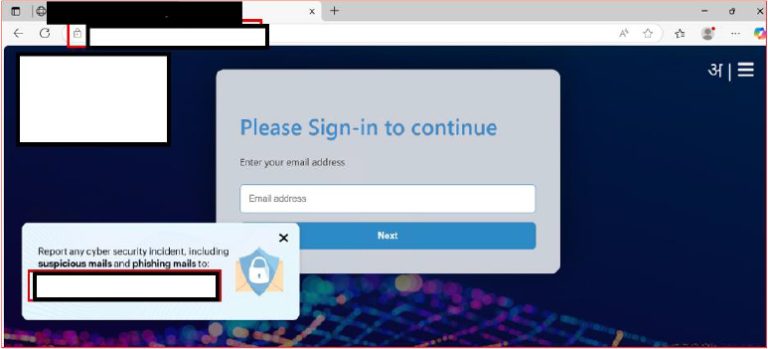
APT36, a Pakistan-linked threat actor, is targeting Indian government officials with phishing campaigns that mimic official websites to harvest credentials and Kavach MFA OTPs in real time.

SentinelLABS and Beazley expose PXA Stealer, a Python-based infostealer campaign targeting 62 countries with stealthy DLL sideloading, decoy files, and Telegram-based data exfiltration.

Dell patched a critical flaw (CVE-2025-36594) in DD OS allowing unauthenticated remote auth bypass. DDSH CLI flaws (CVE-2025-30096-30099) also patched.

ThreatLabz reveals the evolution of Raspberry Robin malware, now featuring stronger encryption, complex obfuscation, and a new privilege escalation exploit to bypass detection.

Veracode warns of a North Korean cyber-espionage campaign using malicious NPM packages to spread Beavertail malware and steal crypto from developers via fake interview tasks.

A new report reveals Kimsuky, a North Korea-linked APT, is using sophisticated LNK files and reflective payloads to infiltrate systems and conduct cyberespionage against South Korean targets.

Huntress and other firms warn of a likely zero-day vulnerability in SonicWall VPNs. Attackers are bypassing MFA and deploying Akira ransomware within hours of initial access.

MediaTek has patched out-of-bounds write vulnerabilities in its chipsets, exposing smartphones and IoT devices to local privilege escalation. Update firmware immediately.

With macOS Sequoia, Apple introduces a native containerization system, enabling security professionals to run Kali Linux directly on Apple Silicon for penetration testing without needing Docker.

Microsoft 365 intelligent services like Read Aloud and Dictation will stop working on older versions. Update to 16.0.18827.20202 by Jan 2026.

A study reveals Python's ecosystem is a "labyrinth of dependencies" that propagates vulnerabilities. Over 145,000 packages are at risk, with urllib3 accounting for 41% of all exposures.

APT37, a North Korea-linked group, is using a new RoKRAT backdoor to target South Korea. The malware uses stealthy LNK files and steganography to evade detection.

Apple has formed a new team, "Answers, Knowledge, and Information," to develop a proprietary AI chat system and search experience to rival ChatGPT and Google.

YouTube is testing a new collaboration feature that lets creators tag co-creators in videos, sharing content across audiences and boosting visibility, similar to Instagram and TikTok.

Samsung has unveiled the Exynos 2600, the world’s first 2nm GAA mobile chip. The processor, which will power the Galaxy S26, aims to deliver significant improvements in performance and on-device AI.
ShadowSyndicate’s Global Ransomware Empire Blurs Lines Between Cybercrime and Geopolitical Espionage

ShadowSyndicate’s Global Ransomware Empire Blurs Lines Between Cybercrime and Geopolitical Espionage
A new report exposes ShadowSyndicate, a sophisticated cybercrime group tied to top-tier RaaS affiliates, bulletproof hosting, and suspected geopolitical influence operations, blurring lines between cybercrime and espionage.

CERT/CC reveals critical flaws in Partner Software and Partner Web, including default admin credentials and XSS, that allow unauthenticated RCE on municipal and state systems.

A critical flaw (CVE-2025-54782, CVSS 9.4) in NestJS's devtools-integration package allows attackers to execute code on a developer's machine via a malicious website.