
 Do Son
Apple Security Engineering and Architecture (SEAR) has unveiled Memory Integrity Enforcement (MIE), an always-on, hardware-assisted memory safety...
Latest news

GitLab has released new versions of its Community and Enterprise Editions to address several security vulnerabilities, including...

The Mozilla Foundation is currently rolling out a page summarization feature for Firefox on iOS, initially available...

According to a report from South Korean outlet The Elec, Apple is preparing to adopt OLED displays...

Microsoft recently issued a notice through Microsoft Azure reporting a disruption in submarine cables near Jeddah, Saudi...

As artificial intelligence tools increasingly harvest internet content to generate summaries and detailed answers, the open web...

Cybersecurity researcher Jeremiah Fowler has disclosed a massive data exposure involving over 1.6 million audio recordings belonging...
The Django Software Foundation has patched a high-severity SQL injection vulnerability in Django’s FilteredRelation feature. Tracked as...

Sophos has released a fix for a critical authentication bypass vulnerability (CVE-2025-10159) affecting its AP6 Series Wireless...

Following the unveiling of the iPhone 17 series, Apple announced in its update notes that it will...

As a business, you are constantly looking for ways to protect the sensitive data held by your...

CVE-2023-25076 affects the latest version on GitHub, the 0.6.0-2 Debian package, and potentially several forks of the original repository

In an increasingly connected world, security vulnerabilities are a persistent concern for businesses and individuals alike. The...

When you’ll be looking for employment opportunities in IT, most vacancies on job boards will be real....
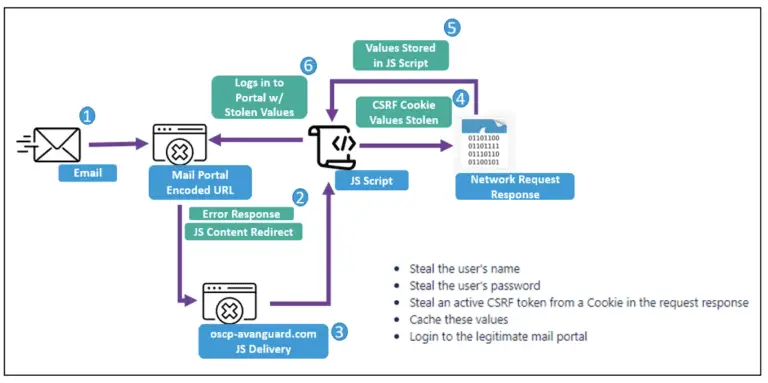
TA473 started exploiting the Zimbra vulnerability CVE-2022-27926 in phishing campaigns targeting European government entities

CVE-2023-0614 highlights a vulnerability that allows attackers to access and potentially obtain confidential information

CVE-2023-28326 is considered critical and can potentially cause serious harm to users and organizations that use this software.

Dubbed "MacStealer," the attack targets Wi-Fi networks with malicious insiders and exploits client isolation bypasses (CVE-2022-47522)

However, an e-commerce giant Pinduoduo used CVE-2023-20963 in conjunction with prior vulnerabilities to re-exploit the flaws.

The CVE-2023-25196 vulnerability also involves improper neutralization of special elements used in SQL commands.

Launching your own cybersecurity business can be a daunting prospect, with the potential to open up lucrative...

If you are looking to make some extra cash, selling your belongings online can be a great...

CVE-2023-1177 is a more severe security vulnerability with a CVSS score of 10, enables an attacker to download arbitrary files from the host server

CVE-2022-47502 is a critical-severity vulnerability that affects Apache OpenOffice versions 4.1.13 and older.

Deno, the popular runtime for JavaScript, TypeScript, has recently been identified with a critical security vulnerability (CVE-2023-28445)
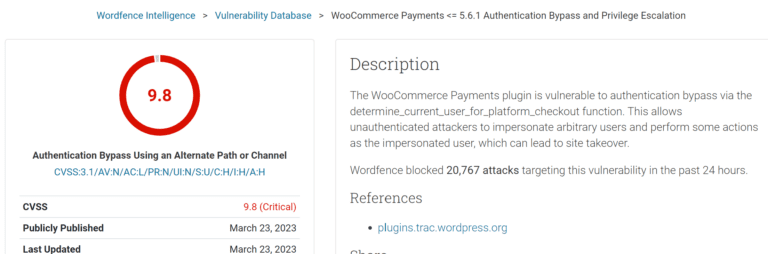
a critical vulnerability with a CVSS score of 9.8, resides in the WooCommerce Payments plugin versions 4.8.0 through 5.6.1

Due to CVE-2023-28432, MinIO returns all environment variables, including sensitive information like MINIO_SECRET_KEY and MINIO_ROOT_PASSWORD
Designated as CVE-2023-0386, this vulnerability has been assigned a CVSS score of 7.0, indicating a high level of severity

Using a Blockchain API provided by RPCfast.com can be extremely beneficial for businesses. By managing transactions and...

Logistics APIs can be an immensely helpful tool for businesses looking to streamline their operations. With https://distancematrix.ai/logistics-api,...
Are you looking for reliable proxy servers in Asia? Choosing the correct proxy server can be challenging...

Chatbots are an emerging type of artificial intelligence (AI) that can answer questions via text or voice....