Sovereign Synthesis: Apple Unveils Gemini-Powered Siri AI and macOS Golden Gate
 Do Son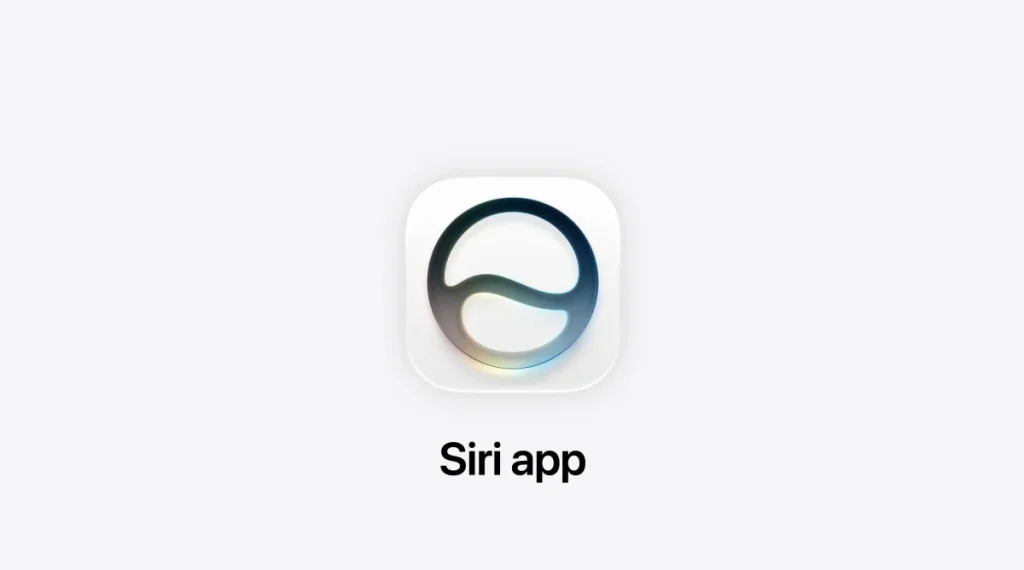
After two years of anticipation and multiple delays, Apple officially introduced the reincarnated, AI-driven Siri at WWDC 2026. This reimagined digital assistant is now designated as “Siri AI.” To achieve this transformation, Apple solidified a strategic alliance with Google. Therefore, the architecture builds entirely upon the foundational Google Gemini models. Furthermore, this monumental upgrade delivers a bespoke, standalone application. It also secures deep, system-level integration across iOS 27 and macOS 27 Golden Gate.
The Reimagined Interface of iOS 27
Within the iPhone ecosystem, Siri AI commands profound operational access. Specifically, engineers elegantly nestled the user interface directly inside the Dynamic Island. This structural placement ensures immediate clarity for subsequent user interactions.
Intuitive Gestures and Multi-Modal Components
- The “Search or Ask” Gateway: Additionally, Apple introduced an intuitive invocation gesture to complement traditional vocal prompts. Users can simply swipe downward from the upper center of the viewport. Consequently, this action summons the pristine “Search or Ask” dashboard. This interface empowers individuals to launch applications, dispatch text messages, or audit calendar milestones. Moreover, the utility executes deep, granular searches directly across native applications.
- Interactive Presentation Layer: When Siri AI formulates a response, the Dynamic Island generates an interactive dynamic card. If the interaction demands a multi-turn dialogue, the operator simply glides the card downward. This gesture expands the canvas into a comprehensive conversation window.
- A First-Party Standalone Competitor: Crucially, Apple launched a standalone Siri application to compete directly with external platforms like ChatGPT and Claude. This first-party alternative supports text-based communication and vocal interactions. Furthermore, users can upload complex imagery and diverse document profiles. Subsequently, the assistant executes sophisticated multi-modal evaluations on these ingested assets.
Auditory Refinement and Voice Personalization
During this exhibition, Apple also meticulously overhauled Siri’s vocal acoustics to achieve a lifelike cadence. For instance, the operating system introduces a dedicated customization dashboard. This interface features specialized adjustment sliders for pace and emotional expressivity. Therefore, users can effortlessly tailor the auditory experience to mirror their personal preferences.
Concurrently, engineers aggressively optimized the universal voice dictation framework across Apple’s software platforms. The upgraded subsystem interprets contextual nuances, such as capitalization logic, with superior precision.
macOS 27 Golden Gate and Spotlight Synergy
Regarding the desktop environment, Apple officially designated macOS 27 as “Golden Gate.” This iteration prioritizes system refinement alongside subtle enhancements to the “Liquid Glass” interface design. However, the true centerpiece of the release remains the deep integration of Siri AI.
Users can now summon the assistant directly from the Spotlight search interface. Remarkably, this upgraded searching engine demonstrates exceptional contextual judgment. The utility easily distinguishes between a standard file query and an analytical prompt meant for the AI. Then, it automatically routes the directive to the correct processing engine. Initially, Siri AI will deploy with exclusive support for the English language. Nevertheless, Apple pledges to distribute alternative linguistic variations to global markets rapidly.
Harmonizing the Device and Cloud Ecosystem
Historically, Apple’s initial artificial intelligence showcases in 2024 faced intense criticism due to a lack of live demonstrations. This initial friction subsequently triggered consecutive deployment delays for the assistant. After two years of intensive internal development, Apple abandoned its insistence on purely proprietary foundational models. Instead, the technology giant chose a deep architectural dependency on Google’s Gemini platform.
From an operational standpoint, Apple successfully separated Siri AI into two distinct functional frameworks. First, the assistant melts invisibly into the core system via the Dynamic Island and Spotlight. This architecture handles lightweight vocal requests and minor system operations effortlessly. Second, the dedicated Siri application satisfies data-heavy demands, including document and image analysis. Thus, Apple effectively constrains the expansion of third-party platforms within its ecosystem.
Beyond its core deployment, this advanced digital assistant will permeate Apple’s entire hardware portfolio. The standalone application will debut concurrently on watchOS 27 and visionOS 27. Additionally, users can summon Siri AI seamlessly through their AirPods peripherals to initiate fluid, intelligent dialogues.
Support Our Threat Intelligence
Find our tech and OS security coverage helpful? Support our work today and unlock a 100% ad-free reading experience!
 Buy Me a Coffee
