The Amphibious Gamer: How Google’s “Buy Once, Play Anywhere” Strategy is Taking on Steam
 Do Son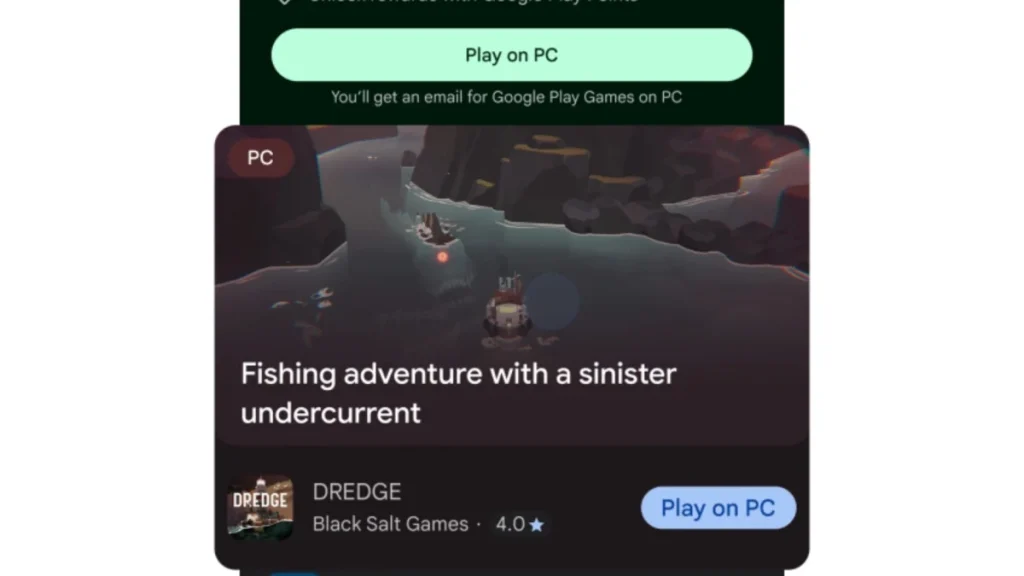
After an epoch wherein free-to-play architectures monopolized the mobile dominion, Google has resolved to forge an entirely nascent vanguard for high-caliber, premium titles. Seizing the momentous occasion of the 2026 Game Developers Conference (GDC), the Google Play Store promulgated a constellation of monumental updates. In an endeavor to further seamlessly amalgamate the ludic ecosystems of Android mobile hardware and Windows personal computers, Google has formally inaugurated a “buy once, play anywhere” cross-platform pricing stratagem, concurrently integrating a risk-free “Game Trials” mechanism. Furthermore, the AI-propelled ludic auxiliary instrument christened “Play Games Sidekick” has officially ascended to operational status; it aspires to sculpt a frictionless, omnipotent gaming odyssey spanning from the initial acquisition to the ultimate triumph.
Historically, patrons yearning to traverse a singular premium title across both mobile and desktop architectures were invariably compelled to render tribute twice—once within the Google Play Store and anew upon platforms akin to Steam. The paramount crescendo of Google’s current orchestration is the profound resolution of this very tribulation. Empowered by this nascent “buy once, play anywhere” pricing paradigm, players need only consummate a solitary transaction within the Google Play Store to instantaneously inherit the licensing rights for both the mobile and PC iterations of the opus. At present, a curated pantheon of premium titles—prominently encompassing the Reigns lineage, OTTTD, and Dungeon Clawler—has pioneered the adoption of this mechanism.
Additionally, to accommodate the predilections of denizens accustomed to sprawling visual canvases, the Google Play Store’s gaming pavilion has enshrined a dedicated “PC Hub,” serving as a centralized exhibition for the entire constellation of titles meticulously optimized for Windows architectures. Google has concurrently heralded the imminent arrival—within the ensuing months—of highly anticipated independent creations, including Moonlight Peaks, Sledding Game, and Low-Budget Repairs; furthermore, these odysseys shall achieve flawless, cross-device chronological synchronization via the patron’s sovereign Gamer Profile.
The quintessential peril of premium titles lies in the agonizing revelation of buyer’s remorse following the acquisition. To vanquish the paralysis of choice and substantially lower the barrier to entry, Google has proclaimed the inception of the “Game Trials” architecture.
This mechanism endows players with the liberty to directly download and immerse themselves within the unadulterated “full version” of premium content, utterly bereft of fiscal expenditure. Should the patron elect to consummate the purchase subsequent to this trial, the game is seamlessly unshackled; concurrently, the entirety of the progress forged during the trial epoch is immaculately preserved, empowering the player to flawlessly resume their narrative trajectory. This capability shall initially debut within a curated selection of premium titles on the mobile iteration of the Google Play Store in the imminent future, with a subsequent, sweeping expansion prophesied for the PC dominion of Google Play Games. Beyond merely facilitating the procurement of these digital odysseys, Google aspires to actively assist patrons in their very mastery.
Initially, upon the communal stratum, the Google Play Store has natively embedded a nascent “Community Posts” feature, empowering a global constituency exceeding two billion gamers to directly pose inquiries, proffer solutions, and disseminate tactical compendiums within the platform’s confines (presently marshaling the English lexicon, with an expansive multilingual proliferation slated for the horizon). Exuding a profound aura of technological sophistication, the previously heralded Play Games Sidekick has at last achieved formal operational status. This manifests as an in-game overlay architecture propelled by artificial intelligence. When a patron finds themselves inextricably mired amidst the crucible of kinetic combat, there exists no necessity to abandon the ludic sphere in pursuit of tactical guidance; the Sidekick autonomously and instantaneously analyzes the contemporary in-game tableau, provisioning AI-synthesized “Game Tips” and pertinent strategic intelligence. Commencing immediately, denizens may experience this cognitive auxiliary within select premium titles downloaded from the Google Play Store.
For an extended epoch, the Google Play Store was universally perceived as the sovereign dominion of “free-to-play” titles; consequently, high-caliber, premium independent opuses frequently struggled to ascend the echelons of leaderboards suffocated by relentless advertising and microtransactions. The advent of the “buy once, play anywhere” and “Game Trials” mechanisms represents not merely a profound boon for developers—harboring the potential to exponentially elevate conversion rates—but a brazen, kinetic challenge directed at both the cross-device ecosystem of Apple Arcade and the hegemonic monopoly historically enjoyed by Steam. If Google can persistently augment its repertoire of PC titles championing cross-platform procurement, the magnetic allure of the Google Play Store for the amphibious gamer—straddling both mobile and laptop architectures—shall inevitably escalate at an exponential trajectory.
Furthermore, the induction of the Play Games Sidekick vividly illuminates an alternative, potent vector for AI application within the ludic sphere. By abstaining from meddling with the foundational developmental architecture, and instead provisioning instantaneous tactical guidance via an OS-level overlay, Google has forged a definitive killer feature—a masterpiece only conceivable by an entity wielding absolute sovereignty over the foundational permissions of the Android operating system.
Support Our Threat Intelligence
Find our tech and OS security coverage helpful? Support our work today and unlock a 100% ad-free reading experience!
 Buy Me a Coffee
