 Ddos
Ddos 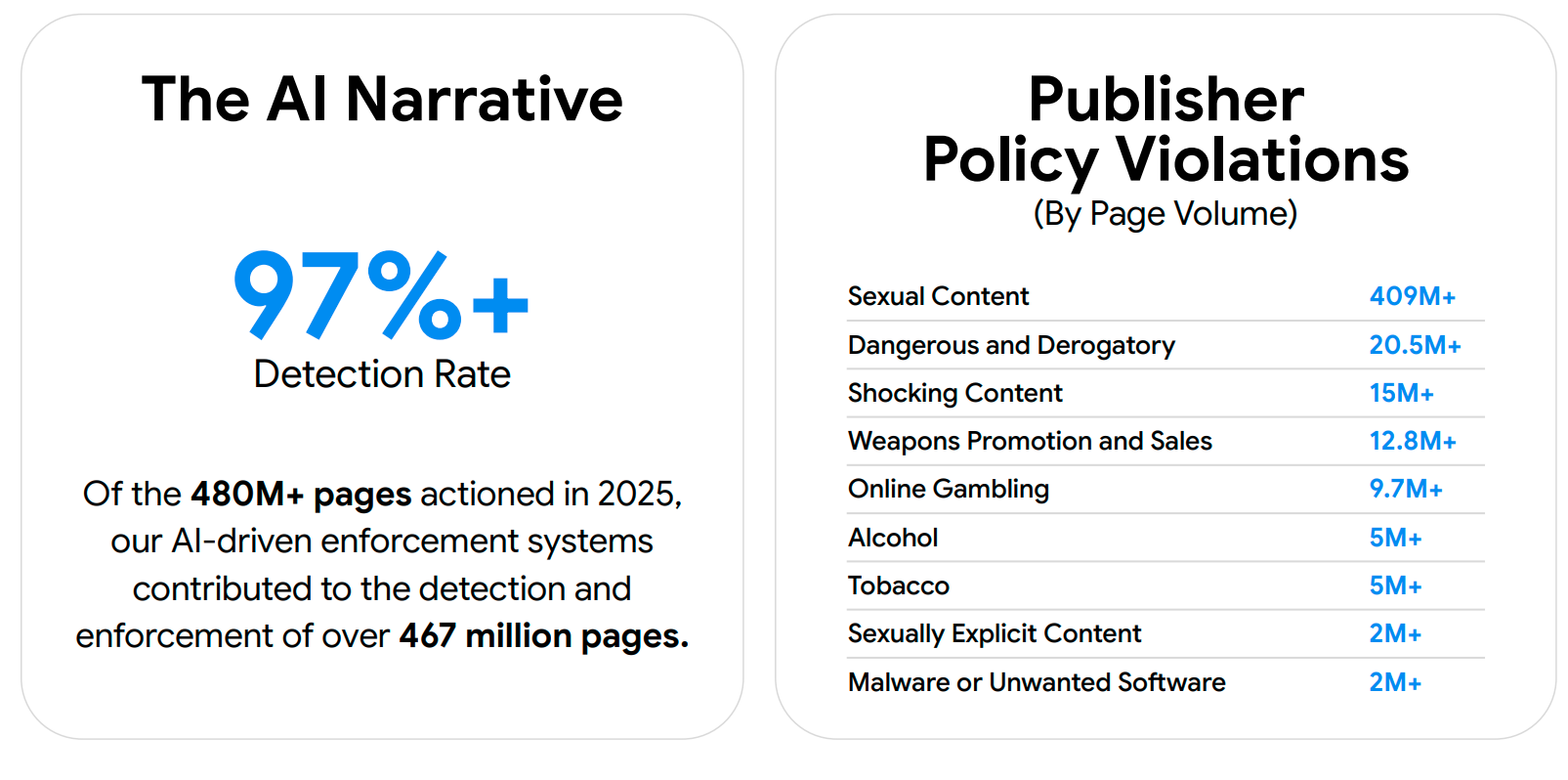
In a concerted effort to uphold the equilibrium and transparency of the digital advertising ecosystem, Keerat Sharma, Vice President and General Manager of Ads Privacy and Safety at Google, has unveiled the pivotal findings of the 2025 Ads Safety Report. As adversaries increasingly weaponize generative AI to fabricate deceptive advertisements, Google has countered by designating its Gemini models as the cornerstone of its defensive architecture. Leveraging profound contextual reasoning and real-time signal synthesis, the system successfully intercepted over 99% of non-compliant advertisements prior to publication while simultaneously diminishing the rate of erroneous account suspensions for legitimate advertisers.
While the rapid evolution of generative AI has catalyzed innovation for creators, it has concurrently provided malicious actors with a sophisticated toolkit. Keerat Sharma noted that fraudulent syndicates are employing AI to craft persuasive copy and assets—designated as “intricate lures”—specifically designed to circumvent traditional, keyword-based vetting protocols.
To thwart these illicit operations before they achieve industrial scale, Google has integrated Gemini deeply into its safety net. Departing from fragmented defenses, Gemini simultaneously evaluates hundreds of billions of complex signals to decipher an advertiser’s “true intent” and identify subtle linguistic nuances. This allows Google’s infrastructure to outpace fraudsters, identifying malicious content designed for detection evasion the moment it is submitted.
The scale of Google’s defensive actions in 2025 illustrates the impact of this AI-augmented approach:
- 8.3 billion non-compliant advertisements were removed or blocked.
- 480 million advertisements were subjected to restricted distribution.
- 24.9 million malicious accounts were permanently suspended.
Furthermore, Google enforced restrictions across 480 million publisher pages and 245,000 websites. User-reported grievances processed by the system quadrupled, a surge made manageable by enhanced AI automation. Through rigorous advertiser verification programs—incorporating identity and physical location checks—over 90% of the advertisements encountered on Google platforms now originate from verified entities.
Historically, platforms struggled with the dilemma of “over-enforcement,” where stringent filters inadvertently penalized legitimate local businesses. Sharma emphasized that this is where Gemini’s value is most pronounced: its superior contextual reasoning allows the system to distinguish between a “bona fide promotion” and a “meticulously disguised trap.”
This technological leap has yielded a transformative benefit: an 80% reduction in the erroneous suspension of legitimate advertiser accounts. By minimizing these false alarms, Google not only protects the interests of honorable enterprises but also allows its human security specialists to concentrate their expertise on high-stakes threats that demand sophisticated human judgment.
The 2025 Ads Safety Report delivers a definitive message: while generative AI has rendered cyber threats more elusive, the deployment of more intelligent models like Gemini has granted Google the capacity for proactive intervention. Moving forward, Google remains committed to utilizing its AI defensive systems to dismantle fraudulent networks in their infancy, ensuring a safer and more transparent digital landscape for both users and brands.
Support Our Threat Intelligence
If you find our CVE report and cybersecurity news helpful, consider supporting our work.
 Buy Me a Coffee
PayPal
Buy Me a Coffee
PayPal
