Exploited in the Wild: “Dirty Frag” Linux Vulnerability Grants Instant Root Access
 Do Son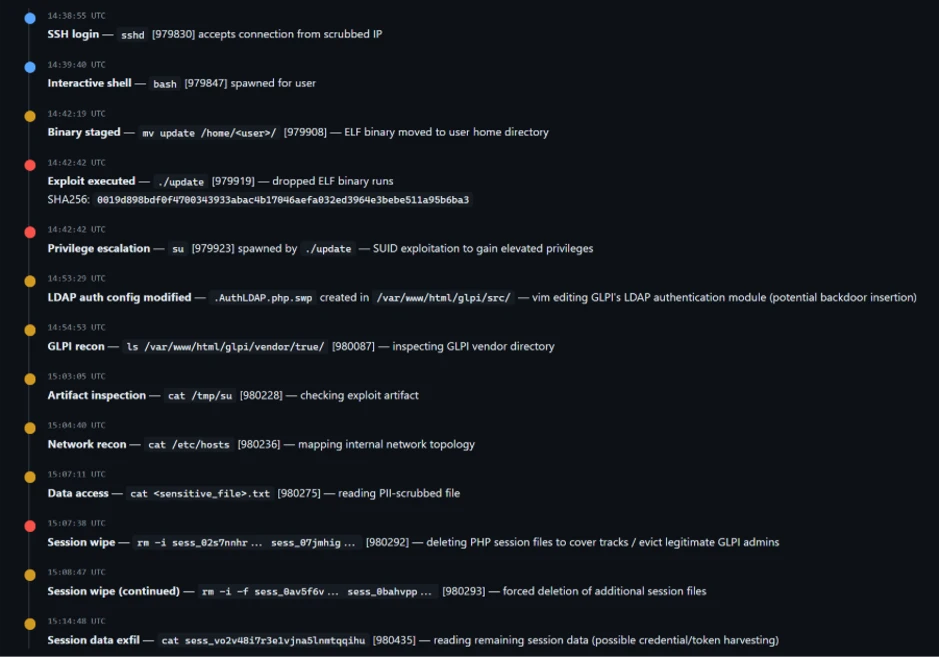
The Linux ecosystem is facing a severe new security challenge that demands immediate attention from everyone, whether you are a junior system administrator managing a handful of servers or a CISO overseeing a massive enterprise deployment. A newly disclosed local privilege escalation (LPE) vulnerability, dubbed “Dirty Frag,” is currently sending shockwaves through the cybersecurity community as proof-of-concept exploits begin to circulate in the wild.
Tracked across multiple vulnerabilities, including CVE-2026-43284 and CVE-2026-43500, Dirty Frag targets critical weaknesses in Linux kernel networking and memory-fragment handling components.
Here is a breakdown of what makes this vulnerability so dangerous, how threat actors are leveraging it, and the immediate steps required to lock down your infrastructure.
At its core, Dirty Frag enables an attacker with basic, unprivileged access to a system to seamlessly elevate their permissions to full root control. The vulnerability specifically exploits the esp4, esp6, and rxrpc kernel modules.
What makes this threat particularly alarming is its stability. Historically, local privilege escalation in Linux often required attackers to win highly unpredictable “race conditions”—a chaotic process that could crash the system before granting root access. Dirty Frag changes the game.
As the Microsoft Defender Security Research Team notes in their latest report, “Public reporting and proof-of-concept activity indicate the exploit is designed to provide more reliable privilege escalation than traditional race-condition-dependent Linux local privilege escalation techniques”.
By introducing multiple kernel attack paths involving these specific networking components, attackers can bypass the need for narrow timing windows or unstable corruption conditions, resulting in a highly reliable, weaponized exploit.
It is crucial to understand that Dirty Frag is a post-compromise exploitation tool. An attacker must first gain a foothold in your environment. However, once they are in, the path to total dominance is frighteningly short.
According to the research, “Dirty Frag may be leveraged after initial compromise through SSH access, web-shell execution, container escape, or compromise of a low-privileged account”.
Once root access is achieved, the attacker holds the keys to the kingdom. They can swiftly disable endpoint detection and response (EDR) tooling, harvest sensitive credentials, manipulate system logs to erase their tracks, and establish deep, persistent access for lateral movement.
The blast radius for this vulnerability is massive. Affected environments include nearly all major enterprise distributions, such as Ubuntu, RHEL, CentOS Stream, AlmaLinux, Fedora, openSUSE, and OpenShift deployments.
“Microsoft Defender is currently seeing limited in-the-wild activity where privilege escalation involving ‘su’ is observed, and which may be indicative of techniques associated with either ‘Dirty Frag’ or ‘Copy Fail’,” the company warns.
With active proof-of-concept code and public reporting confirming the exploit’s viability, organizations must move quickly to mitigate the risk before official kernel patches can be fully deployed.
The report outlines several immediate, practical steps for defense teams:
- Module Disablement: Disable unused rxrpc kernel modules where operationally possible.
- Assess IPsec Impact: Carefully evaluate if esp4, esp6, and related xfrm/IPsec functionality can be temporarily and safely disabled without breaking critical infrastructure, particularly VPNs.
- Harden the Perimeter: Restrict unnecessary local shell access and strictly harden containerized workloads to prevent the initial compromise required to trigger Dirty Frag.
Simply applying the mitigation or unloading the modules may not be enough if an attacker has already struck. The Microsoft Defender team issued a warning regarding post-exploitation cleanup:
“If exploitation occurred prior to mitigation, malicious modifications may persist in memory or cached file content even after vulnerable modules are disabled”.
To counter this, system administrators should validate the integrity of critical files and consider clearing system caches (e.g., using echo 3 | sudo tee /proc/sys/vm/drop_caches) to flush out any lingering malicious modifications. However, this cache clearing must be evaluated carefully, as it can temporarily spike disk I/O and impact production performance.
Support Our Threat Intelligence
Find our vulnerability reports and weekly recaps helpful? Support our work today and unlock a 100% ad-free reading experience!
 Buy Me a Coffee
