Skip to content
September 13, 2026
  • Bluesky
  • Facebook
  • Linkedin
  • Mastodon
  • RSS
  • Twitter
  • Youtube

Daily CyberSecurity

Zero-hour alerts. Unmatched analysis.

Primary Menu
  • Home
  • CVE Data
    • CVE Watchtower
    • Top Exploited CVEs
    • CVE Stats by Vendor
    • Q2 2026 Report
    • CVE Alerts
    • CVE Alert Settings
    • Pricing
  • Cyber Criminals
  • Data Leak
  • Linux
  • Malware
  • Vulnerability
  • Submit Press Release
  • Weekly Recap
Light/Dark Button
  • Home
  • News
  • Vulnerability Report
  • PoC Available: FlowiseAI Flaw (CVE-2025-58434) Allows Full Account Takeover (CVSS 9.8)
  • Vulnerability Report

PoC Available: FlowiseAI Flaw (CVE-2025-58434) Allows Full Account Takeover (CVSS 9.8)

Do Son September 15, 2025 3 minutes read
0
Flowise Sandbox Escape CVE-2026-46442 Flowise RCE Flowise Auth Bypass, Unauthenticated Registration Flowise RCE, WriteFileTool FlowiseAI, account takeover CVE-2025-58434
Add Daily CyberSecurity as a preferred source on Google

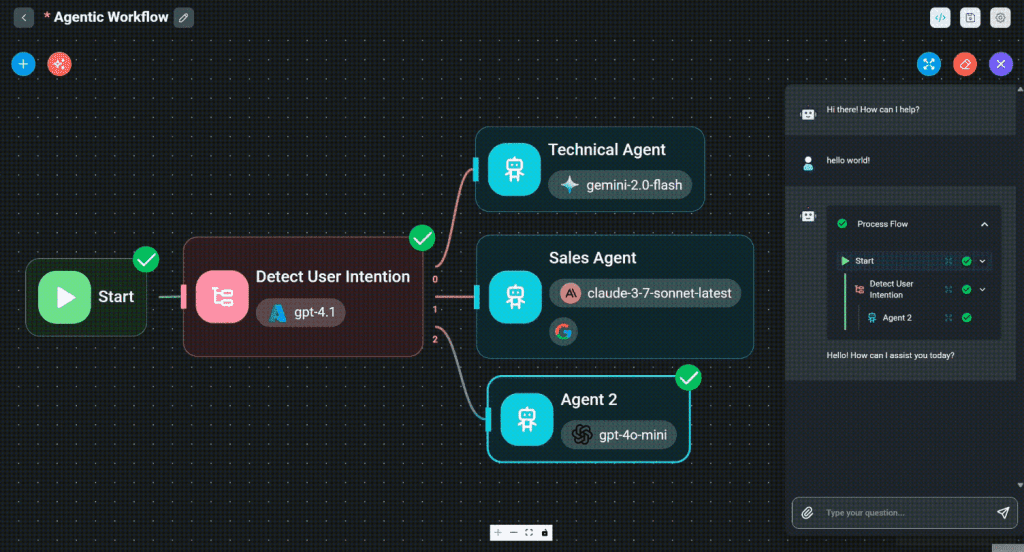
The open-source generative AI development platform FlowiseAI, widely used for building AI agents and LLM workflows, has been found vulnerable to a critical flaw that enables unauthenticated account takeover across both cloud and self-hosted deployments.

Track every CVE that hits your stack the moment it's exploited.

Get free email alerts →

The flaw, tracked as CVE-2025-58434 and rated CVSS 9.8, stems from the platform’s password reset mechanism. According to the advisory, “The forgot-password endpoint in Flowise returns sensitive information including a valid password reset tempToken without authentication or verification. This enables any attacker to generate a reset token for arbitrary users and directly reset their password, leading to a complete account takeover (ATO).”

The vulnerable endpoint, /api/v1/account/forgot-password, accepts only an email address as input. Instead of sending a reset link securely via email, the API responds with highly sensitive account details, including:

  • User ID, name, email, and credential hash
  • Account status and timestamps
  • A valid password reset tempToken and its expiry

The advisory notes, “This tempToken can then be reused immediately in the /api/v1/account/reset-password endpoint to reset the password of the targeted account without any email verification or user interaction.”

Because exploitation only requires knowledge of a victim’s email—often guessable or publicly available—any unauthenticated attacker can take over arbitrary accounts, including administrators.

The advisory provides a working exploit scenario:

  1. Request reset token for victim:

    curl -i -X POST https://<target>/api/v1/account/forgot-password \ -H "Content-Type: application/json" \ -d '{"user":{"email":"victim@example.com"}}'

    Response includes valid tempToken.

  2. Use token to reset password:

    curl -i -X POST https://<target>/api/v1/account/reset-password \ -H "Content-Type: application/json" \ -d '{ "user":{ "email":"victim@example.com", "tempToken":"<redacted-tempToken>", "password":"NewSecurePassword123!" } }'

    Expected Result: 200 OK — the victim’s password is changed, granting full login access

The vulnerability is classified as Authentication Bypass / Insecure Direct Object Exposure with the following consequences:

  • Complete Account Takeover — including high-value administrator accounts
  • Data Exposure & Impersonation — access to sensitive organizational assets
  • No User Interaction Required — making exploitation trivial
  • Affects Both Cloud & Local Deployments — widening the threat surface

As the advisory warns, “High likelihood of exploitation since no prior access or user interaction is required.”

FlowiseAI has not yet released a patch, leaving all versions prior to 3.0.5 vulnerable. Recommended mitigations include:

  • Do not return reset tokens or sensitive details in API responses.
  • Ensure tokens are only delivered via secure email.
  • Respond with generic success messages to prevent user enumeration.
  • Enforce single-use, short-lived tokens tied to request origin.
  • Log and monitor all password reset requests.
  • Implement multi-factor authentication (MFA) for sensitive accounts.

Until patches are available, administrators must apply strict workarounds, restrict exposure of vulnerable endpoints, and closely monitor reset activity.

As the advisory stresses, “This effectively allows any unauthenticated attacker to take over arbitrary accounts (including admin or privileged accounts) by requesting a reset for their email.”

Related Posts:

  • CISA Warns of Credential Risks Tied to Oracle Cloud Breach
  • HTTP/2 Rapid Reset Attack: HTTP/2 Zero-Day Vulnerability Rocks Cybersecurity World
  • GitLab Patches High-Severity Flaws: Update Now to Prevent XSS and Account Takeover
  • CISA Flags Two Actively Exploited Vulnerabilities: TP-Link Router Reset Flaw and WhatsApp Zero-Day Chain
  • GitLab Releases Security Update to Patch XSS and Account Takeover Flaws

Related coverage

  • Critical GitHub Token Stealing Bug Exploits Web-Based Code Editors
  • BigBlueButton Fixes Maximum Severity Arbitrary File Read Flaw
  • Active Gravity SMTP Vulnerability Exploited in the Wild
Track all actively exploited CVEs →

Support Our Threat Intelligence

Find our vulnerability reports and weekly recaps helpful? Support our work today and unlock a 100% ad-free reading experience!

Buy Me a Coffee Logo Buy Me a Coffee
Select your plan
Free Pro Team

Hover over a plan to see its benefits.

Stay Ahead of the Threat

Join security professionals receiving zero-hour CVE alerts, PoC updates, and threat analysis directly to their inbox.

No spam. One actionable email per week. Unsubscribe anytime.

SHARE
Share on FacebookShare on XShare on LinkedInShare on TelegramShare on BlueskyShare on Mastodon
Written by
@DdoS · Security Researcher

Do Son

Do Son is the Founder and Editor of SecurityOnline.info. Working in cybersecurity since 2013, he reports on vulnerabilities, malware, and emerging threats, providing timely analysis to help organizations and individuals stay ahead of evolving risks.

Tags: Account Takeover API CVE-2025-58434 FlowiseAI password reset unauthenticated Vulnerability

Leave a Reply Cancel reply

You must be logged in to post a comment.

Search

Translation

CVE ALERTS
📧

Email Delivery
Get threat intel straight to your inbox.

♾️

Unlimited Vendors
Track every technology in your stack.

🚨

All New CVE Alerts
Be the first to know about new flaws.

⚙️

Custom EPSS Threshold
Filter noise, focus on real risks.

💬

Slack & Teams Webhook
Integrate directly into your SecOps.

🚫

100% Ad-Free
Enjoy an uninterrupted reading experience.

$7/mo
Subscribe Now

🚨 Active Exploits in the Wild

  • CVE-2026-51990
    A critical remote code execution vulnerability in Sogou Input Method, one of the most widely used Chinese-language input...
    Admin intel📅 Updated: Sep 12, 2026
  • CVE-2026-85706CVSS 10.0
    GitLab has remediated an issue that, under certain conditions, an unauthenticated user could have read arbitrary files from...
    Admin intelCISA KEV📅 Added to KEV: Sep 11, 2026📅 Updated: Sep 11, 2026
  • CVE-2026-42016CVSS 8.1
    JFrog Artifactory (Self Hosted) versions before 7.133.11 are vulnerable to a privilege escalation attack due to a validation...
    Admin intelCISA KEV📅 Added to KEV: Sep 11, 2026📅 Updated: Sep 11, 2026
  • CVE-2026-42018CVSS 7.5
    JFrog Artifactory could return an internal anonymous-user token to an unauthenticated caller when anonymous access is disabled, potentially...
    Admin intelCISA KEV📅 Added to KEV: Sep 11, 2026📅 Updated: Sep 11, 2026
  • CVE-2026-84869CVSS 9.9
    A condition in the ScreenConnect client may allow files to be transferred and executed through an active remote...
    CISA KEV📅 Added to KEV: Sep 11, 2026
  • CVE-2026-20079CVSS 10.0
    A vulnerability in the web interface of Cisco Secure Firewall Management Center (FMC) Software could allow an unauthenticated,...
    Admin intelCISA KEV📅 Added to KEV: Sep 9, 2026📅 Updated: Sep 9, 2026
  • CVE-2025-25249CVSS 8.1
    A heap-based buffer overflow vulnerability in Fortinet FortiOS 7.6.0 through 7.6.3, FortiOS 7.4.0 through 7.4.8, FortiOS 7.2.0 through...
    Admin intelCISA KEV📅 Added to KEV: Sep 9, 2026📅 Updated: Sep 9, 2026
  • CVE-2026-87491
    Out of bounds write in V8 in Google Chrome prior to 153.0.8010.36 allowed a remote attacker to execute...
    Admin intelCISA KEV📅 Added to KEV: Sep 9, 2026📅 Updated: Sep 9, 2026
Powered by CVE Watchtower

🔴 Live Critical Threats

  • CVE-2026-90558CVSS 9.8
    sngrep through 1.8.4 contains stack buffer overflow vulnerabilities in SIP attribute formatting...
  • CVE-2026-78159CVSS 9.8
    The The Events Calendar plugin for WordPress is vulnerable to Remote Code...
  • CVE-2026-78006CVSS 9.8
    The The Events Calendar plugin for WordPress is vulnerable to Remote Code...
  • CVE-2026-85681CVSS 9.8
    The WP Component WordPress plugin through 2.2.4 does not have any capability...
  • CVE-2026-84171CVSS 9.8
    The WP images upload on piclect WordPress plugin through 1.0 does not...
  • CVE-2026-82845CVSS 9.9
    The Masteriyo LMS WordPress plugin before 3.4.1 does not prevent user-supplied values...
  • CVE-2026-81402CVSS 9.8
    The DS Ad Rotator WordPress plugin through 0.8 does not perform any...
  • CVE-2026-77006CVSS 9.6
    The WebTotem Backups WordPress plugin through 1.0.1 does not validate a user-supplied...
  • CVE-2026-77005CVSS 9.6
    The CODE MONKEYS PROPOSALS WordPress plugin through 1.0.1 does not validate a...
  • CVE-2026-75800CVSS 9.8
    The Frontegg SAML SSO WordPress plugin through 1.0.1 does not verify the...
Powered by CVE WATCHTOWER

Daily CyberSecurity

  • About SecurityOnline.info
  • Advertise with us
  • Announcement
  • Contact
  • Contributor Register
  • Login
  • Disclaimer
  • DCMA
  • Privacy Policy
  • About SecurityOnline.info
  • Advertise on SecurityOnline.info
  • Contact Us

When you purchase through links on our site, we may earn an affiliate commission. Here’s how it works

  • CVE Watchtower
  • CVE Statistics by Vendor 2026
  • Q2 2026 Report
  • Top Exploited CVEs
  • Bluesky
  • Facebook
  • Linkedin
  • Mastodon
  • RSS
  • Twitter
  • Youtube
© 2017 - 2026 Daily CyberSecurity. All Rights Reserved.