A Popular YouTube Extension Is Leaving Firefox and Developers Are Blaming Mozilla
 Do Son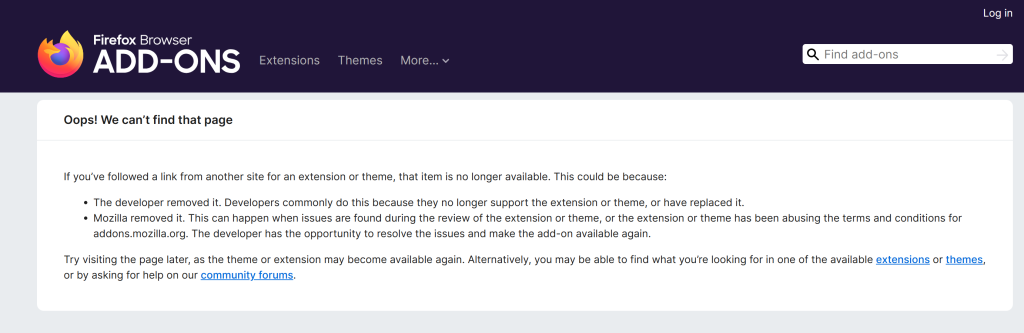
The widely acclaimed YouTube enhancement extension Enhancer for YouTube has now vanished from the Mozilla Add-ons store—and this disappearance may very well be permanent, with little chance of the extension returning to Firefox’s official marketplace.
On Firefox alone, the extension boasted more than 600,000 users and carried Mozilla’s coveted “Recommended” badge. Its last release, version 2.0.130.1, was published on November 24, 2024, while the Chrome version has already advanced to 3.0.10, with over one million downloads on that platform.
At present, all traces of Enhancer for YouTube have been erased from the Mozilla Add-ons store. The Internet Archive’s most recent snapshot, dated August 12, 2025, suggests the removal occurred only in the past few days.
On the extension’s official website, the developer has announced the termination of Firefox support, confirming that only Google Chrome and Microsoft Edge will be officially supported going forward.
The developer criticized Mozilla’s current review system, stating that it prevents them from maintaining the extension at the necessary pace to keep it running smoothly. Not only has the developer experience become “deeply unpleasant,” but the slow and unpredictable approval process for each new version has also made fixing bugs far more difficult.
Given YouTube’s rapidly evolving user interface, the extension requires frequent updates. From the developer’s remarks, it seems clear that Mozilla’s sluggish review procedures were the breaking point.
This is not an isolated incident. The Firefox Add-ons ecosystem has faced mounting criticism in recent months. Previously, the popular ad-blocker uBlock Origin Lite (the Manifest v3 edition of uBlock Origin) was delisted from the Firefox Add-ons store due to review disputes. Users are now forced to download installation packages manually from GitHub.
Notably, the original uBlock Origin remains available, as the removal targeted only the Lite version. Mozilla reviewers argued that uBlock Origin Lite collected user data and therefore required a disclosure, though the developer insisted the extension did not collect any information whatsoever.
Other developers, including Juraj Mäsiar and Brawl, have raised similar concerns. They highlighted Mozilla’s recent changes to its privacy policy for add-ons, under which even extensions that collect no data are still required to display consent dialogs.
Taken together, these issues paint a picture of mounting frustration among extension developers—frustration that may increasingly drive them to abandon Firefox in favor of more developer-friendly platforms.
Related Posts:
- Save uBlock Origin: How to Bypass Google’s Chrome Update and Extend Support
- Firefox Bolsters Security: New Scan Detects Crypto Wallet Thieves!
- Mozilla Add-ons Store Overhaul: Closed-Group Extensions Allowed, Privacy Policies Simplified
Support Our Threat Intelligence
Find our tech and OS security coverage helpful? Support our work today and unlock a 100% ad-free reading experience!
 Buy Me a Coffee
