Ecosystem Evolution: Google Unveils “Continue On” in Android 17 to Match Apple’s Handoff
 Do Son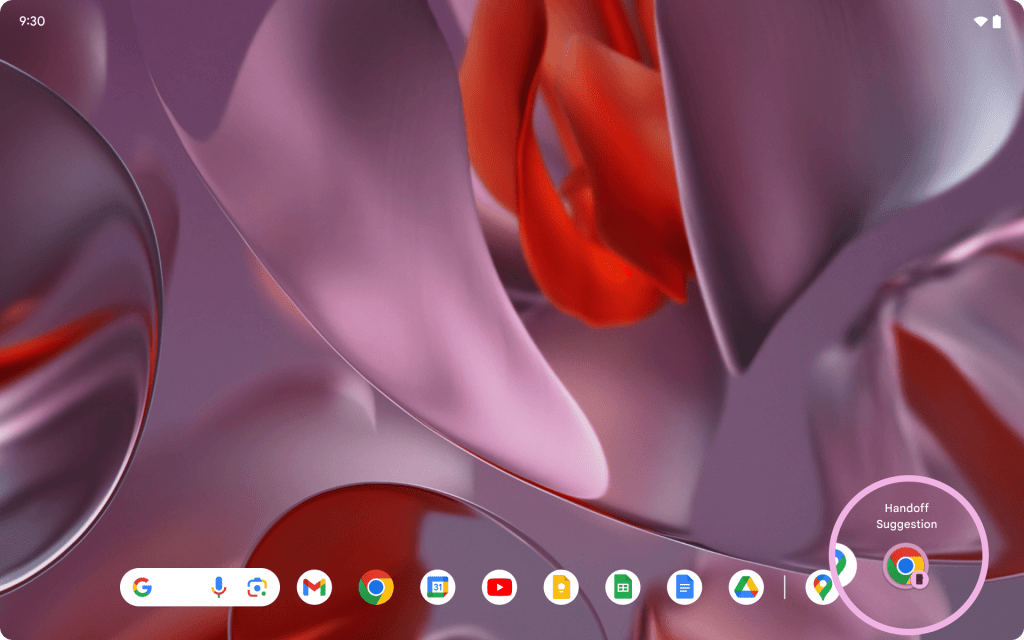
Apple features an ecosystem integration known as Handoff within its proprietary iOS environment, an architecture that empowers adjacent systems like macOS to seamlessly discover a user’s active mobile application state and transition it to the desktop interface for continuous execution. This synchronization effectively eliminates the operational friction of manual serialization, enabling users to fluidly traverse multiple physical endpoints. Seeking to challenge this paradigm, Google is actively engineering a peer capability engineered for the Android architecture.
The technology titan intends to debut this framework, designated as Continuity, alongside the impending release of Android 17. When a user initializes an action or micro-task upon an Android device, the operational context can be natively projected and resumed upon an adjacent terminal. Diverging from unidirectional models, Android’s Continuity architecture supports bi-directional execution, though its inaugural deployment envelope will be strictly rationed to cross-device handshakes between Android smartphones and Android tablets.
To facilitate this fluid interoperability, Google has blueprinting three distinct transitional pipelines:
- Application-to-Application Migration: This workflow initializes the identical native application package upon the target receiving terminal—assuming the binary has been successfully provisioned on both hosts—and seamlessly reconstitutes the active volatile execution state.
- Application-to-Web Translation: This mechanism serializes the active application context, converting and projecting it into an open web browser tab. Android developers can specify fallback URLs within their application manifests; if the destination hardware lacks the native application package, the Continuity daemon will default to invoking the web-based equivalent, such as a Progressive Web App (PWA).
- Direct Web-to-Web Routing: This process targets web-native application instances, programmatically capturing the absolute Uniform Resource Locator (URL) state from the originating environment and rendering the identical digital footprint upon the receiving web browser engine.
Conversely, should the native application infrastructure on the target machine possess the requisite programmatic filters to parse and intercept incoming URL intents, the platform can successfully execute a Web-to-Application inversion, gracefully transitioning a user from a standard web session into a high-performance native application environment.
At this developmental juncture, the Continuity framework remains structurally bound to the ecosystem boundary of Android smartphones and tablets. However, this deployment strategy lays the architectural foundation for Google’s impending Android PC operating system initiatives. Once users maintain their preferred core application suites across an entirely unified hardware fleet, the platform will achieve absolute cross-device parity—yielding a highly optimized, hyper-fluid user experience.
Inevitably, the endemic software fragmentation characterizing the Android ecosystem introduces major deployment headwinds, preventing the simultaneous distribution of Android 17’s Continuity primitives to the global user base. Initial availability will likely be monopolized by flagship hardware tiers, notably Google Pixel and premium Samsung Galaxy portfolios. Ultimately, the realization of this synchronized workspace strictly necessitates that all participating endpoints reside upon a compatible, modern Android 17 stable upstream release channel.
Support Our Threat Intelligence
Find our tech and OS security coverage helpful? Support our work today and unlock a 100% ad-free reading experience!
 Buy Me a Coffee
