Beyond the Chatbot: Anthropic Unveils “Claude Design” to Challenge Adobe and Canva
 Do Son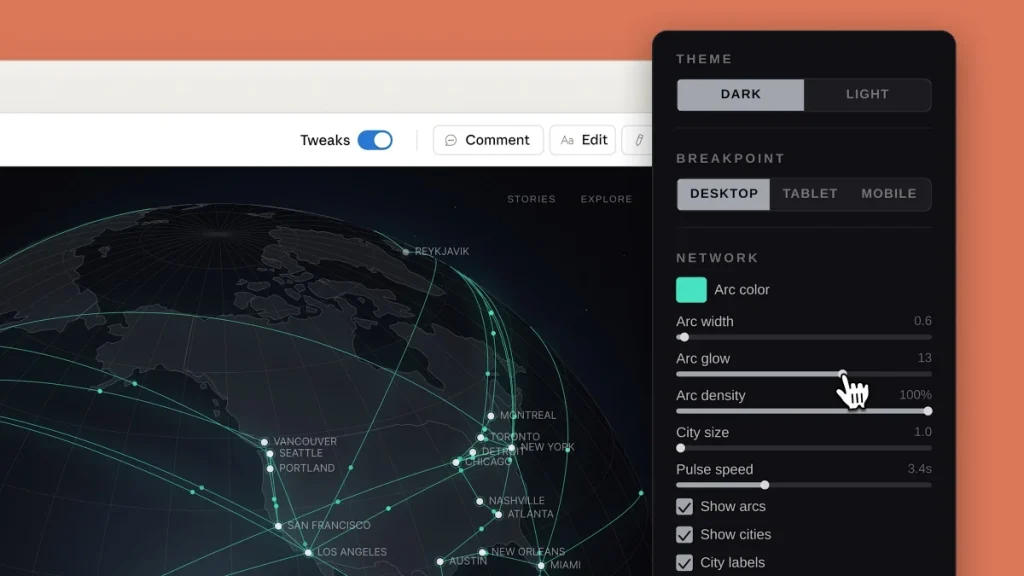
Following the inauguration of chart generation capabilities for Claude last month, Anthropic has launched a secondary offensive with the unveiling of the Claude Design preview. Driven by the cutting-edge Opus 4.7 vision model, this utility diverges from artistic generators like Midjourney or DALL-E. Instead, it directs its formidable prowess toward empowering designers and corporate professionals to rapidly synthesize UI prototypes, business presentations, and professional visual assets, signaling an overt incursion into the sovereign territories of Adobe and Canva.
Anthropic’s strategic orientation for Claude Design is unequivocal: “To grant designers expansive horizons for exploration while democratizing the capacity for visual creation.” To facilitate this vision, the engine underlying Claude Design is not a conventional diffusion model, but rather Opus 4.7—Anthropic’s most potent vision model to date. Consequently, it is not intended for the creation of whimsical, surrealist imagery. Rather, it is engineered to architect logical web interfaces, functional product prototypes, and sophisticated commercial briefings.
The creative process remains anchored in natural language prompts. Once a preliminary draft is instantiated, users may refine the output through ongoing dialogue, inline commentary, or direct editorial manipulation. In a pioneering stroke, Claude autonomously generates “Custom Sliders” predicated on the design elements produced. For instance, should the model render a complex network node diagram, an intuitive slider will manifest, permitting the manual adjustment of “luminance” or “distribution density.” This synthesis of conversational AI and traditional UI orchestration bears a striking resemblance to Adobe’s nascent AI assistants.
Perhaps the most alluring feature for enterprise clientele is the model’s profound aptitude for internalizing a brand’s unique “Visual Language.” Historically, the primary impediment to AI-assisted design has been the dissonance between AI-generated styles and established corporate identities. To remediate this, Anthropic has architected a bespoke onboarding protocol that allows Claude to ingest a firm’s codebase and extant design documentation. Once this training is concluded, all subsequent projects will automatically adhere to the organization’s specific color palettes, typography, and design standards.
Beyond support for static image and document uploads, Claude Design integrates a “Web Capture” utility, enabling users to harvest elements directly from their corporate websites for AI processing. Intriguingly, the debut of Claude Design coincided precisely with the release of competitive visual AI assistants from Adobe and Canva. However, Anthropic does not ostensibly intend to “annihilate” these legacy typesetting tools. The firm noted that Claude Design projects can be exported directly to the Claude Code development environment or even transferred seamlessly to Canva.
This nascent service is currently available for beta testing to subscribers of the Pro, Max, Team, and Enterprise tiers, with usage integrated into their existing allocation quotas.
Support Our Threat Intelligence
Find our tech and OS security coverage helpful? Support our work today and unlock a 100% ad-free reading experience!
 Buy Me a Coffee
