 Do Son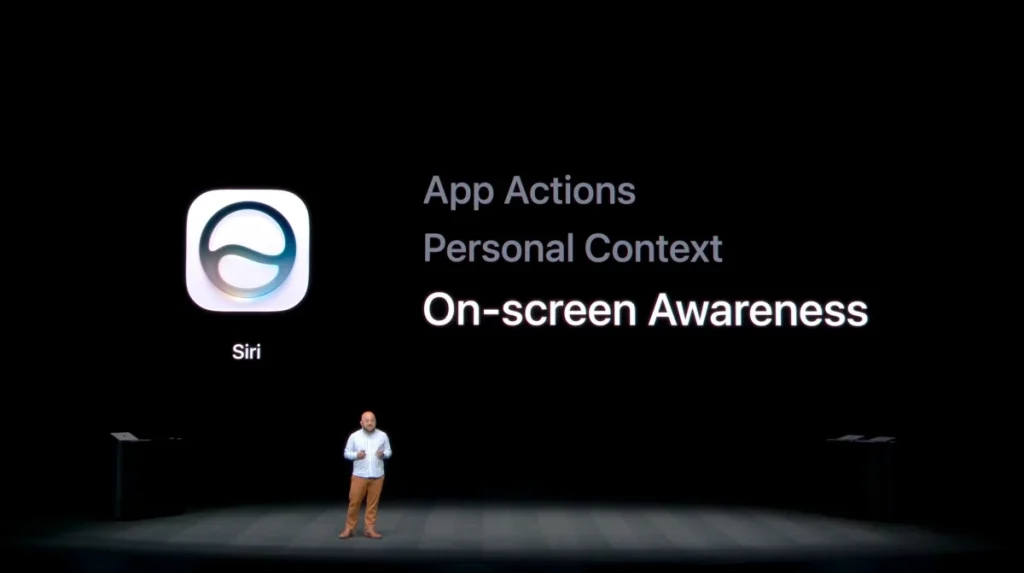
During the recent WWDC 2026 special session, Apple profoundly explored the underlying operational mechanisms of its artificial intelligence ecosystem. They detailed significant updates regarding Apple Intelligence developer tools. Apple emphasizes that artificial intelligence must not merely exist as a superficial layer tacked onto applications. Instead, it must serve as a core technology deeply woven into foundational Apple Silicon chips, operating systems, and development frameworks.
By leveraging Xcode 27, App Intents, Apple Foundation Models, alongside the Core AI and MLX frameworks, Apple envisions empowering software engineers. Consequently, developers can craft next-generation AI applications with unprecedented efficiency, unwavering privacy, and remarkable flexibility. For a comprehensive visual overview of these technical presentations, developers can explore the detailed WWDC 2026 keynote insights.
Accelerating Development with Xcode 27 Agentic Coding
Historically, software development required engineers to manually type code line by line or rely on fragmented autocomplete features. However, with the newly launched Xcode 27, Apple introduces “Agentic Coding.” This feature fundamentally transforms the daily development experience.
Unlike standard large language models restricted to modifying single files, Agentic Coding comprehensively understands a developer’s entire codebase. Through an innovative conversational interface, developers simply express their needs in natural language or upload design sketches. Subsequently, Xcode 27 automatically analyzes the project and formulates a strategic Plan Mode. Furthermore, when encountering ambiguity, the system proactively questions the developer to clarify intricate details.
Unprecedented Model Flexibility
Moreover, Apple grants developers the profound freedom to select their preferred AI agent models. Beyond built-in support, developers can seamlessly integrate models from Anthropic, OpenAI, or Google via dedicated plugins. They can even utilize custom models running entirely locally on their Mac devices.
Within Xcode 27, these agent models accomplish much more than merely writing code. They directly interact with preview tools, simulator testing environments, compilation processes, and debugging mechanisms. Ultimately, this collaborative paradigm ensures developers retain absolute control while focusing their mental energy on creative ideation. Therefore, it drastically abbreviates the development lifecycle from initial concept to a fully operational application.
Enhancing Siri Comprehension via App Intents
To ensure interactions between Siri and the operating system feel naturally intuitive and context-aware, Apple strongly encourages developers to adopt the App Intents framework.
Through App Intents, developers can define internal app data structures such as timers, emails, or photographs as specific “Entities.” Similarly, they can define corresponding user actions as “Intents.” Once an application integrates this framework, its internal data flows directly into a system-level Semantic Index. Consequently, this allows Siri to profoundly comprehend the application’s core capabilities and functions.
Seamless Contextual Awareness
This deep integration possesses profound user experience implications. When users issue natural language commands, Siri instantly leverages its novel On-screen Awareness functionality. It accurately discerns the user’s explicit intent while simultaneously grasping the context displayed on the current screen.
Consequently, Siri can directly execute corresponding in-app operations, either silently in the background or visibly in the foreground. For instance, it can directly modify a specific alarm time without opening the clock application. This advancement not only magnifies Siri’s everyday utility but also ensures third-party applications integrate flawlessly into a user’s daily digital workflow.
Apple Foundation Models: A Unified Framework
For developers seeking to embed large language model experiences directly into their software, Apple introduces the Apple Foundation Models framework. This robust architecture provides a unified, native Swift API for seamless resource integration.
Depending on specific task requirements, developers can easily invoke an on-device Apple Foundation Model. This crucial choice guarantees ultra-low latency, rigorous data privacy, and complete offline functionality. Conversely, if a complex task necessitates profound logical reasoning, developers can effortlessly switch to a server-side model. This utilizes Private Cloud Compute (PCC) via a single line of code, remarkably avoiding any additional API token expenses.
Expanding Multimodal Capabilities
Furthermore, this robust framework fully supports multimodal inputs, skillfully combining text and imagery for richer interactions. It also introduces a revolutionary Language Model Protocol. Consequently, developers can access models heavily optimized by Core AI or directly integrate third-party large language models like Google Gemini or Anthropic Claude via standard Swift packages.
Simultaneously, Apple debuted the innovative Evaluations framework. This specific toolset empowers developers to utilize extensive datasets directly within Xcode. Thus, they can continually quantify and refine AI generation quality through rigorous Model Judge assessments.
Core AI and MLX: Comprehensive Deployment Support
For those aiming to deploy highly customized models specifically on-device, Apple revealed the groundbreaking Core AI framework. Core AI effectively replaces and elevates preexisting local inference technologies. Specifically designed for modern AI workloads, it maximizes the computational prowess of the CPU, GPU, and Neural Engine situated within Apple Silicon.
Developers can effortlessly convert standard PyTorch models into the optimized Core AI format using Apple’s provided Python toolchain. This conversion process permits profound memory and cache management. More importantly, it completely ensures that when the model operates on an endpoint device, personal data never travels to the cloud. This strict data governance rigorously protects user privacy while delivering superlative inference performance.
Distributed Computing with MLX
To extensively support AI researchers and technological enthusiasts, Apple further enhanced MLX. MLX is their open-source framework meticulously tailored for high-performance computing. It features deep optimizations specifically for Apple Silicon’s unique Unified Memory architecture. Now, it proudly incorporates exceptionally efficient Distributed Computing capabilities.
By harnessing Thunderbolt 5’s remarkable Remote Direct Memory Access (RDMA) technology, developers can physically connect multiple Mac Studio or MacBook Pro units. This creates an immensely powerful computing cluster boasting ultra-low latency and phenomenal bandwidth. Effectively, this shatters the restrictive memory constraints of a single physical device.
During a captivating live demonstration, Apple seamlessly executed the colossal 1-trillion parameter Qwen (Kimmy 2.6) model using a linked cluster of four Mac Studio units. This spectacularly showcased the astonishing potential of combining advanced Mac hardware with the MLX protocol for expansive machine learning applications.
Conclusion: A Vision for the Future
Overall, Apple’s comprehensive presentation vividly illustrates its expansive strategy and technological prowess within the modern AI ecosystem. From streamlining fundamental application development via Xcode 27 to radically amplifying voice interactions through App Intents, the showcased advancements are truly staggering.
Furthermore, the Apple Foundation Models, Core AI, and MLX frameworks provide incredibly versatile deployment options for engineers of all levels. By masterfully executing high-level vertical integration between custom hardware and sophisticated software, Apple significantly lowers the barrier for developers actively adopting AI technologies. Ultimately, this strategic ecosystem architecture solidifies their unparalleled leadership in both stringent privacy protection and raw computational performance.
Support Our Threat Intelligence
Find our tech and OS security coverage helpful? Support our work today and unlock a 100% ad-free reading experience!
 Buy Me a Coffee
