 Do Son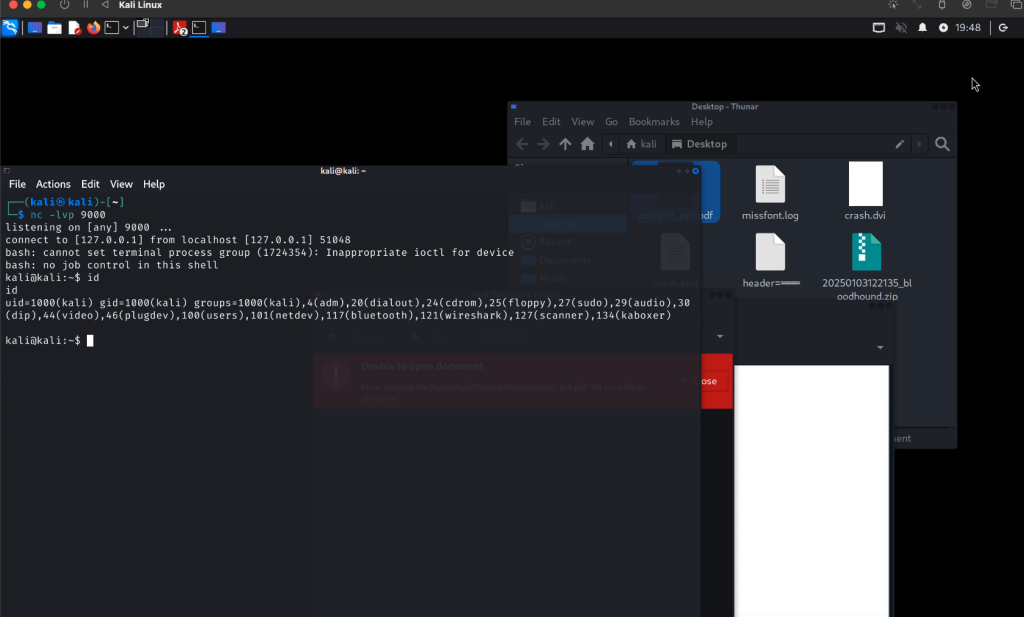
Security researchers recently discovered a dangerous security flaw in a popular open-source application. Specifically, developers recently uncovered a severe Atril single-click RCE vulnerability tracked as CVE-2026-46529. The flaw affects Atril, which is a simple multi-page document viewer used across various Linux distributions. Because this application handles common file formats like PDF, many users are currently at risk. Consequently, the security community has raised alarms due to the nature of the threat. Furthermore, independent researchers publicly disclosed full technical details and proof-of-concept exploit code.
The Mechanics of the Polyglot Exploit
How the Command Injection Works
To begin with, the security flaw allows attackers to execute unauthorized commands. The threat report summarizes the core issue clearly. According to the report, “A single-click remote code execution vulnerability in atril allows an attacker to achieve arbitrary code execution as the user by tricking them into clicking a link inside a malicious PDF document.”
Subsequently, the attacker packages the malicious payload in a very unusual format. Specifically, the file acts as a polyglot entity. Therefore, the single document serves as both a valid PDF file and a valid ELF shared library simultaneously.
Technical Root Cause Analysis
Inside the Broken Code Path
Moreover, the underlying issue stems from improper argument handling within the application shell component. The vulnerability specifically resides inside the shell/ev-application.c:ev_spawn function. In this location, the software builds a command line from user-controlled fields without sanitizing the input. As a result, the code fails to apply the necessary g_shell_quote safety functions.
Bypassing Desktop Security
Concurrently, the system hands this corrupted string to native application utilities. The system then parses the input back into separate argument elements. During this phase, an attacker can pass custom modules to trigger a library load function. Ultimately, this fatal sequence gives the threat actor immediate code execution capabilities. This execution runs with the privileges of the active local user.
Broad Scope of Affected Linux Distributions
Impacted Desktop Environments
Because many platforms rely on this viewer tool, the exploit footprint is exceptionally wide. For example, the bug endangers systems running the popular MATE Desktop environment. Affected operating systems include Ubuntu MATE, Fedora MATE, and Manjaro MATE. Additionally, the flaw impacts security-focused distributions like Parrot OS and Kali Linux. Linux Mint systems using the Cinnamon desktop are also vulnerable through the xreader fork.
Urgent Mitigation Actions
Since the Atril single-click RCE details are public, users must protect their workspaces immediately. First, administrators should monitor default file-opening associations on all workstations. Second, users must avoid clicking unverified links inside external documents. Finally, teams must apply software upgrades as soon as individual distributions release their safety patches. This rapid response neutralizes the active threat vector before malicious actors launch automated campaigns.
Support Our Threat Intelligence
Find our vulnerability reports and weekly recaps helpful? Support our work today and unlock a 100% ad-free reading experience!
 Buy Me a Coffee
