
 Do Son
An iOS exploit developer was shocked to receive an Apple warning after being targeted by the same kind of state-sponsored mercenary spyware he researches.
Malware
Malware news and in-depth analysis of the malicious software targeting organizations and users. We cover new ransomware strains, infostealers, loaders, remote access trojans and botnets, explain how they are delivered and how they work, and highlight the campaigns using them. Where available, reports include indicators of compromise and defensive guidance from researchers.

Kaspersky exposed the resurfaced PassiveNeuron campaign targeting Asia via MS SQL servers. The APT deploys custom Neursite and NeuralExecutor backdoors using Phantom DLL Hijacking for stealth persistence.

Google exposed Russia's COLDRIVER APT deploying a new "ROBOT" malware family (NOROBOT, YESROBOT) just 5 days after its LOSTKEYS tool was disclosed. The multi-stage malware uses a ClickFix lure.

The official Xubuntu website was compromised, replacing the torrent download with a malicious Windows executable to steal data.

Koi Security exposed GlassWorm, the first VSCode worm that spreads autonomously, using invisible Unicode to hide malicious code. It uses Solana blockchain and Google Calendar for a resilient C2.

SEQRITE exposed CAPI, a .NET trojan targeting Russian FinTech with malicious LNK resumes. It uses rundll32 for execution and a hidden "Security" scheduled task for persistence.

Mandiant exposed UNC5142 for using EtherHiding—hiding malicious JavaScript in BNB Smart Chain smart contracts—to create a resilient C2 and distribute VIDAR/ATOMIC to 14,000+ sites.

FortiGuard exposed a cross-regional campaign that expanded to Malaysia using HoldingHands malware. The malware hijacks Task Scheduler via TimeBrokerClient.dll to achieve stealthy persistence.

NTT exposed WaterPlum APT's multi-platform OtterCandy RAT (v2), which uses Node.js for remote control, targets 7 browser extensions, and now includes anti-forensic trace deletion.

Google exposed UNC5342 (DPRK APT) using EtherHiding—hiding JADESNOW/INVISIBLEFERRET malware in BNB/Ethereum smart contracts—for a resilient, nation-state C2 infrastructure.

Cisco Talos exposed Famous Chollima using fake job offers and a trojanized Node.js app (Chessfi) to infect developers. The OtterCookie RAT steals crypto wallets, credentials, and source code.

Kaspersky exposed Maverick, a sophisticated fileless banking Trojan targeting Brazil. It hijacks WhatsApp Web using WPPConnect for self-propagation and installs phishing overlays to steal UPI/banking data.

Unit 42 exposed PhantomVAI Loader, a stealthy MaaS tool that uses steganography (hiding DLL in images) and VM detection to deploy Katz Stealer in MSBuild.exe and exfiltrate crypto credentials globally.

A sophisticated GhostBat RAT campaign targets Indian users by spoofing RTO apps (mParivahan). The malware steals UPI credentials and OTPs via phishing pages and uses a Telegram bot for C2.

Sekoia details PolarEdge, a Rust-based backdoor using a custom mbedTLS server for C2 on Cisco, QNAP, and Synology devices. The backdoor uses XOR 0x11 for config obfuscation and attempts to delete system utilities to block rivals.

Seqrite discovered a campaign using SVG smuggling and a fake Colombian court lure to deploy AsyncRAT. The SVG executes JS to stage a malicious HTA file, evading detection.

Malicious packages across npm, PyPI, and RubyGems are exploiting Discord webhooks as stealthy, resilient C2 endpoints to exfiltrate developer config files and sensitive host data.
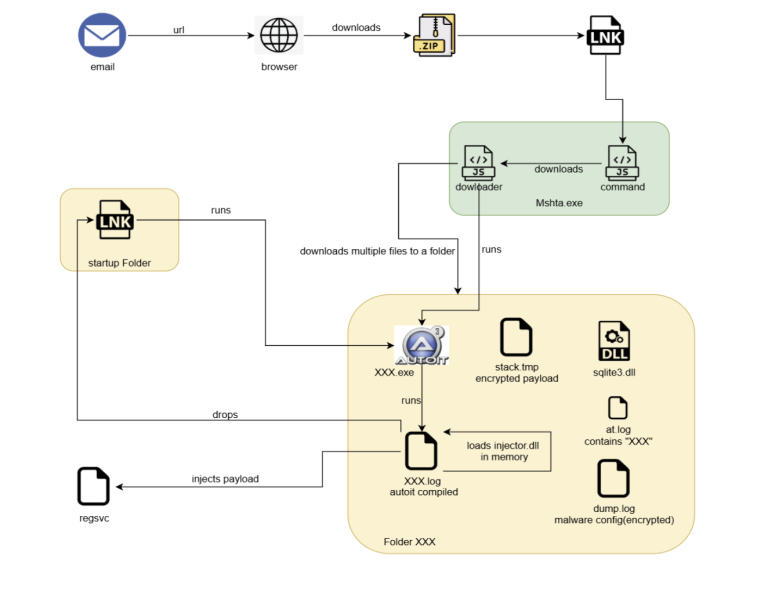
McAfee uncovered the Astaroth banking Trojan using GitHub for C2 backup, hiding encrypted configuration data via steganography in images to target Brazilian financial and crypto users.

FortiGuard Labs identified a new Stealit malware variant abusing Node.js SEA for stealthy distribution. The campaign features a public C2 panel and uses Telegram for data exfiltration.

GreyNoise warns of a massive, synchronized RDP botnet using 100,000+ IPs from over 100 countries for RDP scanning and enumeration, with US infrastructure as the primary target.

eSentire discovered ChaosBot, a Rust-based malware deployed via DLL sideloading that uses Discord channels as a covert C2 platform to perform reconnaissance and command execution.

Akira ransomware is actively exploiting the unpatched/misconfigured SonicWall flaw (CVE-2024-40766) and using the rare "UnPAC the Hash" Kerberos technique for lateral movement.