
 Do Son
Unit 42 exposed two massive campaigns (Trio & Chorus) using 2,500 spoofed domains to target Chinese users. The multi-stage attack uses MSI/VBScript and DLL sideloading via Avast to deploy Gh0st RAT.
Malware
Malware news and in-depth analysis of the malicious software targeting organizations and users. We cover new ransomware strains, infostealers, loaders, remote access trojans and botnets, explain how they are delivered and how they work, and highlight the campaigns using them. Where available, reports include indicators of compromise and defensive guidance from researchers.

eSentire exposed the Amatera Stealer campaign using ClickFix social engineering to deliver multi-stage PowerShell. The malware patches AMSI in memory and deploys NetSupport RAT for remote access.

Elastic exposed Dragon Breath APT's new RoningLoader malware. It uses PPL abuse and a signed kernel driver (ollama.sys) to disable Windows Defender and inject a modified gh0st RAT for espionage.

CISA/Europol updated their advisory on Akira Ransomware, confirming $244M in profits. The group now encrypts Nutanix AHV VMs and performs data exfiltration in just two hours via VPN flaws.

NVISO exposed the Contagious Interview APT using JSON Keeper and npoint.io as covert C2 channels. The North Korean group uses fake job lures on GitLab to deploy BeaverTail to steal Web3 credentials.

AWS Inspector exposed the largest npm supply chain incident ever: 150,000+ malicious packages were uploaded in a coordinated campaign to exploit tea.xyz token rewards via tea.yaml files.

Despite a recent doxxing attempt, Lumma Stealer has resurfaced, integrating browser fingerprinting into its C&C to collect WebGL/Canvas signatures for sandbox evasion and victim assessment.
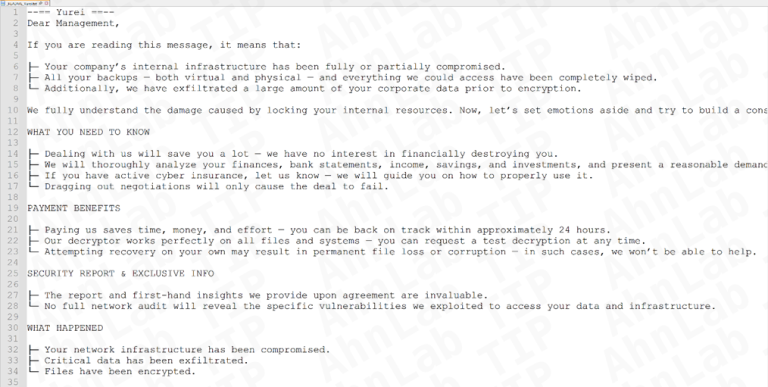
ASEC exposed Yurei, a new Go-based ransomware group using ChaCha20-Poly1305/ECIES for irreversible encryption. The stealthy RaaS operates with minimal initial setup and focuses on double extortion.

A malicious Chrome extension, Safery: Ethereum Wallet, steals BIP-39 seed phrases by encoding them into synthetic Sui blockchain addresses and broadcasting microtransactions, bypassing HTTP/C2 detection.

A new macOS threat uses malicious AppleScript (.scpt) files, disguised as documents/updates, to bypass Gatekeeper and execute stealers like MacSync and Odyssey, exploiting user trust.

ASEC exposed a SteamCleaner malware clone signed with a valid certificate. It installs a Node.js RCE backdoor via InnoSetup, evades sandboxes, and is suspected of running Proxyware for profit.

A new campaign is using Bitcoin wallet lures to distribute DarkComet RAT. The UPX-packed trojan gains persistence via a fake explorer.exe binary and uses keylogging and remote control to steal data.

ASEC exposed PatoRAT, a Delphi RAT that hijacks LogMeIn Resolve and PDQ Connect RMM tools. Attackers use maliciously configured installers disguised as 7-Zip/Notepad++ to gain full system control.

North Korea's KONNI APT is exploiting stolen Google accounts and the Find Hub service to remotely wipe South Korean Android devices for data destruction and surveillance, then spreading malware via KakaoTalk.

ENKI exposed a Lazarus Group espionage campaign targeting aerospace/defense firms. The new Comebacker variant uses malicious Word macros and ChaCha20/AES to deliver a memory-resident backdoor.

Acronis exposed DragonForce's evolution: the ransomware is compiled with MinGW, uses BYOVD drivers to terminate EDR, and contains fixes to prevent decryption of its Conti V3 derived codebase.

Unit 42 exposed LANDFALL, commercial-grade spyware that exploited a Samsung zero-day (CVE-2025-21042) in the image library libimagecodec.quram.so to compromise Galaxy phones via DNG images sent over WhatsApp.

Zimperium exposed Fantasy Hub, a Russian MaaS Android RAT. It uses a Telegram bot for subscriptions and WebRTC to covertly stream live video and audio, targeting Russian banks with dynamic overlays.

A NuGet supply chain attack injected time-delayed destructive logic into 9 packages. The malware triggers random crashes and silent data corruption on hardcoded future dates, targeting database/PLC applications.

GlassWorm resurfaced, infecting 3 new VS Code extensions on OpenVSX. The worm uses invisible Unicode and Solana blockchain C2 to steal credentials and spread via AI-generated malicious commits on GitHub.

Datadog exposed MUT-4831, a cluster that deployed Vidar Infostealer via 17 malicious npm packages. The malware uses postinstall scripts to download and execute the payload, stealing credentials and crypto wallets.

Kimsuky APT is using a Themes.js JavaScript loader and certutil LOLBIN to gain minute-by-minute persistence via a Windows Scheduled Task. The APT is targeting think tanks for espionage.