 Do Son
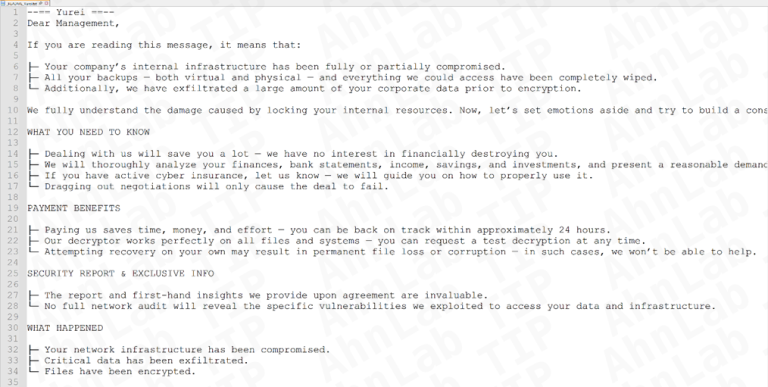
ASEC exposed Yurei, a new Go-based ransomware group using ChaCha20-Poly1305/ECIES for irreversible encryption. The stealthy RaaS operates with minimal initial setup and focuses on double extortion.
Malware

A malicious Chrome extension, Safery: Ethereum Wallet, steals BIP-39 seed phrases by encoding them into synthetic Sui blockchain addresses and broadcasting microtransactions, bypassing HTTP/C2 detection.

A new macOS threat uses malicious AppleScript (.scpt) files, disguised as documents/updates, to bypass Gatekeeper and execute stealers like MacSync and Odyssey, exploiting user trust.

ASEC exposed a SteamCleaner malware clone signed with a valid certificate. It installs a Node.js RCE backdoor via InnoSetup, evades sandboxes, and is suspected of running Proxyware for profit.

A new campaign is using Bitcoin wallet lures to distribute DarkComet RAT. The UPX-packed trojan gains persistence via a fake explorer.exe binary and uses keylogging and remote control to steal data.

ASEC exposed PatoRAT, a Delphi RAT that hijacks LogMeIn Resolve and PDQ Connect RMM tools. Attackers use maliciously configured installers disguised as 7-Zip/Notepad++ to gain full system control.

North Korea's KONNI APT is exploiting stolen Google accounts and the Find Hub service to remotely wipe South Korean Android devices for data destruction and surveillance, then spreading malware via KakaoTalk.

ENKI exposed a Lazarus Group espionage campaign targeting aerospace/defense firms. The new Comebacker variant uses malicious Word macros and ChaCha20/AES to deliver a memory-resident backdoor.

Acronis exposed DragonForce's evolution: the ransomware is compiled with MinGW, uses BYOVD drivers to terminate EDR, and contains fixes to prevent decryption of its Conti V3 derived codebase.

Unit 42 exposed LANDFALL, commercial-grade spyware that exploited a Samsung zero-day (CVE-2025-21042) in the image library libimagecodec.quram.so to compromise Galaxy phones via DNG images sent over WhatsApp.

Zimperium exposed Fantasy Hub, a Russian MaaS Android RAT. It uses a Telegram bot for subscriptions and WebRTC to covertly stream live video and audio, targeting Russian banks with dynamic overlays.

A NuGet supply chain attack injected time-delayed destructive logic into 9 packages. The malware triggers random crashes and silent data corruption on hardcoded future dates, targeting database/PLC applications.

GlassWorm resurfaced, infecting 3 new VS Code extensions on OpenVSX. The worm uses invisible Unicode and Solana blockchain C2 to steal credentials and spread via AI-generated malicious commits on GitHub.

Datadog exposed MUT-4831, a cluster that deployed Vidar Infostealer via 17 malicious npm packages. The malware uses postinstall scripts to download and execute the payload, stealing credentials and crypto wallets.

Kimsuky APT is using a Themes.js JavaScript loader and certutil LOLBIN to gain minute-by-minute persistence via a Windows Scheduled Task. The APT is targeting think tanks for espionage.

Darktrace exposed a DragonForce RaaS attack on a manufacturer. The multi-phase intrusion used brute force and OpenVAS for recon, then exfiltrated data over SSH to a Russian-based malicious host.

Google exposed AI-enabled malware like PROMPTFLUX, which uses the Gemini API to dynamically rewrite its own source code to evade detection. APT28 was seen deploying an LLM-assisted stealer.

Bitdefender exposed Curly COMrades (Russian APT) using Hyper-V to run a hidden Alpine Linux VM. The VM hosts the CurlyShell backdoor, effectively bypassing host-based EDR for espionage.

JPCERT exposed APT-C-60 targeting Japan via VHDX LNK files in phishing emails. The SpyGlace malware uses GitHub to fetch encrypted commands and statcounter for victim telemetry.

CERT Polska exposed NGate, an Android malware that tricks users into tapping their card against their phone to steal NFC EMV data and PINs. The data is then relayed to an ATM for cash withdrawal.

Microsoft exposed SesameOp, an espionage backdoor that uses the OpenAI Assistants API for a covert C2 channel. The malware bypasses network defenses by blending encrypted commands with legitimate HTTPS traffic.

Check Point found ChatGPT dramatically accelerates malware analysis, reducing XLoader's complex, multi-layered RC4 encryption decryption from days to hours. The AI breaks obfuscation and reveals C2 infrastructure.