
 Do Son
The new Sturnus Android banking trojan bypasses end-to-end encryption on WhatsApp & Signal and enables full device takeover for hidden financial fraud.
Malware

A deep-dive on Lazarus’s ScoringMathTea RAT reveals a full reflective DLL injection system, TEA/XTEA C2 encryption, and a polyalphabetic cipher for API hashing—a highly evasive tool for espionage.

A 42-day Akira ransomware attack started with one ClickFix CAPTCHA that deployed SectopRAT. The attackers went undetected despite EDRs, stealing 1 TB and deleting cloud storage backups.

Cybereason exposed The Gentlemen, a new, technically advanced Go-based RaaS using XChaCha20/Curve25519 crypto. The group claimed 48 victims in 3 months, leveraging WMI and PowerShell for propagation.

Akamai exposed a malware that hides RAT C2 traffic by spoofing LLM chat-completion API requests on Tencent Cloud Serverless Functions. The payload is delivered via LNK/Sangfor DLL sideloading.

Trend Research warns that ransomware is shifting to AWS S3, exploiting misconfigured IAM and SSE-C keys in five attack variants to cause irreversible data loss and cloud-native extortion.

Oligo exposed ShadowRay 2.0, a massive, evolving campaign using AI-generated malware to turn 230K exposed Ray AI clusters into a self-propagating cryptomining and DDoS botnet.

LayerX exposed a 6-year, 9M-install campaign: Fake VPN/ad-blocking Chrome extensions hijack all user traffic via remote PAC proxy scripts, enabling surveillance and data exfiltration.

Socket exposed a new npm attack (dino_reborn) using Adspect cloaking to hide behind a fake crypto CAPTCHA for victims, while showing a polished decoy site (Offlido) to researchers.

Mandiant exposed UNC1549, an Iranian APT, using DLL search order hijacking on Citrix/VMware to deploy TWOSTROKE and DCSYNCER.SLICK. The group performs VDI breakouts for long-term espionage.

Splunk uncovered a new .NET steganographic loader that hides LokiBot malware inside embedded BMP and PNG image files. The multi-stage loader uses a separate container module, evading static detection.

A new macOS stealer (Nova) uses LaunchAgents to install a modular backdoor. Its main function is replacing legitimate Ledger/Trezor apps with phishing clones that exfiltrate seed phrases as users type.

Israel disclosed SpearSpecter: an IRGC-IO espionage campaign using weeks-long WhatsApp social engineering and search-ms/WebDAV abuse to deploy the fileless TAMECAT PowerShell backdoor with Discord/Telegram C2.

Jamf exposed DigitStealer, an advanced macOS infostealer that checks for Apple M2+ chips. It uses Cloudflare Pages for delivery, JXA for stealth, and modifies Ledger Live to steal crypto wallets via DNS TXT C2.

Unit 42 exposed two massive campaigns (Trio & Chorus) using 2,500 spoofed domains to target Chinese users. The multi-stage attack uses MSI/VBScript and DLL sideloading via Avast to deploy Gh0st RAT.

eSentire exposed the Amatera Stealer campaign using ClickFix social engineering to deliver multi-stage PowerShell. The malware patches AMSI in memory and deploys NetSupport RAT for remote access.

Elastic exposed Dragon Breath APT's new RoningLoader malware. It uses PPL abuse and a signed kernel driver (ollama.sys) to disable Windows Defender and inject a modified gh0st RAT for espionage.

CISA/Europol updated their advisory on Akira Ransomware, confirming $244M in profits. The group now encrypts Nutanix AHV VMs and performs data exfiltration in just two hours via VPN flaws.

NVISO exposed the Contagious Interview APT using JSON Keeper and npoint.io as covert C2 channels. The North Korean group uses fake job lures on GitLab to deploy BeaverTail to steal Web3 credentials.

AWS Inspector exposed the largest npm supply chain incident ever: 150,000+ malicious packages were uploaded in a coordinated campaign to exploit tea.xyz token rewards via tea.yaml files.

Despite a recent doxxing attempt, Lumma Stealer has resurfaced, integrating browser fingerprinting into its C&C to collect WebGL/Canvas signatures for sandbox evasion and victim assessment.
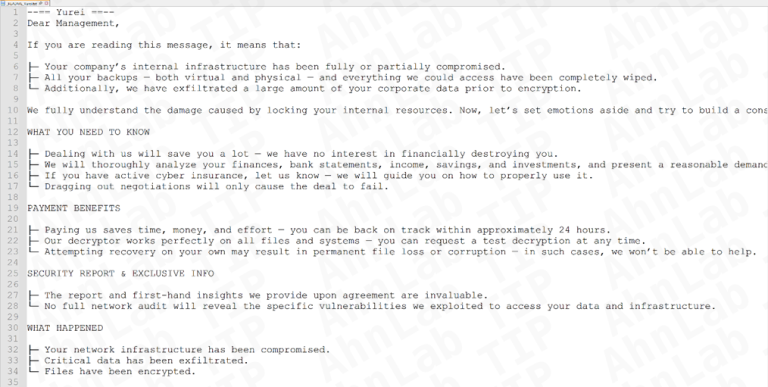
ASEC exposed Yurei, a new Go-based ransomware group using ChaCha20-Poly1305/ECIES for irreversible encryption. The stealthy RaaS operates with minimal initial setup and focuses on double extortion.