
 Do Son
A critical vulnerability (CVE-2024-4358) has been discovered in Progress Telerik Report Server, a popular report management solution
Vulnerability

The vulnerability, tracked as CVE-2024-24919, has been assigned a CVSS score of 7.5, indicating high severity.

Foxit Software, a leading provider of PDF solutions, has issued a security advisory, disclosing actively exploited vulnerabilities...

The flaw, tracked as CVE-2024-5027, could allow an attacker with local access to a Mac device to escalate their privileges to the highest level
Critical Security Advisory: Mitel MiCollab Vulnerabilities Exposed (CVE-2024-35285 & CVE-2024-35286)

Critical Security Advisory: Mitel MiCollab Vulnerabilities Exposed (CVE-2024-35285 & CVE-2024-35286)
The vulnerabilities, tracked as CVE-2024-35285 and CVE-2024-35286, have been assigned the highest severity rating of 9.8 on the CVSS

The flaw, designated as CVE-2024-5274 (CVSS 8.8), was recently patched by Google after being exploited in the wild

The vulnerability, designated CVE-2024-26289 and assigned a CVSS score of 9.8 (critical), stems from the deserialization of untrusted data

CVE-2024-5035 allows for remote code execution (RCE) due to command injection and buffer overflow issues in the rftest binary

In the cybersecurity field, web application firewalls (WAFs) are pivotal in defending web applications from malicious attacks....

Technical details and a proof-of-concept (PoC) exploit code have emerged about a security flaw (CVE-2024-2961) in GNU C Library

Security researcher Guillaume André with Synacktiv has detailed a high-severity vulnerability, CVE-2024-26238 (CVSS 7.8)

In addition to CVE-2024-27842, Wang Tielei has also released a PoC exploit for CVE-2023-40404, a privilege escalation flaw in macOS Sonoma

CVE-2024-25737 and CVE-2024-25738, are both rated with a high CVSS score of 9.1, indicating the potential for significant damage if exploited

Security researcher Matthias Gerstner has discovered a critical vulnerability (CVE-2024-5148) in GNOME Remote Desktop

This RCE vulnerability was facilitated through the use of Cog, Replicate’s proprietary format for containerizing AI models.

Researchers have unveiled a potent new method for launching distributed denial-of-service (DDoS) attacks, dubbed DNSBomb (CVE-2024-33655)

Qlik, a prominent player in the data analytics space, has issued a security advisory warning users of a high-risk flaw (CVE-2024-36077)

The vulnerability, designated CVE-2024-34710, poses a serious risk due to its potential for stored cross-site scripting (XSS) attacks

CVE-2024-28063 & CVE-2024-28064 could allow attackers to access sensitive information, delete files, and potentially launch DoS attacks
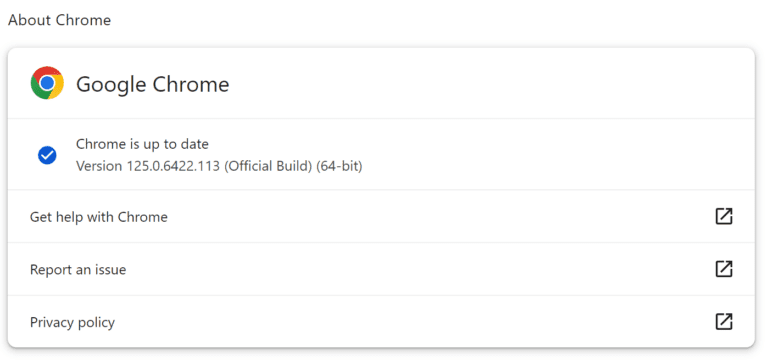
Google issued an emergency security update for its Chrome browser Thursday, urgently addressing a zero-day vulnerability (CVE-2024-5274)

The vulnerability in question (CVE-2020-17519) is a directory traversal flaw that allows attackers to read arbitrary files

A critical vulnerability, designated CVE-2024-4978, has been discovered in Justice AV Solutions (JAVS) Viewer software