 Do Son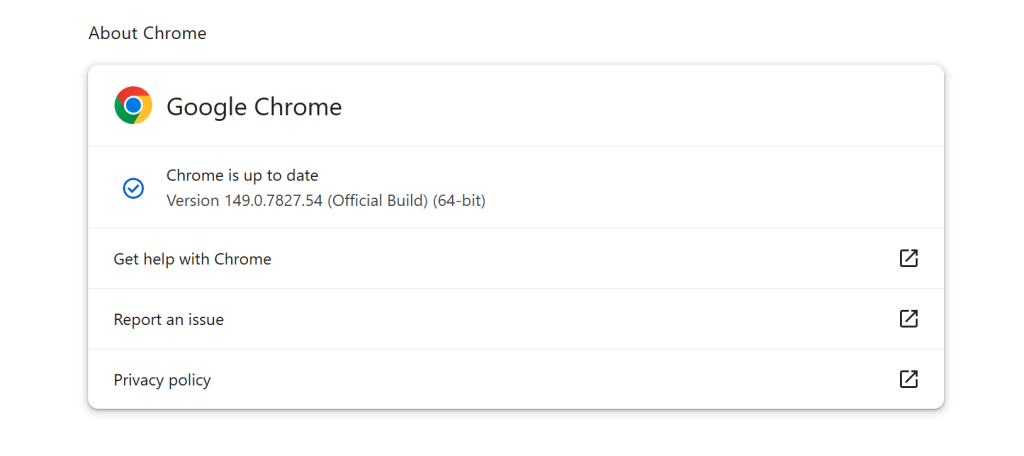
Massive Stable Channel Rollout Safeguards Web Browsers
The Google development team promoted Chrome 149 to the stable channel for Windows, Mac, and Linux. Specifically, this mandatory Chrome desktop security update addresses an unprecedented number of security flaws across multiple platform modules. According to the official release note, “This update includes 429 security fixes.” Consequently, users must upgrade their active browser applications over the coming days to maintain robust perimeter defenses.
Turn Google CVEs into GitHub Issues automatically — no copy-pasting, no duplicates.
Try Team free for 14 daysInside the Critical Engine Defects
To begin with, external researchers discovered highly volatile memory corruption bugs inside the core ANGLE graphics abstraction layer. For example, an anonymous researcher received a massive $97,000 bounty payout for identifying CVE-2026-10881. The team classified this severe issue as a “Critical CVE-2026-10881: Out of bounds read and write in ANGLE.” Furthermore, another vulnerability researcher named Maher Azzouzi discovered a separate out-of-bounds write defect tracking as CVE-2026-10883. Additionally, internal automated testing by Google flagged a critical stack buffer overflow bug inside the GPU handling infrastructure. This specific flaw tracks as CVE-2026-10898 and allows full process compromise.
Addressing Widespread Use-After-Free Exploits
Concurrently, a substantial portion of the newly resolved flaws involve dangerous use-after-free conditions. These specific errors impact high-profile internal subsystems like the Ozone platform layer, the file system, and password managers. For instance, independent security professionals reported CVE-2026-10882 inside the network component, earning a notable forty-three thousand dollar reward. Because these memory mismanagement errors can trigger arbitrary code execution, they represent a significant threat to endpoint integrity. Therefore, eliminating these structural software vulnerabilities remains the primary focus of this stable rollout.
Temporary Information Restrictions Imposed
However, engineering teams are temporarily withholding the precise technical mechanics of these exploits from the public domain. The advisory states: “Access to bug details and links may be kept restricted until a majority of users are updated with a fix.” In addition, the organization maintains these explicit boundaries if a defect resides inside a shared third-party dependency library. This deliberate operational delay successfully prevents adversarial groups from engineering functional exploit payloads against unpatched installations.
Immediate Upgrades Recommended for Endpoints
Ultimately, corporate technology managers must enforce immediate update policies to roll out the Chrome desktop security update. Systems running build version 149.0.7827.53 or earlier contain several critical vulnerabilities patched by this release cycle. Fortunately, the browser handles the installation process automatically upon a standard application relaunch sequence. Finally, manually verifying the software version status inside the product help menu guarantees complete patch validation.
Support Our Threat Intelligence
Find our vulnerability reports and weekly recaps helpful? Support our work today and unlock a 100% ad-free reading experience!
 Buy Me a Coffee
