Cloudflare Wallets: Programmable Payment and Identity Infrastructure for AI Agents
 Do Son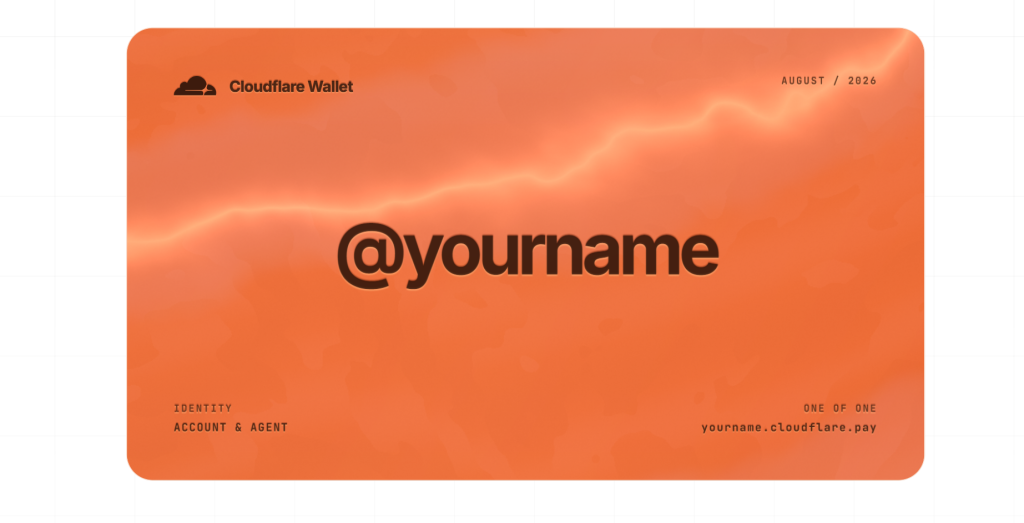
Cloudflare has announced the launch of Cloudflare Wallets – a programmable wallet system designed not for everyday consumers, but for AI agents and automated applications. The product’s stated ambition is to serve as the foundational payment and identity layer for the agentic internet.
Users may currently register a reserved wallet username through their Cloudflare account via Cloudflare.Pay. Each account is limited to one reserved username. Predictably, names such as @Google, @Apple, and @Microsoft carry a high likelihood of rejection.
The Problem Cloudflare Is Solving
Cloudflare has previously argued that AI agents and AI-powered search crawlers should pay per-use fees for APIs and content they consume. Cloudflare Wallets is the practical instrument designed to make that vision operable.
At present, when an AI agent attempts to access a service through a website’s API, it typically encounters a workflow designed entirely for human users: navigate to a login page, register an account, add a payment method, generate an API key, and then work through the integration documentation. This sequence is fundamentally incompatible with autonomous agent operation.
Two Root Causes of the Gap
The first problem is identity. AI agents lack a stable, verifiable identity, making it difficult for service providers to determine whom a given agent represents. This ambiguity complicates trial quotas, fraud controls, commercial agreements, and trust decisions.
The second problem is payment. AI agents have no native mechanism for paying directly for APIs, content, or inference services in the same seamless way they call those services. As a result, many tasks that agents could theoretically handle autonomously still require a human to step in – defeating the purpose of automation and preventing agents from independently testing and comparing competing services at scale.
How Cloudflare Wallets Works
Cloudflare Wallets addresses both deficiencies by pairing with Cloudflare’s previously launched monetization gateway service. That gateway supports the x402 protocol, which embeds payment information directly within an HTTP request. A service provider can place an API, dataset, or piece of content behind an x402-enabled endpoint. When an agent requests that resource, it simultaneously completes a micropayment – no separate checkout flow required.
Account Wallets vs. Virtual Wallets
The system introduces two distinct wallet types designed to reflect the division of responsibility between human administrators and autonomous agents.
Account Wallets
Account wallets are intended for human users – the account owners and administrators who fund and govern the system. Through an account wallet, a user can deposit and withdraw funds, set overall spending limits, and authorize AI agents to draw on those funds within defined parameters.
Virtual Wallets
Virtual wallets are provisioned specifically for AI agents and are operated programmatically through an API. An administrator can create a distinct virtual wallet for each agent, then configure rules governing that wallet: an available balance ceiling, a list of approved merchants or services, and a per-transaction spending cap.
Within these boundaries, an agent can autonomously purchase services without human intervention. Beyond them, it cannot. The design is explicitly intended to enable agent autonomy without enabling unconstrained spending.
Wallet as Agent Identity Layer
Beyond payments, Cloudflare Wallets is also positioned as an identity infrastructure for AI agents. Today, when a website receives a request from an AI agent, it typically sees only an automated HTTP call with no reliable signal indicating whom the agent represents. This makes it impossible to apply per-user trial quotas, extend free credits, implement meaningful fraud controls, or establish commercial relationships with the entity behind the agent.
Cloudflare’s solution links the wallet to the user’s primary account identity through Cloudflare.Pay. This association allows an agent to selectively declare its identity when interacting with a service. A website or merchant receiving that declaration can then make an informed decision: whether to serve the request, grant a usage quota, or require a higher level of identity verification before proceeding.
Identity Disclosure Remains User-Controlled
Whether an agent announces its identity is entirely at the discretion of the human operator. Users who prefer not to expose their real identity may withhold it. Merchants, in turn, may offer differentiated service tiers based on disclosure status – for example, requiring anonymous agents to pay for every request while granting verified agents a free testing quota.
The result is a tiered trust model that mirrors the way human identity and reputation function in commercial relationships, extended to the autonomous agents acting on users’ behalf.
Support Our Threat Intelligence
Find our tech and OS security coverage helpful? Support our work today and unlock a 100% ad-free reading experience!
 Buy Me a Coffee
