The Silicon Squeeze: Apple Sacrifices High-End Memory to Survive the Global AI Chip Famine
 Do Son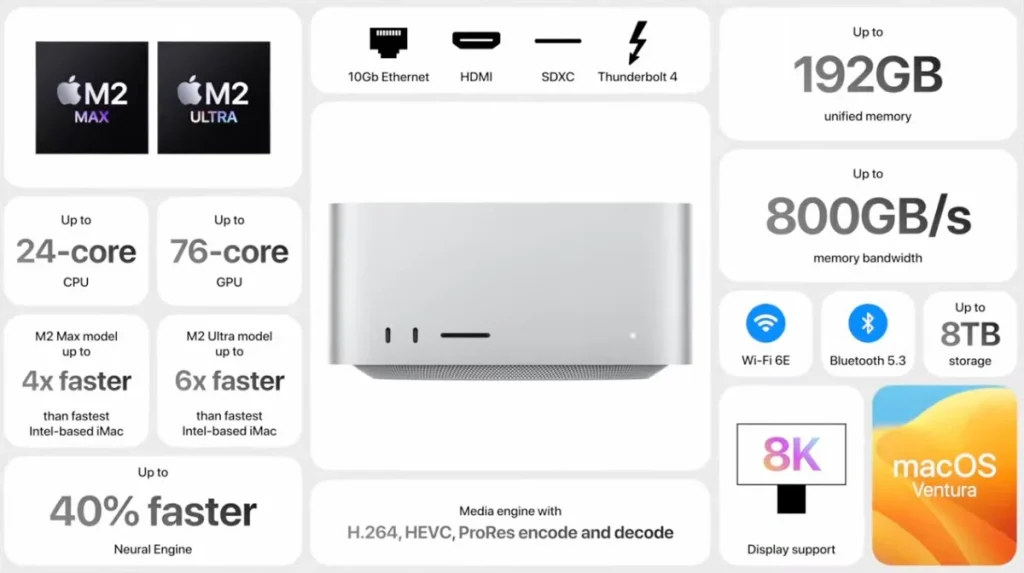
As the global artificial intelligence industry’s insatiable appetite for memory chips reaches a fever pitch, this profound supply drought has inexorably encroached upon both consumer and professional-grade electronics. Apple recently orchestrated a drastic, unheralded recalibration of the hardware configurations for its professional desktop, the Mac Studio. Not only has the zenith 512GB unified memory tier been entirely excised, but the surviving 256GB iteration now languishes with shipping schedules deferred until May, whilst simultaneously enduring the friction of an elevated upgrade premium. Concurrently, as its desktop vanguard wrestles with a dearth of high-echelon components, Apple has executed a surgical architectural reimagining of its MacBook armada, unequivocally demonstrating its sovereign mastery over supply chain logistics.
According to the latest architectural matrices upon Apple’s official domain, the Mac Studio’s memory specifications and pricing paradigms have undergone the following pronounced metamorphoses:
-
The Extinction of the Apex 512GB Tier: Prior to this recalibration, patrons commanding the M3 Ultra-equipped Mac Studio were afforded the luxury of a premium ascension to 512GB of unified memory. Presently, this opulent configuration has been entirely expunged from Apple’s digital storefront, violently truncating the permissible upgrade spectrum to a bandwidth of 48GB to 256GB (anchored by a baseline of 36GB).
-
A Precipitous Ascent in Upgrade Expenditures: Beyond the severing of the capacity ceiling, the financial toll for securing the 256GB memory configuration has grown discernibly more onerous. Taking the M3 Ultra chassis as an exemplar, elevating the architecture from 96GB to 256GB historically demanded a tribute of $1,600; traversing this identical upgrade path now exacts a toll of $2,000—a staggering inflation of $400.
-
Profoundly Protracted Fulfillment Timelines: Even should a patron acquiesce to the inflated premium for the 256GB iteration, official shipping dockets currently project delivery delays cascading into May. This starkly illuminates the colossal logistical strain presently suffocating the supply chain nexus.
Industry analysts overwhelmingly postulate that Apple’s “contraction and inflation” stratagem regarding the Mac Studio’s memory configurations is inextricably tethered to the severe global famine of DRAM silicon. The contemporary AI sector’s voracious appetite for High Bandwidth Memory (HBM) and capacious DRAM architectures is experiencing explosive, exponential proliferation. This phenomenon has not merely precipitated ubiquitous price inflations and capacity cannibalization among upstream memory purveyors, but its reverberations have now unequivocally permeated the terminal consumer electronics bazaar.
Furthermore, as an escalating contingent of developers and enterprises gravitates toward executing AI Agents and open-source models natively upon localized hardware, the Mac Studio—armed with formidable computational prowess and cavernous unified memory—has morphed into a profoundly coveted commodity. This dual pincer movement of diminished supply colliding with surging demand has exponentially exacerbated the supply chain crucible Apple endures regarding its premier configurations.
In stark juxtaposition to the insurmountable hurdles impeding the Mac Studio’s zenith specifications, Apple has deployed a fundamentally disparate stratagem within the notebook theater, orchestrating a comprehensive architectural reshuffling of memory and storage paradigms across the entirety of the MacBook lineage:
- The MacBook Neo’s Resolute Defense of the Vanguard: The newly unveiled, accessible MacBook Neo resolutely offers a solitary 8GB memory configuration, maintaining a draconian guardianship over the entry-level pricing threshold and its pedagogical market positioning.
- A Monumental Elevation of the MacBook Air Benchmark: The historical grievance lamenting the “anemic capacity of the baseline model” has officially been relegated to antiquity. The MacBook Air armada now launches from a formidable baseline of 16GB of memory, entirely eradicating the 256GB storage tier and consecrating a capacious 512GB reservoir as the definitive foundational standard.
- The MacBook Pro’s Consecration of Professional Supremacy: To irrevocably widen the chasm demarcating it from the Air lineage, the entire MacBook Pro pantheon now embarks from a colossal 1TB storage threshold, exquisitely satisfying the uncompromising demands of professional creators who mandate cavernous sanctuaries for their monumental digital assets.
This cascading series of architectural calibrations has not merely crystallized the positioning of each product echelon with unprecedented lucidity; amidst the tempestuous price volatility afflicting DRAM and NAND Flash markets, it serves as a formidable testament to Apple’s transcendent supply chain dominion and its monolithic, bulk-purchasing leverage. Apple’s contemporary hardware stratagems flawlessly encapsulate the adage of deploying the finest steel exclusively upon the blade’s edge.
The recent abbreviation and subsequent inflation of the Mac Studio’s memory configurations paradoxically illuminate the breathtaking cost-efficacy of Apple’s unified memory architecture when tasked with executing colossal AI models. A Mac Studio fortified with 256GB of memory essentially operates as a computational leviathan boasting over a hundred gigabytes of VRAM—a proposition that significantly undercuts the exorbitant fiscal demands of traditional, multi-GPU NVIDIA workstation paradigms.
Nonetheless, confronted by the global strangulation of high-echelon DRAM capacity, even Apple was compelled to bow before reality. The corporation was forced to jettison the hyper-niche 512GB specification and inflate the 256GB tariff to accurately mirror the stark realities of supply chain expenditures.
Yet, pivoting our gaze toward the MacBook armada, Apple exudes a fundamentally disparate confidence. Through exquisitely surgical precision, Apple ensures the MacBook Neo retains its 8GB memory footprint, thereby engulfing the demographic relentlessly pursuing ultimate cost-efficiency. Concurrently, leveraging its formidable supply chain supremacy, it has vaulted the MacBook Air’s baseline to an opulent 16GB of memory and 512GB of storage. This not only preemptively paves a golden thoroughfare for the impending ubiquity of Apple Intelligence applications but also guarantees that the Pro lineage, now anchored by a 1TB standard, reigns unassailable upon its professional throne.
Support Our Threat Intelligence
Find our tech and OS security coverage helpful? Support our work today and unlock a 100% ad-free reading experience!
 Buy Me a Coffee
