The High-End Interregnum: Why Global Part Shortages Just Pushed the New Mac Studio to October
 Do Son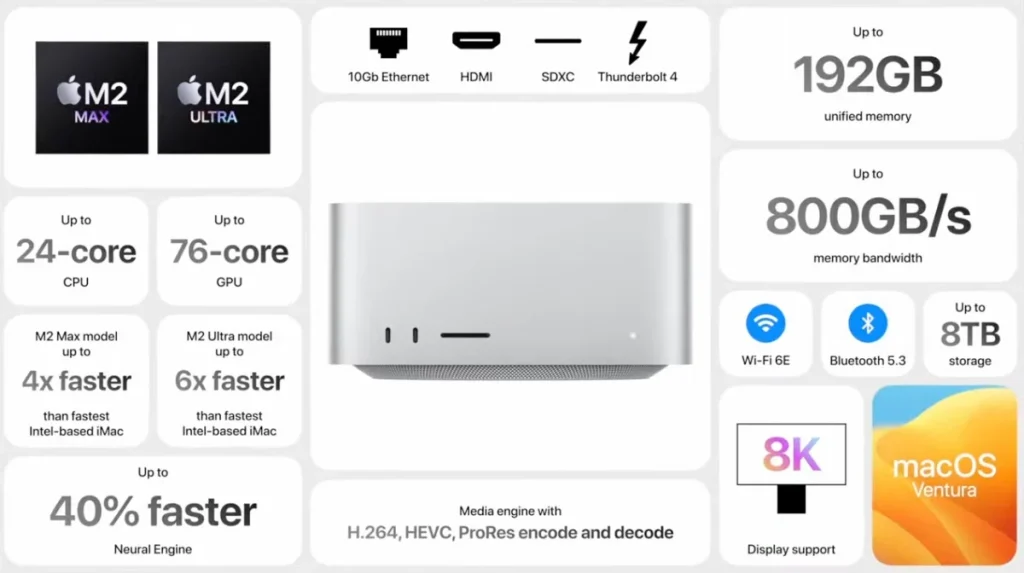
According to insights shared by Bloomberg correspondent Mark Gurman in his most recent “Power On” editorial, Apple’s next-generation Mac Studio, originally slated for a mid-year debut, may be deferred until October due to persistent supply chain volatility. The primary catalyst for this delay appears to be a global deficit in memory and storage components, an industrial shortage that has not only disrupted Apple’s product launch cadence but has also precipitated a severe scarcity of current Mac desktop models.
At present, the Mac Studio portfolio features configurations powered by the M3 Ultra and M4 Max silicon. However, consumers attempting to procure these high-performance workstations through Apple’s official channels will encounter protracted lead times, with specific iterations currently marked as entirely out of stock or unavailable for order.
While market analysts initially conjectured that this widespread depletion signified a routine inventory liquidation in anticipation of an M5-powered successor, Gurman’s reporting suggests a more precarious reality. The constrained delivery capacity is fundamentally a consequence of global shortages in critical semiconductor components.
Faced with finite manufacturing resources, Apple has seemingly executed a strategic pivot, prioritizing its high-volume portable lineup over its desktop offerings. Consequently, while the majority of MacBook Air and MacBook Pro models remain readily available, desktop solutions such as the Mac mini and Mac Studio are besieged by delays exceeding a month.
Should Gurman’s assertions prove accurate, creative professionals awaiting a hardware unveiling during WWDC 2026 must temper their expectations. This shift implies that the launch trajectory for the new Mac Studio will migrate from the traditional developer-centric summer stage to Apple’s customary autumn hardware showcase, typically held in October or November.
From a commercial perspective, prioritizing the MacBook over the Mac desktop line is a pragmatic defensive maneuver. Given that portables generate the lion’s share of Mac revenue, ensuring the stability of the mass-market supply is paramount to sustaining fiscal performance.
Nevertheless, this represents an unwelcome development for power users who rely on the Mac Studio for intensive workloads such as cinematic editing, 3D rendering, complex software compilation, and localized AI model training. With current hardware unavailable and the successor delayed by another six months, many enterprises and creative studios face a challenging “interregnum” in their equipment lifecycle management.
If the new Mac Studio is indeed absent from WWDC 2026, it suggests that next month’s conference will marginalize hardware announcements in favor of a concentrated focus on the evolution of iOS 27, macOS 27, and the deeper integration of Apple Intelligence within the broader ecosystem.
Support Our Threat Intelligence
Find our tech and OS security coverage helpful? Support our work today and unlock a 100% ad-free reading experience!
 Buy Me a Coffee
