 Do Son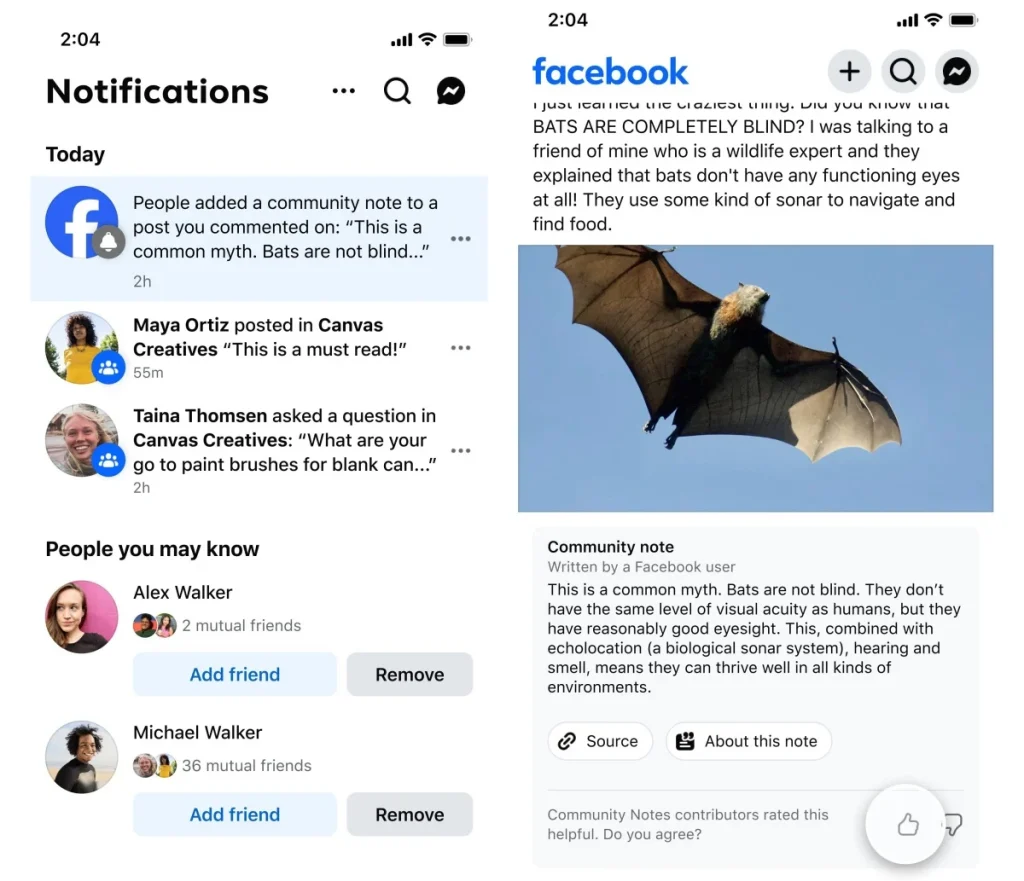
Earlier this year, following the announcement of its new “Community Notes” initiative to replace third-party fact-checking, Meta’s Chief Security Officer, Guy Rosen, revealed that the company has begun inviting all users to participate in testing. Participants can now rate the usefulness of existing notes and even contribute supplemental annotations on posts, with the goal of fostering a model of “community-driven information integrity.”
In the current trial, even users who have not yet been approved as qualified note authors with writing privileges can still express their judgment by giving a “like” or “dislike” to notes they encounter—indicating whether the annotation was helpful. For now, however, the Community Notes feature on platforms like Facebook remains limited to users in the United States.
Meta hopes this feedback-driven approach will increase both the credibility and the practical value of annotations. Users may also request notes on specific posts they believe to be misleading, lacking context, or in need of clarification, prompting designated authors to supply additional explanations.
Alongside this upgrade in interactivity, Meta is also testing a notification system: if a user has previously liked, commented on, or shared a post that later receives a Community Note, they will be alerted to the update. This mirrors Meta’s earlier practice of notifying users about fact-checking outcomes, enabling quicker awareness of potentially disputed or misleading content.
So far, more than 70,000 contributors have joined the program, collectively producing over 15,000 notes. Yet only around 6% of these have been published publicly, reflecting Meta’s stringent quality controls and underscoring that the project remains in an early experimental phase, with both content volume and coverage still limited.
The design philosophy behind Meta’s initiative strongly resembles that of X’s Community Notes, though it has sparked debate over whether eliminating traditional fact-checking might weaken the platform’s defenses against misinformation. Multiple studies have already suggested that while X’s system emphasizes freedom of expression, its effectiveness in curbing falsehoods has been inconsistent.
On the other hand, Meta’s approach can be seen as an attempt to make platform governance more transparent and participatory, encouraging users themselves to collaborate in clarifying facts and providing context. For brands, media outlets, and everyday users alike, this model could prove to be a fairer mechanism—one in which diverse perspectives are represented, rather than relying solely on official or third-party fact-checkers.
As more social platforms experiment with open collaboration in place of centralized moderation, the credibility of information may, in time, be determined not by official certification alone, but by collective consensus. Meta’s expansion of Community Notes thus serves as a critical case study in this evolving trend, though whether it can truly balance freedom of expression with the fight against disinformation remains a question only time can answer.
Related Posts:
- Zero-Click Calendar Invite: Critical macOS Vulnerability Chain Uncovered
- Moscow Hacker Arrested in Georgia, Faces U.S. Court for Cybercrimes
- C2 Tracker: A Community-Driven IOC Feed for Cybersecurity
- OpenAI announces a bug bounty program, providing a bug bounty ranging from $200 to $20,000
- Discord Invite System Hijacked: Expired Links Now Lead to Crypto-Stealing Malware
Support Our Threat Intelligence
Find our tech and OS security coverage helpful? Support our work today and unlock a 100% ad-free reading experience!
 Buy Me a Coffee
