 Do Son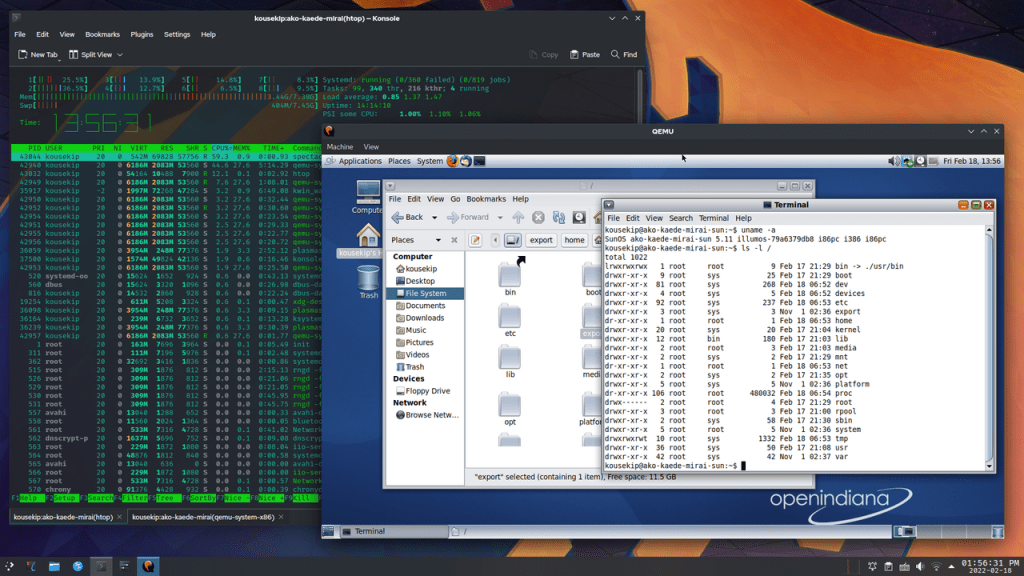
The venerable open-source virtualization architecture, QEMU, is currently orchestrating the deprecation of 32-bit processor support for its Cloud host environment. It is imperative to distinguish that this transition is confined specifically to the Cloud distribution; the standard iteration of QEMU shall remain unencumbered, persisting in its support for 32-bit host architectures.
Project developers recently submitted a comprehensive suite of fifty patches designed to expunge 32-bit host support entirely. This refinement is projected to diminish the QEMU and TCG (Tiny Code Generator) codebases by over 7,000 lines. Given that 32-bit support had previously reached a state of obsolescence, this structural streamlining represents a significant advancement in efficiency. It should be clarified that QEMU 10.0 had already abandoned official support for 32-bit processors in its Cloud variant; consequently, while the software remained functional on such hardware, the official team ceased the provision of security and functional updates.
Looking ahead, host systems tethered to 32-bit processors will be precluded from migrating to QEMU 11.0. While users may elect to remain on the 10.x branch, the protracted utilization of a platform devoid of security maintenance entails formidable risks. Furthermore, it must be underscored that these modifications are presently in the conceptual phase and have yet to be definitively ratified. The final determination regarding the inclusion of 32-bit support in QEMU 11.0 Cloud will manifest only upon its formal release.
Interested parties may scrutinize the detailed change logs and participate in the discourse here.
Related Posts:
- iOS on Nintendo Switch: Technical Feat Achieved, But Performance is a “Kernel Crash” Nightmare
- New “CRON#TRAP” Campaign Exploits Emulated Linux Environments to Evade Detection
- Mozilla to End Support for Firefox on 32-bit Linux in 2026
- Fedora Linux Delays 32-bit Support End: Community Backlash Saves Gaming & Legacy Hardware
Support Our Threat Intelligence
Find our tech and OS security coverage helpful? Support our work today and unlock a 100% ad-free reading experience!
 Buy Me a Coffee
