 Do Son
TL;DR
Google researchers disclosed full details and a proof-of-concept (PoC) exploit for CVE-2026-74127. This critical AMD PSP Code Execution flaw bypasses early bootrom signature checks on Zen 1 and Zen+ CPUs. Because the bug sits in read-only chip silicon, AMD confirmed it will not issue a firmware fix.
- CVE: CVE-2026-74127 R
- CVSS: Awaiting analysis
- Summary: Summary We’ve identified a vulnerability in the PSP bootrom which bypasses the PSP’s firmware verification very early at boot. Zen 1 and Zen+ are both affected. Zen 2 and later are not…
- Status: No confirmed exploitation yet
- Action: See vendor advisory
Why It Matters
The Platform Security Processor (PSP) is an embedded Cortex-A5 management core inside AMD chips. It boots before the main x86 cores and holds full access to all system RAM. In addition, the host OS cannot inspect PSP memory or see its running tasks. Thus, an attacker who hijacks the PSP can plant stealth malware that survives OS reinstalls.
In the Google Security Research advisory, researcher matrizzo found CVE-2026-74127 while testing the 2018 Masterkey bug (CVE-2018-8930). On AMD’s security portal, the vendor rates this flaw Critical with a 9.4 CVSS v4.0 score. Although a working Python PoC script is now public, no live attacks in the wild have been confirmed.
How the Attack Works
Bootrom SRAM Residue and Unsigned Directories
This AMD PSP Code Execution flaw stems from three quirks in the on-chip bootrom loader. First, if the main bootloader (type 1) fails its RSA check, the bootrom leaves the bad code in SRAM. Second, the SPI flash directory that stores module types is not signed. Third, if a module header has size_signed == 0, the bootrom loads only the header and signature into SRAM.
Donor Module Recovery Bypass
Consequently, an attacker with software write access to the BIOS SPI flash can patch the main bootloader body at 0x100. Next, the attacker swaps the recovery bootloader (type 3) with a valid AMD-signed donor module. That donor module has size_signed == 0 and a load address of 0x100. When the tampered main bootloader fails its check, the bootrom loads the recovery slot. It verifies the donor header signature, leaves the patched code at 0x100 untouched, and jumps to 0x100. As a result, the PSP runs unsigned code at early boot.
Affected Versions
Vulnerable AMD Processor Models
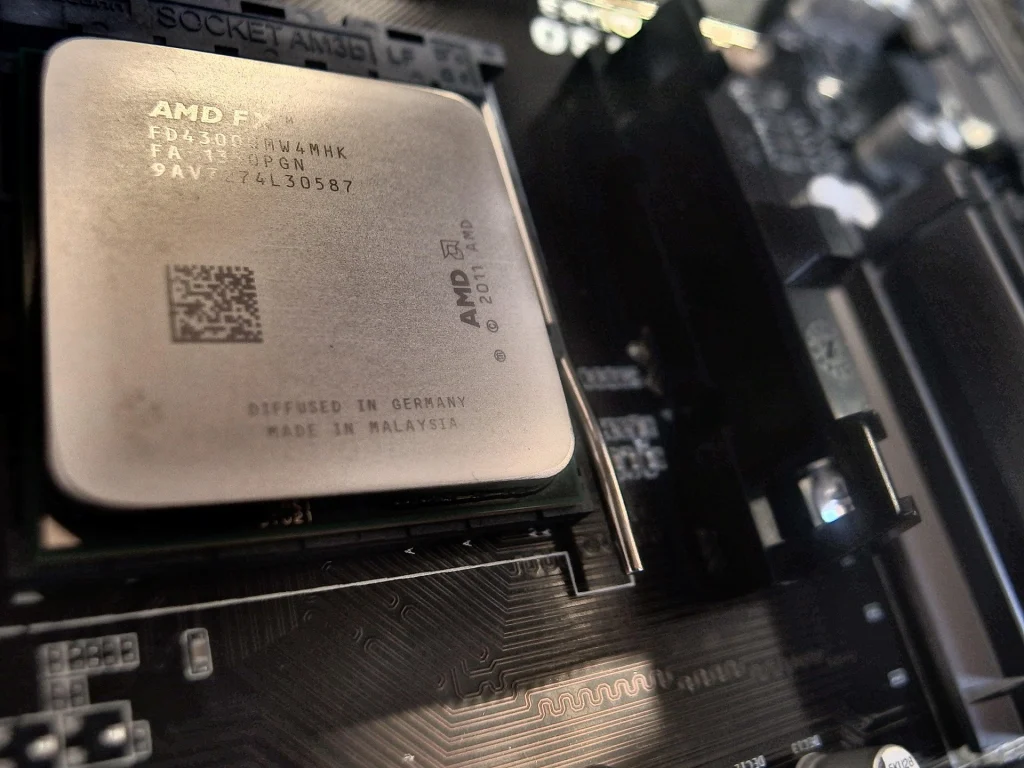
Google verified this AMD PSP Code Execution bug on Zen 1 (Ryzen 5 1600X) and Zen+ (Ryzen 7 2700X) chips. First-generation Zen 1 EPYC server chips also likely face risk. However, Zen 2 and newer CPUs are safe because no signed donor modules exist with a zero signed-size value.
Patch and Mitigation Steps
Google reported this bug to AMD on August 19, 2026. Still, AMD confirmed that no patch is planned because fixing the on-chip bootrom requires new CPU hardware. Therefore, teams running Zen 1 or Zen+ hosts must lock down local admin and kernel rights. Blocking unauthorized software writes to the BIOS SPI flash stops this attack chain.
Support Our Threat Intelligence
Find our vulnerability reports and weekly recaps helpful? Support our work today and unlock a 100% ad-free reading experience!
 Buy Me a Coffee
