 Do Son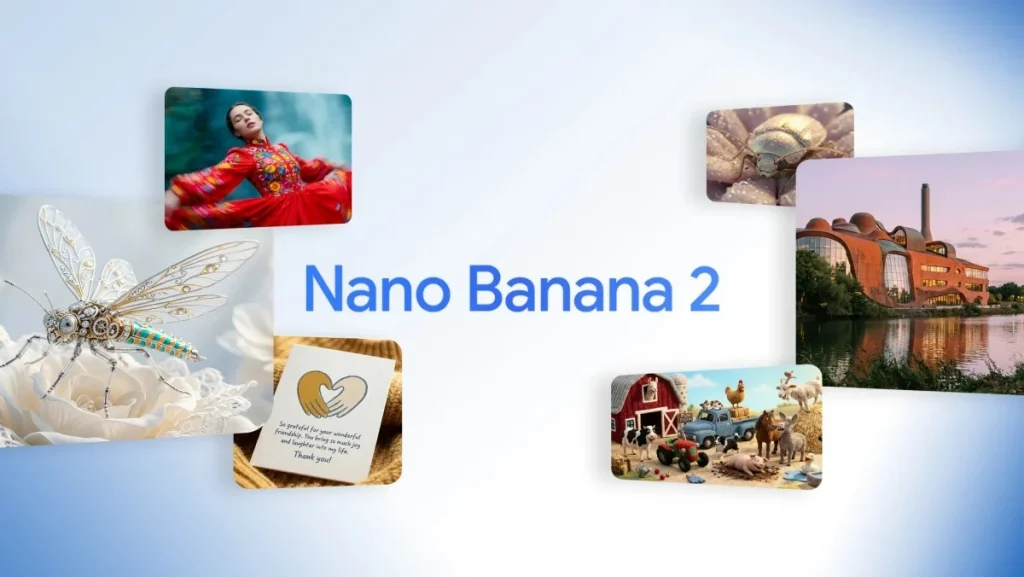
Google has once again accelerated its momentum in the realm of image generation! Earlier today, the company heralded the launch of “Nano Banana 2,” a revolutionary image generation model propelled by Gemini 3.1 Flash Image. This novel iteration not only inherits the formidable world knowledge and reasoning acumen of its predecessor, Nano Banana Pro, but also elevates generation speeds to lightning-fast echelons, poised to seamlessly take the helm across the entirety of Google’s product lines.
As the rivalry among AI imaging tools reaches a fever pitch, generation speed and precision have emerged as the ultimate crucibles of success. According to official dispatches, Google’s newly unveiled Nano Banana 2 orchestrates a flawless symphony of high fidelity and peak efficiency, democratizing potent capabilities once reserved exclusively for advanced practitioners. Previously, while Nano Banana Pro could render hyper-realistic imagery bordering on the indistinguishable, it was fettered by colossal computational demands and protracted generation times—even encountering official usage constraints at one juncture due to overwhelming demand.
Today, Nano Banana 2 elegantly vanquishes this critical limitation. It not only preserves the Pro model’s profound “World Knowledge”—the capacity to instantaneously harvest the latest information and imagery from the web to draft precise infographics and structural diagrams—but also dramatically accelerates the pace of creation.
This signifies that creators can now execute rapid edits and numerous iterations in a fraction of the time, all guided by a single prompt. Furthermore, Nano Banana 2 has fortified its text-rendering prowess, enabling the precise generation of typography essential for marketing collateral and greeting cards directly within the visual canvas.
Regarding its core specifications, Nano Banana 2 introduces several remarkable enhancements:
-
Character Resemblance: Within a singular workflow, the model can sustain the aesthetic consistency of up to five distinct characters. For creators tasked with composing storyboards or cohesive visual narratives, this emerges as an immensely pragmatic, killer application.
-
Exquisite Detail and Fidelity: It supports image outputs at a magnificent maximum resolution of 4K, delivering richer textures and sharper details than any preceding generation.
-
Precise Instruction Adherence: The model complies with greater strictness to complex, multi-layered directives, ensuring the final generated artwork flawlessly mirrors the user’s conceptual vision.
Coinciding with the advent of Nano Banana 2, Google has also proclaimed a comprehensive elevation and recalibration of its product suite. Nano Banana 2 will officially supplant the original Nano Banana Pro within the Gemini App. However, for esteemed users subscribing to the Google AI Pro and Ultra tiers, the system will retain the privilege to invoke Nano Banana Pro for specialized, professional endeavors. Moreover, Nano Banana 2 will immediately ascend as the default imaging model for Google Search’s “AI Mode,” Google Lens, and the Flow AI Creative Studio.
Google’s strategic intent with the unveiling of Nano Banana 2 is patently clear: bartering velocity for far-reaching application ubiquity. In the past, Nano Banana Pro unequivocally demonstrated Google’s elite supremacy in image generation, yet its sluggish computation and exorbitant costs perpetually remained the Achilles’ heel of its widespread adoption. Forged upon the Gemini 3.1 Flash Image architecture, Nano Banana 2 is tantamount to embedding a top-tier engine within a lightweight chassis, empowering everyday users to experience Pro-level text rendering and character consistency in mere moments.
The capacity to maintain the visual consistency of five characters, in particular, directly ameliorates the most glaring vulnerability currently afflicting AI illustration in comic creation and commercial sequential storyboarding. The paramount focal point moving forward will be whether this new model, championing lightning-fast rapidity, can truly uphold its officially proclaimed 4K fidelity and photorealism when confronted with voluminous and intricate prompts in real-world scenarios, remaining entirely unblemished by the customary flaws endemic to AI-generated imagery.
Support Our Threat Intelligence
Find our tech and OS security coverage helpful? Support our work today and unlock a 100% ad-free reading experience!
 Buy Me a Coffee
