Google Unveils “Opal”: A New AI Tool for Building Mini Web Apps with Natural Language
 Do Son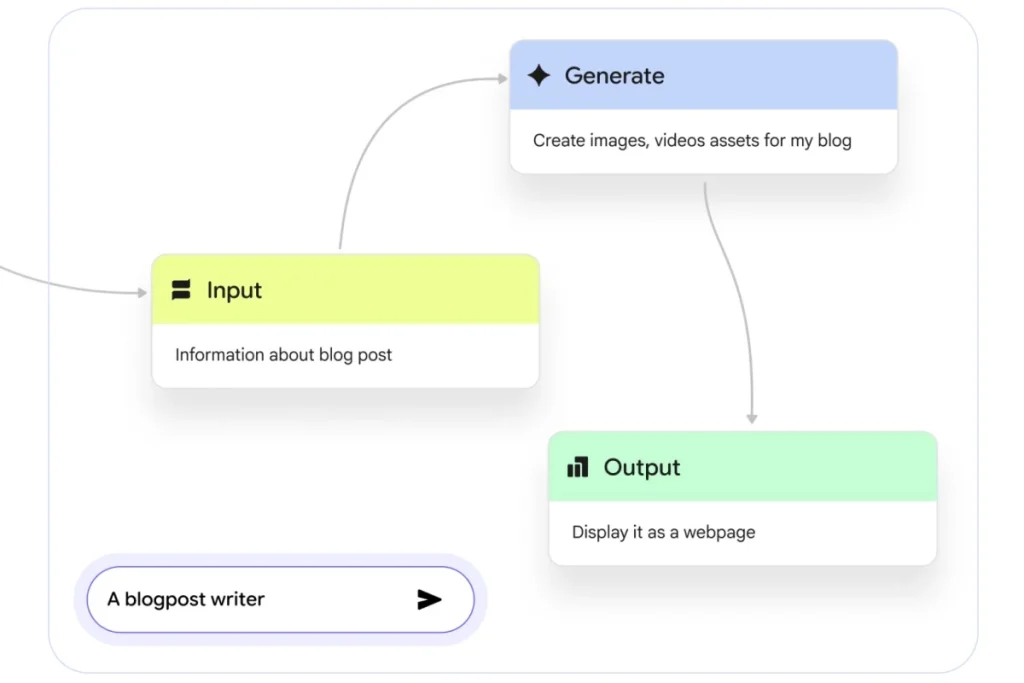
As AI technology continues to permeate the development landscape, an increasing number of companies are investing in AI-driven “vibe-coding” tools—platforms designed to empower users without formal programming backgrounds to create their own digital services using natural language. Following in the footsteps of Canva, Figma, and Replit, Google has now introduced a new experimental service called “Opal,” currently available to U.S. users through the Google Labs platform.
Opal operates on principles similar to those of generative AI tools. Users simply input descriptive prompts such as “I want to build a web form to collect user feedback” or “Create a tool that displays current weather information,” and Opal, leveraging Google’s suite of proprietary AI models, swiftly generates corresponding miniature web applications with clearly visualized workflows.
In addition to building new apps through natural language prompts, Opal features an integrated application library, allowing users to quickly remix existing templates, tweak their workflows, or add custom interactive elements. Once an application is generated, users can access a visual editor to examine the overall structure, refine prompt commands for each step, and insert new process nodes from the toolbar to further tailor the user experience.
Google emphasizes that Opal is not intended solely as a tool for developers, but rather as a platform to engage non-technical users in the application creation process. The aim is to lower the barriers to app development and unleash broader creative potential. With its graphical, flowchart-based interface, Opal enables users to configure data input, processing logic, and visual output—without writing a single line of code—while offering real-time previews of the results.
Regarding sharing capabilities, Opal allows users to publish their completed applications in web-based format, generating public links that can be accessed by others via Google accounts to experience the content firsthand.
Currently, Opal is in testing via Google Labs. However, the company has yet to announce a timeline for a formal release or whether the service will be expanded to additional markets.
Related Posts:
- AI-Powered Cyberattacks: Greasy Opal Bypasses CAPTCHA, Threatens User Accounts
- Exploring the AI-Powered Windows Search Copilot+ PCs Feature
- Apache HTTP Server Hit by Triple Vulnerabilities – Users Urged to Update
- Microsoft Unveils Enhanced Windows AI Features for “Copilot+ PC”
- Critical Flaws in AI Browse Agents: Exposed to Credential Theft and Hijacking
Support Our Threat Intelligence
Find our tech and OS security coverage helpful? Support our work today and unlock a 100% ad-free reading experience!
 Buy Me a Coffee
