 Do Son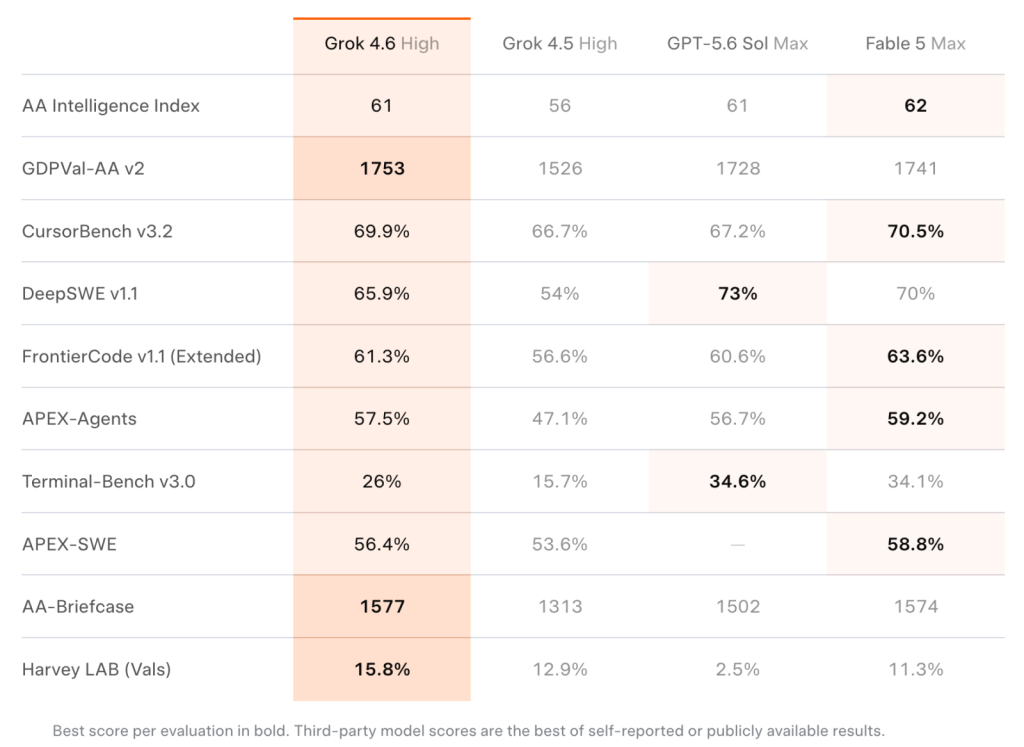
SpaceXAI recently unveiled the Grok 4.6 AI model series. This advanced lineage specifically enhances the model’s capacity for long-horizon tasks. It also targets software engineering and interactive visual projects. You can read the official announcement on x.ai’s news page for Grok 4.6. SpaceXAI asserts that this model seamlessly sustains momentum across intricate workflows. Consequently, it excels at comprehensive data research and deep information analysis. Furthermore, it easily handles cross-file code modifications. It even translates abstract product concepts into fully functional application prototypes.
Shifting Training Focus to Complex Tasks
SpaceXAI reports that Grok 4.6 underwent extensive supplementary training. The underlying training data encompasses model-generated reasoning pathways. It also incorporates software engineering repositories and high-quality technical documentation. Meanwhile, the development team meticulously refined the optimizer and the overarching training architecture. They utilized Grok 4.5 to regenerate diverse training trajectories. These specific trajectories spanned varying intensities of reasoning. They also covered distinct agentic tool environments.
Expanding Core Competencies
These rigorous training regimens encompass software engineering, knowledge work, and general programming. They also cover kernel optimization, web development, and computer-aided design tasks. Moreover, the new model significantly fortifies its self-testing capabilities. It improves result-validation processes during extended assignments. This improvement drastically reduces instances where agents deviate from their primary objectives mid-task. Therefore, it prevents failures in concluding operations. It also stops the delivery of inconsistent output quality.
Enhancing Interactive and Visual Projects
Regarding interactive and visual projects, Grok 4.6 establishes lucid application architectures effortlessly. It builds distinct visual aesthetics on its initial attempt. However, these profound capabilities primarily manifest within specialized environments like Grok Build. Ultimately, the actual performance remains contingent upon the inherent complexity of the task. It also depends on the tool invocation environment. Finally, it relies heavily on the model’s accuracy in comprehending user prerequisites.
Benchmark Performance Remains Competitive
Grok 4.6 demonstrates superior performance in various model benchmarks compared to previous iterations. Nevertheless, it does not hold a singularly dominant position overall. It either parallels the performance of GPT-5.6 SOL or falls slightly behind models like Claude Fable 5. Therefore, across multiple evaluations, Grok 4.6 maintains a top-tier status without definitively leading the pack. Furthermore, some competitor scores stem directly from public system cards. Independent organizations have not universally re-evaluated all associated benchmark data.
Practical Capabilities and API Access
SpaceXAI emphasizes that achieving a frontier-level status denotes robust competitiveness. This applies primarily to multi-agent and knowledge-work assessments. Consequently, developers must gauge its true practical capabilities through daily utilization. Currently, Grok 4.6 is readily accessible within Cursor and Grok Build. Subscribers to these specific tools receive double usage quotas during the inaugural launch week. Additionally, developers can seamlessly invoke the model via API integrations. For comprehensive technical specifications, please refer to the Grok 4.6 developer documentation. Beyond the official SpaceXAI API, various other model platforms will progressively offer access.
Comprehensive Model Information Card
Here are the core technical specifications for this new release:
- Model Name: grok-4.6
- Context Window: 500K tokens
- Knowledge Cutoff Date: February 1, 2026
- Modality Support: Text and image inputs; text outputs
- Pricing per Million Inputs: $2.00
- Pricing per Million Outputs: $6.00
- Pricing per Million Cached Tokens: $0.50
- Overage Pricing (Beyond 200K Tokens): $4.00 per million inputs; $12.00 per million outputs; $1.00 per million cached tokens
- Fast Mode Pricing: Double the standard rates. Overage rates in Fast Mode also double, rendering them four times the standard base rate.
- Effort Levels: Low, Medium, High, and Ultra-High (defaults to High)
- API Interface Support: Responses API and Chat Completions
Support Our Threat Intelligence
Find our tech and OS security coverage helpful? Support our work today and unlock a 100% ad-free reading experience!
 Buy Me a Coffee
